

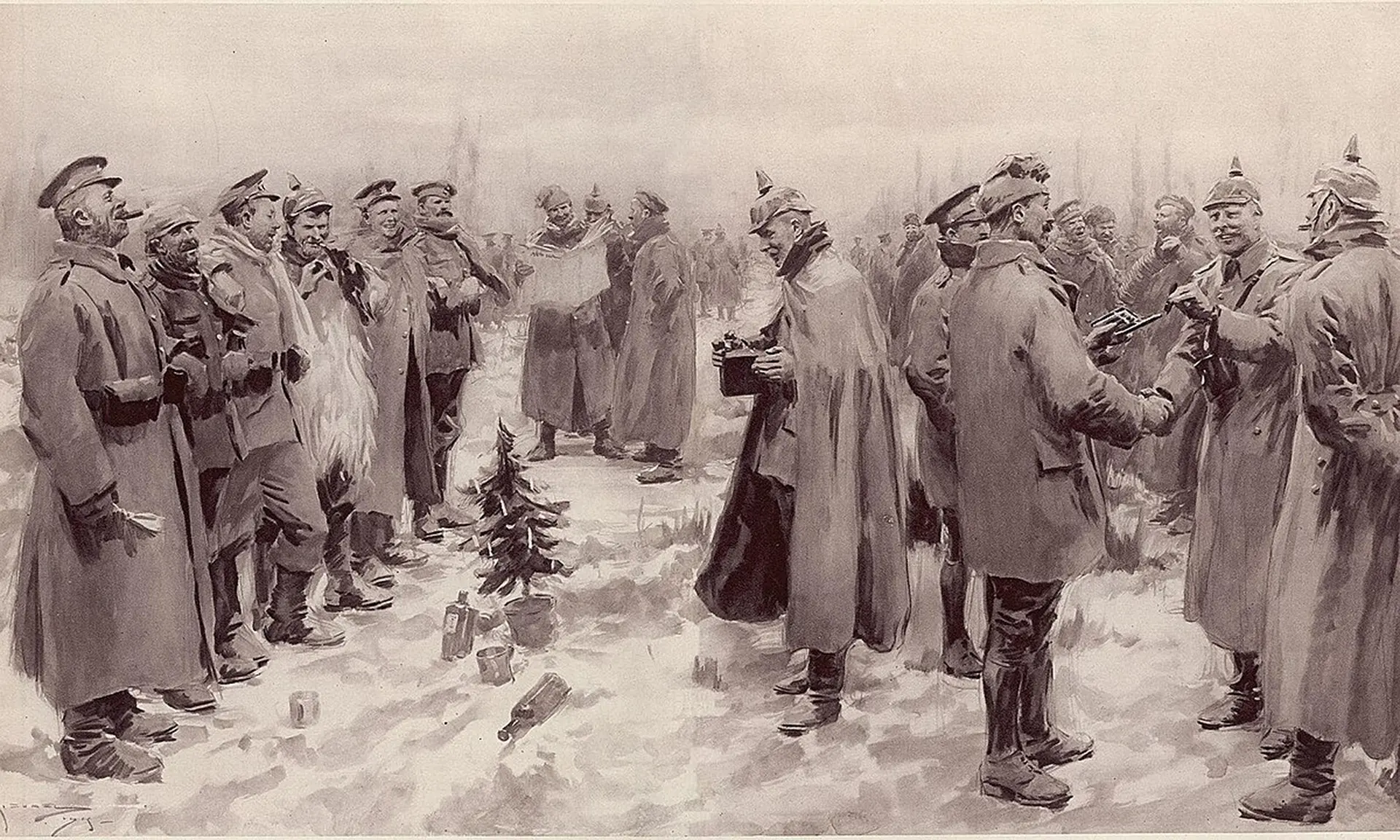
In 1914, an unlikely event took place so unexpected that it’s often believed to be a myth. Yet there is good historical evidence that it indeed happened.
“The Christmas truce” refers to Christmas Day during The Great War (World War I) when German and British soldiers on the front line of the Western Front put down their weapons and celebrated Christmas together. Instead of shooting each other, as they had been doing, they sang Christmas carols, buried their dead, exchanged gifts and even played football (soccer).
These men, who had been mortal enemies, decided for a brief time in the middle of unimaginable horror, that they would celebrate Christmas, sometimes against the wishes of their commanders.
The Great War had been brewing for some time before it broke out in Europe. Many of the young men (especially the Germans) had been raised on a wave of nationalistic pride. Told they would be embarking on an adventure and that the war would be over by Christmas, eager volunteers signed up across Europe. Yet, crushing reality soon sank in. The trenches were dirty, held stagnant water and were a breeding ground for disease. In his poignant poetry documenting the war, Wilfred Owen, who was killed just months before the Armistice, paints the picture of a young man who has been gassed, thrown on a wagon “eyes writhing in his face”, blood “gargling from froth-corrupted lungs”.
The poet finishes his poem with these lines.
“My friend, you would not tell with such high zest
To children ardent for some desperate glory,
The old Lie: Dulce et decorum est
Pro patria mori.”1
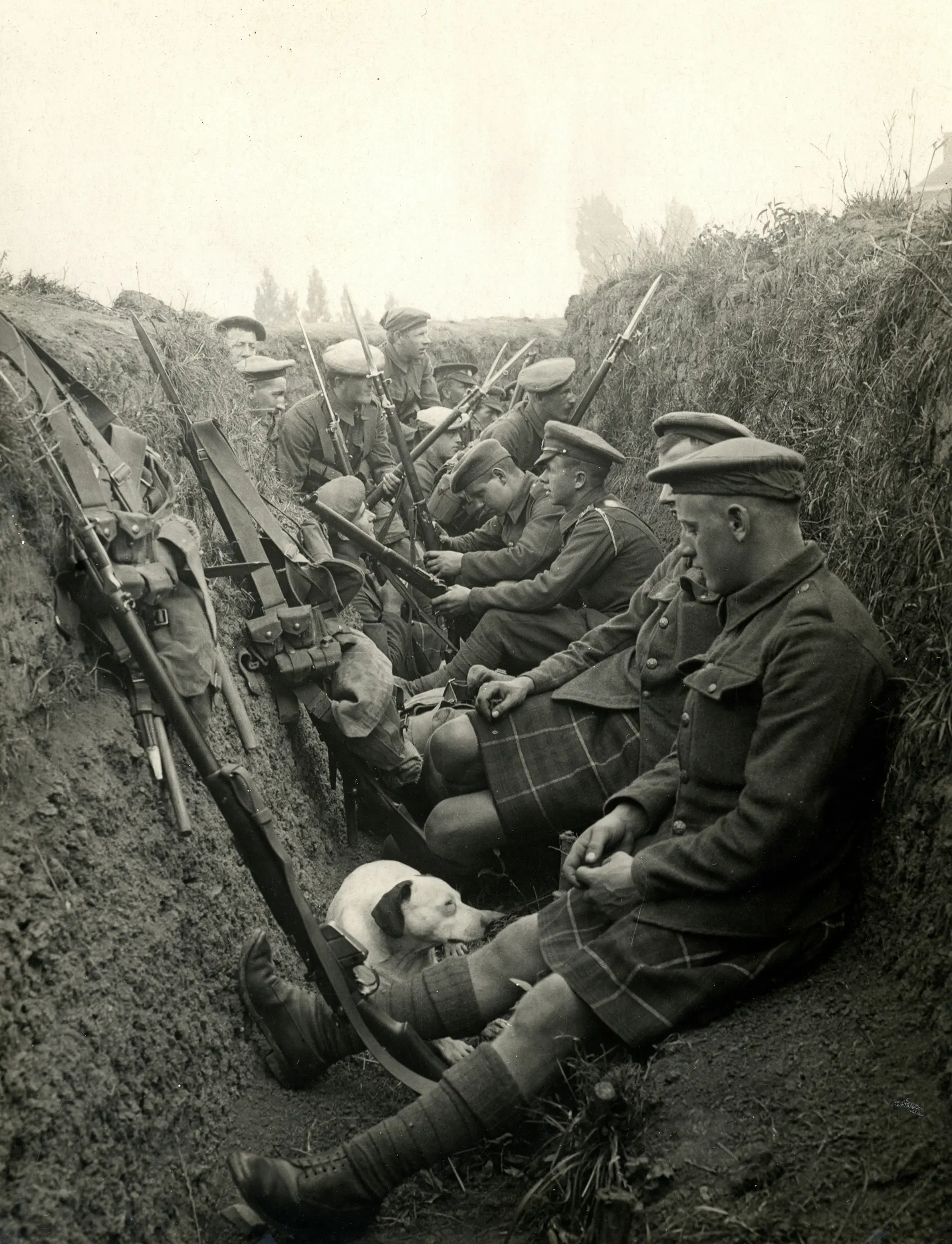
“Sweet and fitting it is to die for one’s country.” That Latin saying had been a catchcry glorifying and softening the brutal, life-ending realities of war. The young men who were told they would sweep in and vanquish the enemy, returning to a heroes’ welcome, soon woke up from their fantasy, senses assaulted by the insistent boom of shells, the clinging mud and stink of the trenches.
Yet on Christmas Day, 1914, some places along the front saw a break in the fighting. Reports from the Imperial War Museum (IWM) verify the soldiers’ tales.
The IWM documentary The Christmas Truce features recorded interviews with soldiers who experienced this unlikely event.
Marmaduke Walkinton of the Queen’s Westminsters said, “We were in the front line. We were about 300 yards from the Germans . . . on Christmas Eve, we’d been singing carols and this, that and the other, and the Germans had been doing the same, and we’d been shouting to each other, sometimes rude remarks, more often just joking remarks.
Eventually a German said, ‘Tomorrow you no shoot, we no shoot’.”
Somehow, the suggestion stuck. “What was interesting at Christmas is that both sides actually started to communicate in more friendly terms,” said Anthony Richards, IWM head of documents and sound. “It really began with the Germans singing Christmas carols and setting up Christmas trees on top of their parapets. And so, they came to very much empathise with one another.”
A German artillery officer, only known as Mr Rickner, shares, “I remember the Christmas Day when the German and the French soldiers left their trenches, went to the barbed wire between them with champagne and cigarettes in their hands and had feelings of fraternisation and shouted that they wanted to finish the war. And that lasted only two days . . . and then strict orders came that no fraternisation was allowed, and we had to stay back in our trenches.”
Officers were worried that such fraternisation would dampen the men’s enthusiasm for battle.
This truce was not negotiated in a board room by leaders, nor banged out in the exchange of hostages or with concessions. It was the simple desire of young men to not fight and die on Christmas. People at home were incredulous about the reports. They didn’t believe that the enemy, who had been demonised and dehumanised, could exchange such pleasantries with their “boys”.
Yet the event did happen—not everywhere and not for long—but up and down the front. On the eastern front, Russian soldiers who had been bombarding the Polish fortress of Przemyśl left three Christmas trees in no-man’s land with a polite note to the defenders: “We wish you, the heroes of Przemyśl, a Merry Christmas and hope that we can come to a peaceful agreement as soon as possible.”2
In our society today, Christmas has become known for the saccharine sweetness of jingles, rich food and an excessive display of materialism as parents fight in aisles over presents for their children. Even the “spirit of Christmas” has become a bit of an urban legend—a nebulous concept of generosity and sacrifice.
Christians around the world celebrate Christmas to mark the occasion of the birth of Jesus. While scholars would agree that Jesus’ actual birthday is not December 25, the date has been part of Christian tradition for more than a millennium and while some get bogged down in that detail, many around the world celebrate the nativity.
The Gospel of Luke has one retelling of the story. An angel comes to a group of shepherds in the Judean countryside and proclaims to them that a special baby has been born.
“Do not be afraid, for behold, I bring you good tidings of great joy which will be to all people. For there is born to you this day in the city of David a Saviour, who is Christ the Lord. And this will be the sign to you: You will find a Babe wrapped in swaddling cloths, lying in a manger” (Luke 2:10–12, NKJV3).
The shepherds would have had something in common with the men in the trenches of Europe. They were rough, uncultured men, probably from lower classes of society. They were accustomed to sleeping in rough terrain and to going without.
Yet, they heard the message of this heavenly messenger, when kings and rulers would not. Luke tells us that with this angel, a host appeared singing this phrase: “Glory to God in the highest, And on earth peace, goodwill toward men!” (2:14)
“Peace and goodwill toward men.” This phrase brings some insight into the mission and purpose of this “Babe wrapped in swaddling cloths” who was to be the Saviour of the world. “Saviour” means “one who saves” or “rescues”. Jesus, the Baby who was born that day, is that Saviour.
Jesus showed His followers a new way. He encouraged them to love their enemies, going against human nature. If someone does me wrong, my natural inclination is to repay them in kind. Yet Christmas celebrates the birth of Jesus, the One who came to bring peace. The kind of peace Jesus wants to bring doesn’t last for a day. He wants to bring wholeness to you and me, to restore broken relationships, to heal cultural and national divides, to have former enemies put down their weapons and share gifts and an embrace. The choir of angels wished for peace on earth and in this broken world, we still long for peace.
Our world is wracked by war and suffering and yet, when we remember Christmas, we are encouraged to heal hurts and be peace makers, even with our enemies.
The Bible records that the shepherds—captivated by this vision of peace—came “with haste” to the place and found the Baby they had been told about, before telling everyone they knew of the strange encounter. Perhaps like the Christmas truce, some didn’t believe them. But those rough men would remember that encounter for the rest of their lives.
Let us pray for peace this Christmas.
1. Wilfred Owen, “Dulce et Decorum est”. Posthumously, 1920.
2. Max Hastings, Catastrophe: Europe Goes To War 1914. William Collins, 2013.
3. Bible texts marked NKJV are taken from the New King James Version®. Copyright © 1982 by Thomas Nelson, Inc. Used by permission. All rights reserved.