


I learned the Dewey Decimal system at a very young age. Given our limited attention for reading these days, I should explain that the Dewey Decimal system is the method libraries use to organise the many topics that make up a large collection. Ever seen a series of numbers on the spine of a library book? That’s what you’re looking at. Well, by the age of eight, I had a favourite number. It was 398.2. This was the number that designated myths, legends and folklore. In my small-town library, it accounted for one medium-sized shelf and most of my daydreams.
To me, 398.2 represented the most fascinating stories I had ever read. Viking folklore. English fables. Grimm’s fairy tales. I would kneel on the carpet in front of that shelf and run my fingers along the spines, feeling them slip over the smooth plastic covers as I searched for favourites and discovered new volumes. Among the most familiar titles were compendiums of Greek and Roman myth. From them, I learned about the trials of Hercules, the selfish games the gods played, and the heroic battles of Perseus, Jason and Bellerophon. But the most significant heroes had to be those who fought the Trojan War. I was stunned by the stupidity of Paris and Agamemnon, inspired by the bravery of Achilles and Hector, and most of all fascinated by the cunning of Odysseus.
Propelled by their adventures, I felt inspired to put down the storybooks I’d been reading and pick up Homer’s originals, The Iliad and The Odyssey. Big mistake. Firstly, no-one told me they were poetry—and dense, unwieldy poetry at that! I’m reminded of Mark Twain who wrote that The Iliad is “something that everybody wants to have read and nobody wants to read”. Secondly, and possibly more importantly, no-one prepared me for an encounter with men and women who shared decidedly different values from me. They were heroes and heroines, yes. But they didn’t seem to share any idea of heroism I had grown up with.
from myth to the silver screen
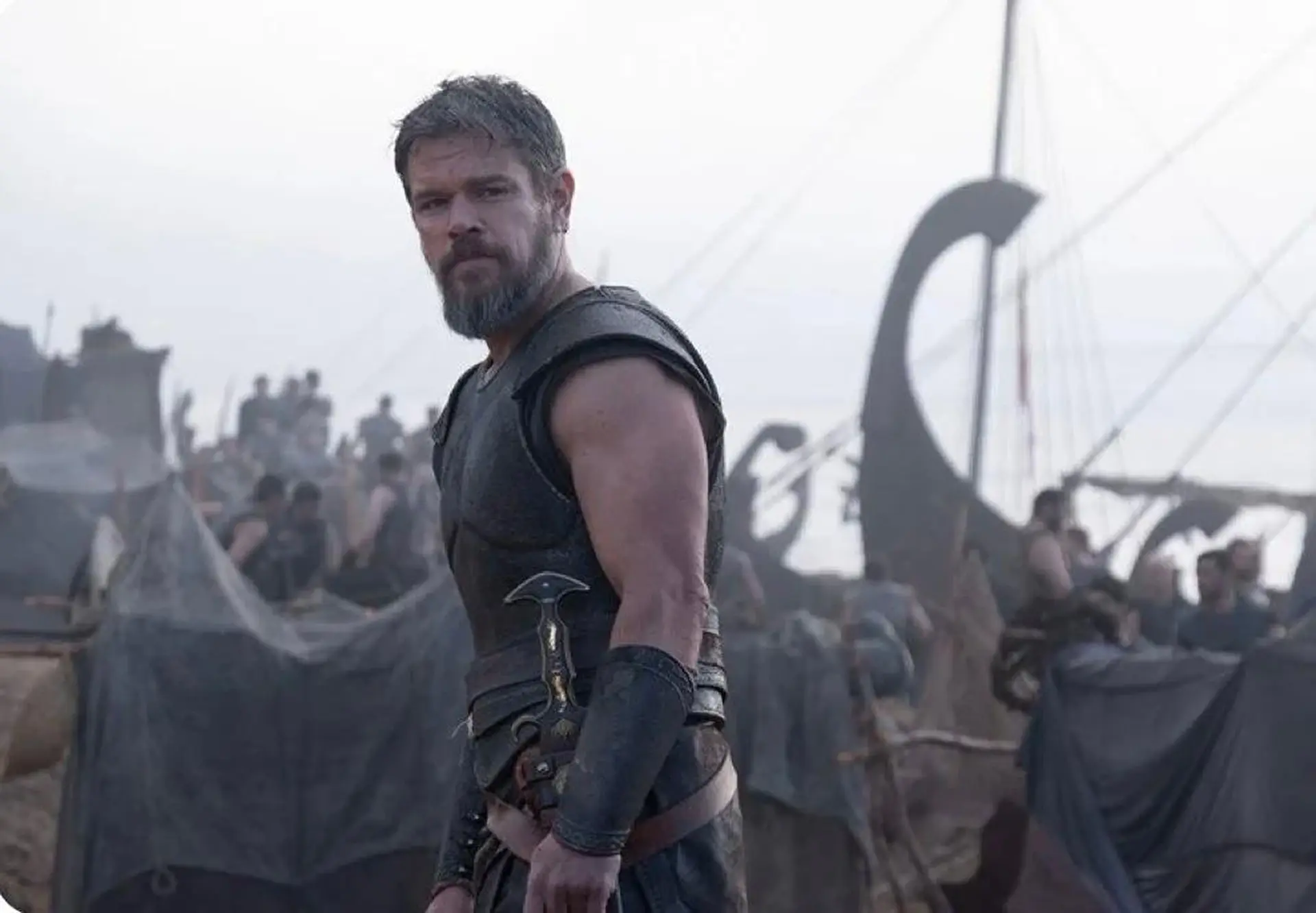
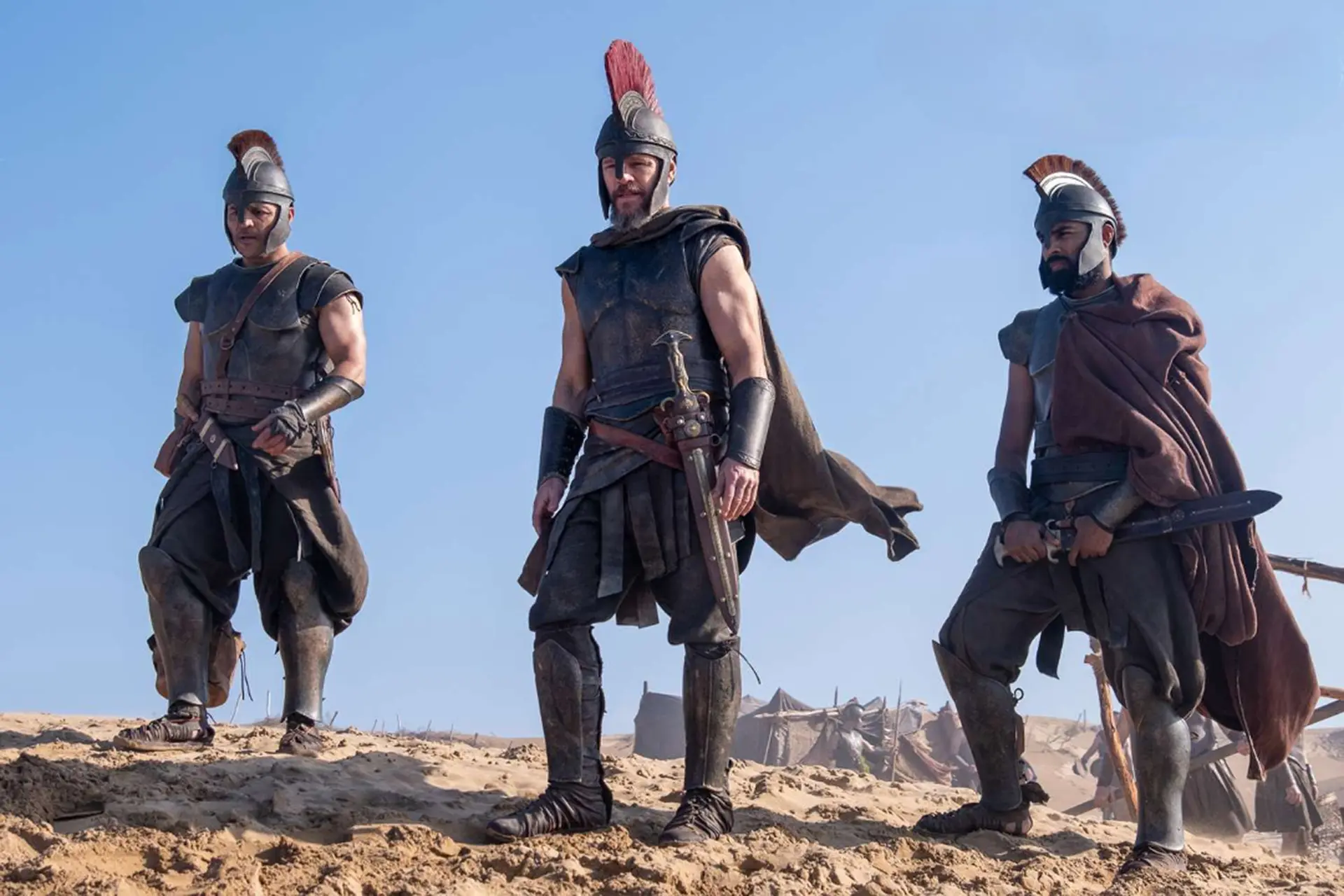
This July, A-list director Sir Christopher Nolan will release his version of one of those classic tales, The Odyssey. It stars Matt Damon as Odysseus and Anne Hathaway as his wife Penelope, supported by Tom Holland, Robert Pattinson and a host of other luminaries. The Odyssey contains all the elements Homer used to flesh out his tale: sorceresses and harpies, a rapacious cyclops, capricious gods and, of course, the war hero Odysseus. Nolan, no stranger to epics, has spared no expense bringing this legend to life. The film’s budget stands at $US250 million, making it more expensive than similar ancient sagas like Gladiator, Troy and 300. The scene previews I’ve seen suggest it’s money well spent. Nolan has eschewed digital effects for as many practical constructions as he can muster, and the result is imagery that looks particularly tangible. But one thing this director won’t be able to sell is Homer’s system of values.
the truth behind the myths
Damon and Hathaway will come together to construct a story guided by love, but this was not the central fact of Homer’s existence. His heroes were motivated by one concept and one alone: glory. “The Classics”, referring to those Mediterranean manuscripts written roughly between 800 BC and AD 200, are simply stiff with men trying to earn it. Their primary goal was an immortal name and they would do any number of things to claim it. Yes, Odysseus loved Penelope, but more because of what she contributed to his personal standing. In her translation of The Odyssey, academic Emily Wilson captures this idea well when she opens her description of Homer’s hero with the line, “Tell me about a complicated man . . .”
“The Classics” are filled with men trying to live forever through memory.
“The Classics” present us with heroes who carry out great deeds that lead to amazing riches and their alignment with beautiful women, but it is important to understand that these were only stepping stones to their true goal. Each hero acts with a series of questions uppermost in his mind: “How do I make something significant of myself?”, “How do I carve out a legacy?”, “How will I ensure that people know my name?” Every Greco-Roman hero wanted to live forever and they saw themselves achieving it through enduring memory. Achilles was the greatest warrior of Odysseus’ age. They fought side by side in the battle for Troy. Achilles’ mother, the goddess Thetis, warned him that two choices lay before him. He could stay at home and live to a ripe old age, surrounded by his family, but be forgotten by posterity. Or he could go to Troy where he would certainly die, but his name would live forever. Achilles chose death and glory over long life and obscurity. And as much as we might outwardly reject that sort of decision, maybe living for glory is more familiar than we’d like to think.
What motivates the actor, the author, the sportsman, the influencer if it isn’t glory? The ancient Greeks would certainly have recognised their motivation. The poet Pindar became highly sought after in ancient Greece because of his ability to craft stanzas that immortalised the sporting achievements of his patrons. Writers like Aeschylus and Sophocles aimed at creating plays that would produce the most glorious societies. Julius Caesar wrote his Gallic War as a means of keeping his achievements in the public eye even though he was far away from his target audience. Even the seemingly unbiased historian Thucydides wrote his account of the Peloponnesian War not just to set the record straight but to achieve eternity through prose:
“I have written my work, not as an essay which is to win the applause of the moment, but as a possession for all time.”
sacred subversion
Maybe it’s no bad thing I missed out on all those glory-saturated stories growing up. But Dr Nadya Williams, author of Christians Reading Classics, says that encountering these ancient works helps us understand the impact Christianity had on the ancient world. Christianity was the cult that turned culture on its head. While people were seeking to make a name for themselves, the followers of Jesus were serving considered the least valuable to society. Unwanted babies, left exposed on rubbish dumps, were collected Christians convinced they were worthy of love and care. Christians created public cemeteries because they believed the poor were made in the image of God and deserved dignity in death. Hospitals were established so that even the lowliest members of society could receive the medical attention they desperately needed. This love for the least was so influential that in a letter to a pagan priest, the Roman Emperor Julian bemoaned how these “Galilean” followers of Jesus were making the state religion look bad:
“It is disgraceful that, when no Jew ever has to beg . . . the impious Galileans support not only their own poor but ours as well, [and] all men see that our people lack aid from us.”
Is it any wonder they served thus, when they followed a servant King? Jesus told His disciples how true glory could be secured in Mark 10:44: “He who would be first must make himself the servant of all.”
And this upside-down approach still has the power to transform society. Its secret lies in offering a contrast to a world shaped by the quest for personal glory. We make ourselves servants, and by doing so we can point people to the most heroic Servant of all. Let me give Dr Williams the final word:
“We all want to be our own superheroes—cape optional. This impulse can be good and true and beautiful—but only if we direct it to serve the world rather than our own selfish desires and only if we give God the glory. Ultimately, the language of the Homeric epics, as theologian Dennis R MacDonald argues, ‘Equipped the writers of the Gospels to do just this—to tell the greatest epic ever told, the story of Jesus’.”
Please note that discussion of a media product in Signs of the Times does not constitute an endorsement or recommendation.