


In 2007, a 20-year-old woman named Amanda Knox was studying abroad in the hilltop town of Perugia, Italy. She’d been there for five weeks, sharing an apartment with three other women and was newly smitten with a boy she’d met at a music recital. Then one night, her housemate, Meredith Kercher, was sexually assaulted and murdered in their home. Within days, Knox was arrested on suspicion of involvement in the crime. Two years later, after a highly publicised trial with the world watching, she was convicted and sentenced to 26 years in prison. But after a series of appeals, her conviction was overturned and she was released. In 2015, Italy’s highest court definitively acquitted her, citing there was no proof of her DNA at the scene and that it was near impossible to have participated in such a violent crime without leaving one’s trace. Why then, were so many convinced of her guilt in the first place?
mistaken impressions
Onlookers thought Knox appeared suspicious. Her demeanour seemed off and her behaviour didn’t match people’s expectations of “the grieving friend”. She looked dazed and unemotional, even calm at times, but not hysterical. There were countless ordinary moments, yet those rarely made it to the public eye.
Some thought Knox was guilty because of her behaviour; others were swayed by the stories they’d heard; and others looked to fragments of her past, leaked from private diaries and treated them as evidence of her culpability.
This is an extreme example, one that has been analysed and revisited for years, but it reveals something uncomfortably familiar: we are all guilty of misreading people and making flawed assumptions about who they are. We do it with strangers like Knox and we do it with those we think we know best.
Personality and social psychologist William Ickes found that strangers in their first conversation read each other accurately only about 20 per cent of the time. Close friends and family do only slightly better, at 35 per cent. Intriguingly, Ickes even found that the longer a couple is married, the less accurate they become at reading each other. Early impressions calcify into assumptions so even if one’s partner changes, their old version can remain fixed in your mind, leaving you increasingly out of touch with what is going on in the other’s heart.1 As “The Fonz”—actor Henry Winkler—once said, “Assumptions are the termites of relationships.”
when expertise fails
In Talking to Strangers, Malcolm Gladwell challenges our confidence in reading others, arguing that even the experts—those we trust to get it right—are often far less accurate than we might expect.
When judges make bail decisions, they have access to three things: the defendant’s record, the testimony of the attorneys and the evidence of their own observations. “A judge does not correspond with the parties in the court case by email or call them on the phone,” Gladwell writes. “Judges believe that it is crucial to look at the people they are judging.” Like the rest of us, they assume someone’s demeanour is a window into their soul.
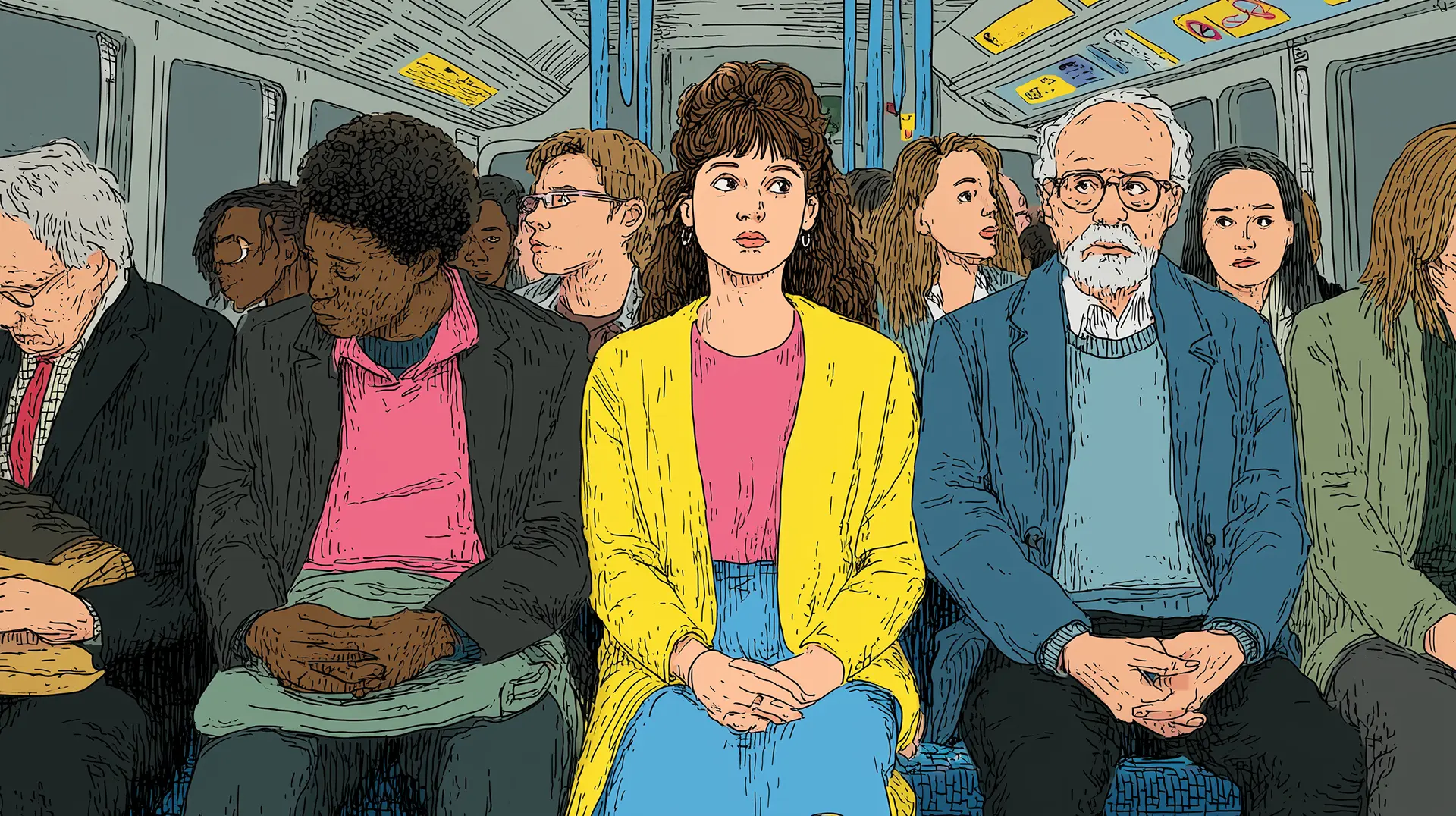
Analysing more than 500,000 bail decisions, research by American professor Sendhil Mullainathan found that defendants released by judges were about 25 per cent more likely to reoffend than those a simple computer model might have released. Judges even released around half of the defendants the model flagged as highest risk. Though judges have far more information than a computer, they often do a worse job of evaluating people. What feels like a uniquely human advantage—to look someone in the eyes—can cloud judgement rather than clarify it.
judging by appearance
For years, Knox endured strangers claiming to know she was guilty based on evidence as measly as an expression on her face. A friend of Meredith Kercher recalled, “Her eyes didn’t seem to show any sadness and I remember wondering if she could have been involved.”
Reflecting on her wrongful conviction, Knox said, “There is no trace of me in the room where Meredith was murdered. But you’re trying to find the answers in my eyes . . . Why? These are my eyes. They are not objective evidence.”2
We like to think that the way people represent themselves on the outside provides a reliable window into the way they are on the inside. If you turn on an episode of the sitcom Friends, you would be able to follow along even with the volume muted. The actors are trained to make sure every emotion their character is feeling is perfectly displayed on their face. But real life is not Friends. Surprised people don’t necessarily look surprised. Sad people don’t always look sad.3
the nuance of emotions
Anthropologist Sergio Jarillo and psychologist Carlos Crivelli conducted a study to explore how universally emotions are understood. They printed six headshots of people looking happy, sad, angry, scared, disgusted—and one with a neutral expression. First, they went to a school in Madrid and asked the students to identify each emotion. The children did pretty well. Then, they travelled to the Trobriands, a cluster of islands off the eastern coast of Papua New Guinea. When Jarillo and Crivelli showed the photos to the Trobianders, they struggled. Only 58 per cent identified the happy face as happy and 23 per cent thought it was neutral. This was the card which was most agreed upon between them and the children in Madrid. On every other expression, interpretations differed drastically. Twenty per cent called the angry face a happy face and 17 per cent called it a fearful face. Jarillo and Crivelli tested this theory again in a fishing village in Mozambique. Results improved slightly, but sad and angry expressions remained particularly confusing.4
This might not surprise us drastically when we consider different cultures, but even within one’s own culture, mistakes happen constantly.
You might be talking to someone and interpret their frown as scepticism when it signals concentration, them trying to wrap their head around an idea or merely sunlight in their eyes or a bad headache.
Gladwell reminds us, “We think we can easily see into the hearts of others based on the flimsiest of clues. We jump at the chance to judge strangers. We would never do that to ourselves, of course. We are nuanced and complex and enigmatic.”
second-hand stories
Another reason we are often wrong about people is because we only know them through second-hand information. Have you ever had a negative opinion about someone you haven’t met, based solely on what you’ve heard? Or been sandwiched between two people in conflict and noticed how easily their perspectives are misunderstood?
We all know the tabloids and the press cherry-pick details to build stories full of speculation. But are we willing to admit that we do much the same with our friends and acquaintances?
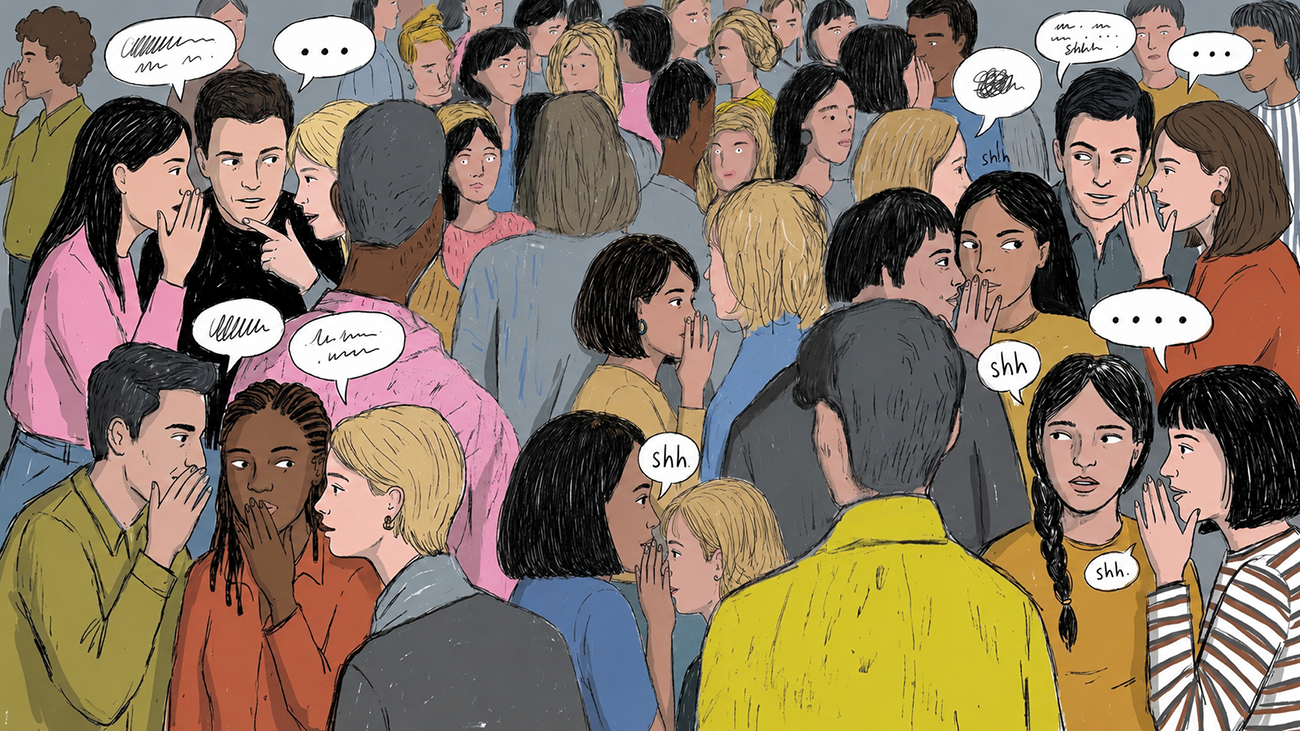
Researcher Brené Brown suggests that when someone shares something about another person, we should listen with generosity. This means believing the best about people until proven otherwise, recognising that what is being shared is their perspective, not the whole story. It doesn’t mean we assume the speaker is lying. Even honest accounts can be incomplete or distorted. People often project their own assumptions or interpret events through their own lens. Understanding this allows us to listen carefully while holding our judgements lightly.5
a holistic view
Before Knox was proven guilty or innocent, a range of loaded labels had already taken hold: “She’s crazy.” “She’s a liar.” “She’s manipulative.” And worst of all, “She’s a murderer.”
We lazily reduce people to single, clichéd character types all the time: mean, weird, racist, sexist and so on. But people rarely fit neatly into such boxes.
Art historian John Richardson, who wrote the biography of Pablo Picasso, was once asked if Picasso was a misogynist or a bad guy. “That’s a lot of nonsense,” he replied. “He could be a monster. He could equally be, and more often was, an angelic, compassionate, tender, sweet man. You say he was stingy. He was also incredibly generous. You say he was very bohemian, but also he had a sort of uptight bourgeois side.”
the golden rule
We hate when people “thin-slice” us like this, when they make snap judgements from a fleeting moment, a single comment or a biased story. If we want others to suspend judgement towards us, we must extend the same courtesy. As Jesus taught, “In everything, do to others what you would have them do to you” (Matthew 7:12).
Seeing others clearly doesn’t happen automatically. We have to learn the skills. We have to practise slowing down, asking questions, suspending our judgement—and above all, staying curious. That is the only way we will come to truly see, hear and understand one another. The Koreans call this nunchi—the ability to be sensitive to others’ moods and thoughts. The Germans call it herzensbildung—training the heart to perceive another’s full humanity.
There are all sorts of inborn proclivities that prevent us from seeing people clearly. Some of us are too self-centred. Some are preoccupied with how we appear, what others think of us or what we’ll say next. Some are too anxious or distracted, too busy to ask the right questions. And some assume everyone is like us, with the same fears and cares.6 As writer Anaïs Nin observed, “We see others as we are, not as they are.”
seeing people clearly
In judging Knox, many forgot she was a young woman—alone, confused and far from home—whose roommate had just been murdered. It was a terrifying and traumatising experience, and people respond to trauma in different ways. Yet many leaped to conclusions about who she was and what she had done.
We must remember that we are not always right about others. Humans are complex, layered and ever-changing. So, stay curious. Give people the benefit of the doubt and treat them with the patience and discernment you would hope for yourself. There is no need to rush to conclusions.
- William Ickes, “Empathic accuracy in close relationships”. In Handbook of Close Relationships. Oxford University Press, 2013. ↩︎
- Amanda Knox. Directed by Rod Blackhurst, 2016. Netflix. ↩︎
- Malcolm Gladwell, Talking to Strangers: What We Should Know About the People We Don’t Know. Little, Brown and Company, 2019. ↩︎
- Ibid, Gladwell. ↩︎
- Brené Brown, Dare to Lead. Random House, 2018. ↩︎
- David Brooks, How to know a person: The art of seeing others deeply. Random House, 2023. ↩︎