

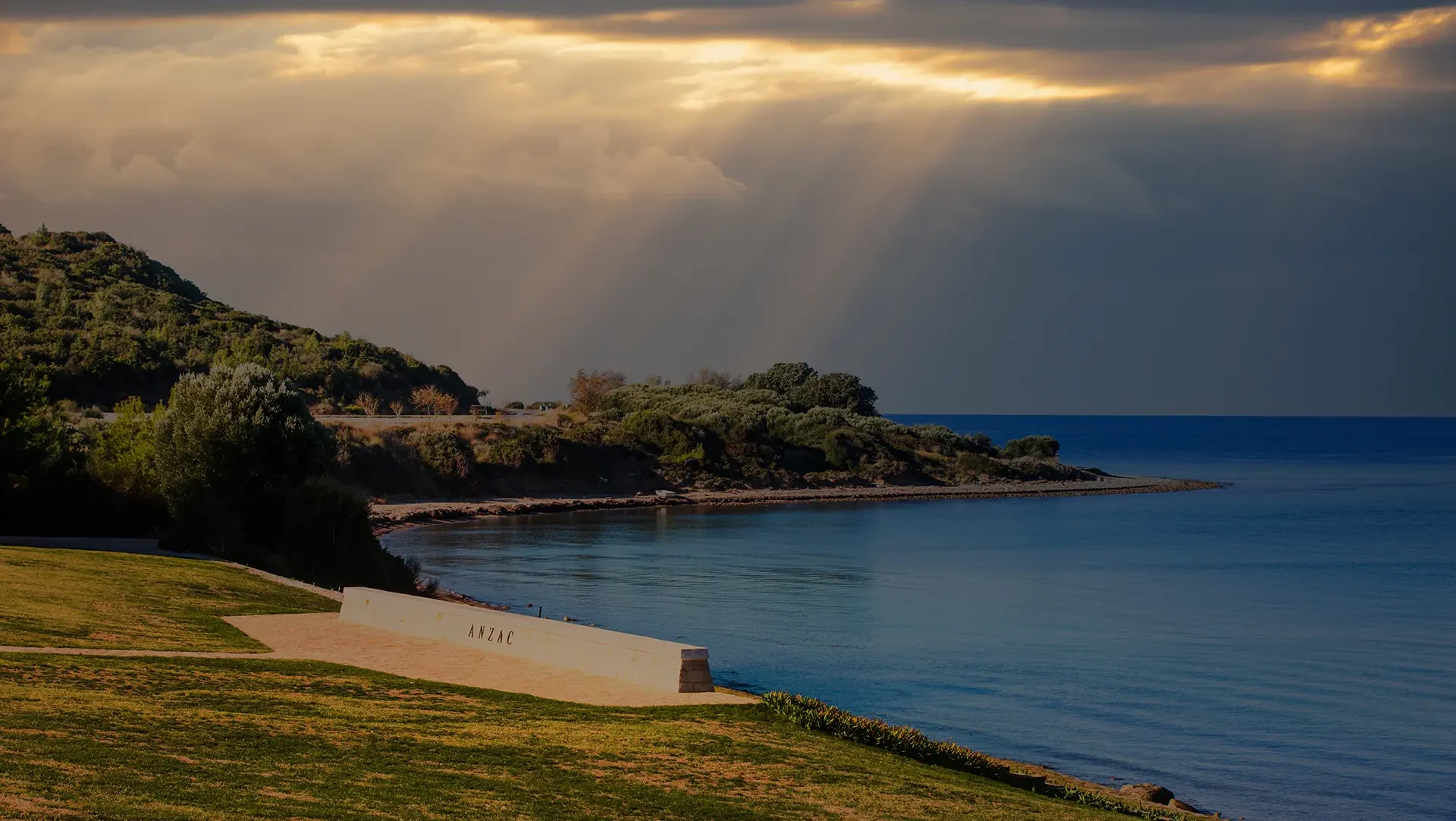
The Aegean Sea lay calm that April morning in 1915. In the darkness, 1500 young men—fathers, sons, brothers and friends—prepared to disembark from three British warships. These were the ANZACs: Australian and New Zealand Army Corps soldiers, ready to face the unknown. Packed tightly into small rowing boats, they were towed towards the Gallipoli Peninsula, each man carrying the weight of war on his shoulders.
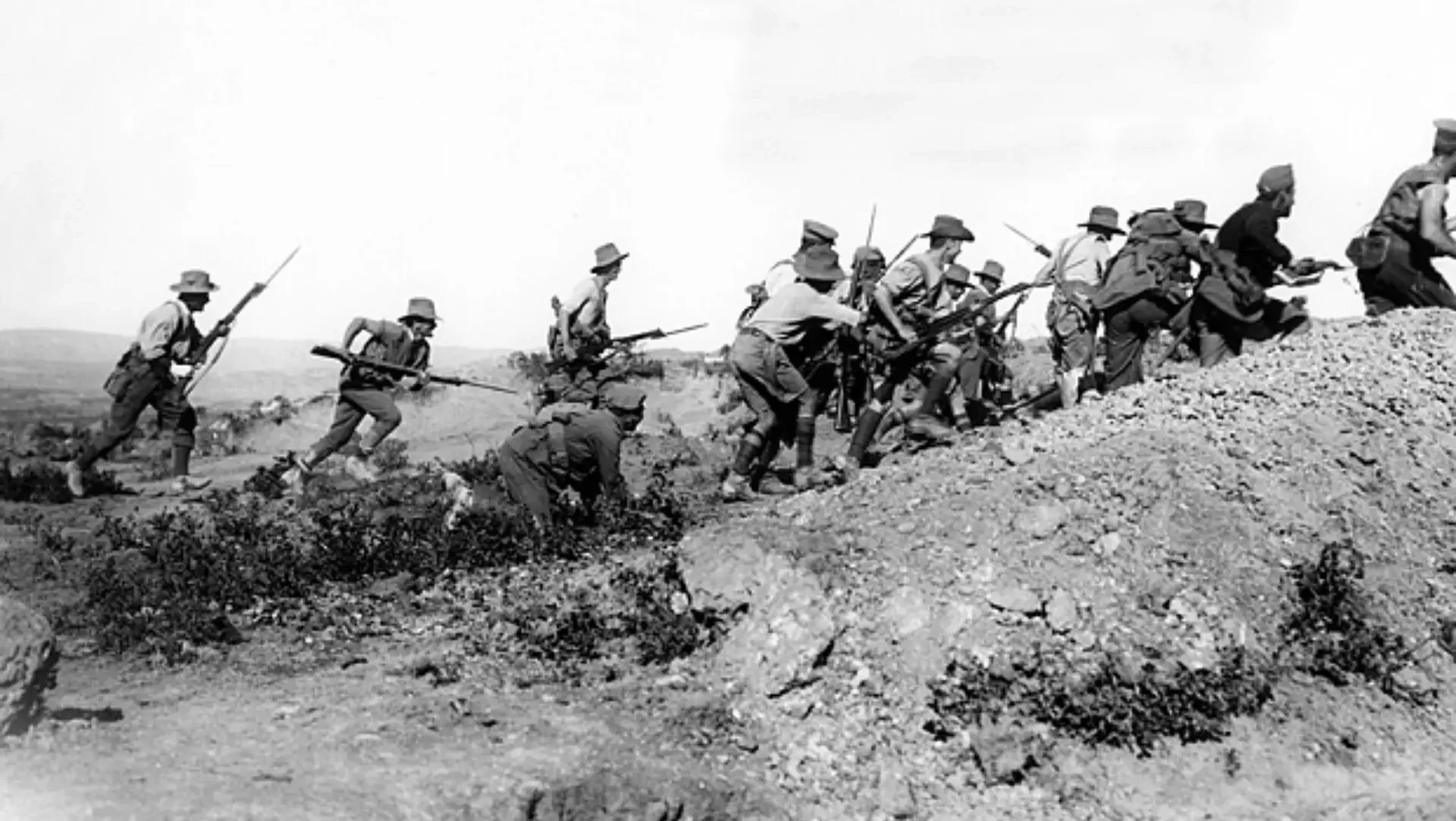
As the boats approached the beach, some men leaped overboard and were immediately dragged under by the weight of their gear. Those who made it ashore faced an uphill battle, scrambling through gullies and scrub, all the while dodging a relentless barrage of Turkish gunfire. The plan was to capture Gallipoli and push towards Constantinople, but the reality of that mission would prove grim.
World War I was just nine months old on April 25, 1915, but the war was already taking a heavy toll. The Central Powers—Germany, Austria-Hungary, Bulgaria and the Ottoman Empire—were gaining ground. The Allies (sometimes called the Entente), including Britain, France and Russia, were desperate for a breakthrough.
Just as Gallipoli became a defining moment for Australia, the crucifixion of Jesus marked a turning point for Christians. Both stories speak to the human capacity for sacrifice and the enduring hope that can arise from tragedy.
The Gallipoli campaign was born out of this desperation. The plan was ambitious: to capture the Ottoman capital, open the Black Sea for Russian ships and launch a larger operation in the Balkans. It appeared sound on paper, but the execution was far from it.
The initial invasion force included 75,000 soldiers, among them 20,000 Australians and New Zealanders. By the end of the campaign, the Allied forces would suffer 43,000 dead and 78,000 wounded. For the ANZACs, the cost was especially steep. On that first day alone, 16,000 men landed and 2000 of them were killed.
The terrain was unforgiving, with steep cliffs and dense bushes offering no cover. Turkish forces held the high ground and rained down bullets on the soldiers below. Trapped on the beaches, the ANZACs had no choice but to dig in and slowly fight their way forward.
The landing was chaotic. Units became mixed up and communication broke down. By all accounts, the operation was a failure and commanders briefly considered evacuation. But Sir Ian Hamilton, the British commander-in-chief, urged his men to hold their ground. His command was simple: “Dig in and stick it out.”
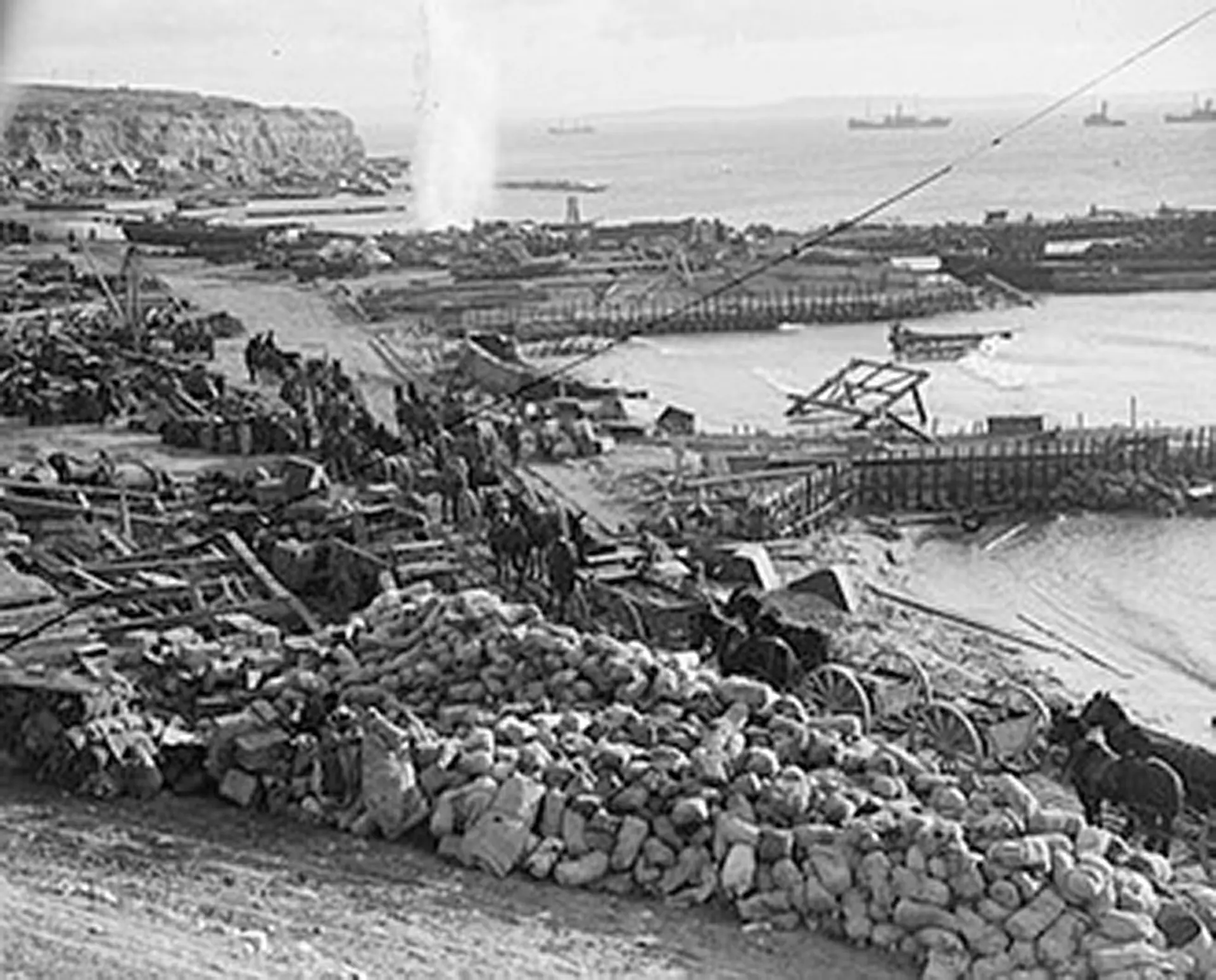
And so, stick it out they did. The ANZACs carved trenches into the rocky ridges, creating a narrow line of defence that became known as Anzac Cove. For months, they endured the stench of death, the relentless sound of gunfire and the constant threat of attack. For many soldiers, Gallipoli became a haunting embodiment of loss and futility. Yet, amid the suffering, a spirit of camaraderie and endurance emerged. This spirit would come to define the ANZAC legend—a story of courage, sacrifice and resilience.
The Gallipoli campaign marked a turning point for Australia and New Zealand. At the time, both nations were still young and struggling to define their place in the world. Australia, in particular, still carried the stigma of its convict past. Many Australians were uncomfortable with their colonial history and their identity as a nation felt uncertain.
Gallipoli changed that. The Melbourne Argus famously proclaimed that, in the ANZAC campaign, Australia had “stepped into the worldwide arena in the full stature of great manhood”. For the first time, Australians and New Zealanders stood tall, their bravery earning them respect on the world stage.
The cost was immense, but Gallipoli became a symbol of national pride. Anzac Day, commemorated by Australians and New Zealanders on April 25 every year, honours those who served and sacrificed. It is a day to remember the fallen and to reflect on the values they embodied: courage, endurance and mateship.
The words of the “Ode to the Fallen” are recited every Anzac Day:
They shall not grow old, as we that are left grow old;
Age shall not weary them, nor the years condemn.
At the going down of the sun and in the morning,
We will remember them.
These words remind us to honour the sacrifices of those who gave their lives. They also serve as a call to reflect on the lessons of history and the fragility of peace.
another day, another hill
On another hill, 2000 years earlier, men were also confronted with death. Onlookers watched in sorrow, confusion and perhaps even disdain as three men were crucified on Roman crosses. The air was heavy with the mingling of anguish and apathy. The scene seemed as futile and tragic as the battles fought centuries later at Gallipoli. For those nailed to the crosses, there was no escape, no possibility of reprieve, no hope for the future. Death, brutal and agonising, was inevitable.
And yet, in the midst of this despair, a mystery unfolded—one that would reverberate across history. Among the three condemned men, One would defy death itself. The story of Jesus’ crucifixion and resurrection is not just a historical account but the cornerstone of Christian belief. It is a narrative that has inspired faith, hope and transformation for millions of people across generations.
For many, the events on that hill represent a profound dividing line: between despair and hope, between an uncertain past and the promise of a brighter future. Jesus’ death was not seen as a defeat but as the ultimate act of sacrificial love. His resurrection three days later was hailed as the definitive victory over death and sin—a moment that changed everything.
While the ANZACs gave their lives to protect their nations, Christians believe that Jesus’ death carried an even greater purpose. His sacrifice was not for one nation—but for all of humanity. It was an act of grace, undeserved yet freely given, to reconcile the broken relationship between God and people.
Jesus’ resurrection was not merely a miracle but a declaration of triumph—over despair, sin and the finality of death. It was the ultimate victory—one that offers eternal life and redemption to all who believe. His rising from the tomb symbolised a new dawn, a living hope that continues to shine through the darkness of human struggle and tragedy.
This story, echoing across two millennia, invites reflection on the nature of sacrifice, the depth of love and the power of hope. Just as the ANZACs’ bravery and sacrifice continue to inspire, the crucifixion and resurrection of Jesus remain a testament to the possibility of life beyond loss, purpose beyond pain and light beyond the shadows of death.
a dividing line
Just as Gallipoli became a defining moment for Australia, the crucifixion of Jesus marked a turning point for Christians. Both stories speak to the human capacity for sacrifice and the enduring hope that can arise from tragedy.
For Australians, Gallipoli represents the birth of a national identity—a moment when a young nation proved its mettle on the world stage. For Christians, the resurrection symbolises the triumph of life over death and the promise of a better future. To the Christian, that day of death and resurrection represent the dividing line between an uncertain past and a glorious future. With Christ’s resurrection, they could now stand tall. God had been vindicated. Eternal life was assured.
While it is necessary for us to be continually reminded of the events that took place on April 25, 1915—more than 110 years ago—how much more do we need to be reminded of the events that took place outside Jerusalem 2000 years ago? In the morning and at the going down of the sun, we will remember Him.
Lest we forget.