
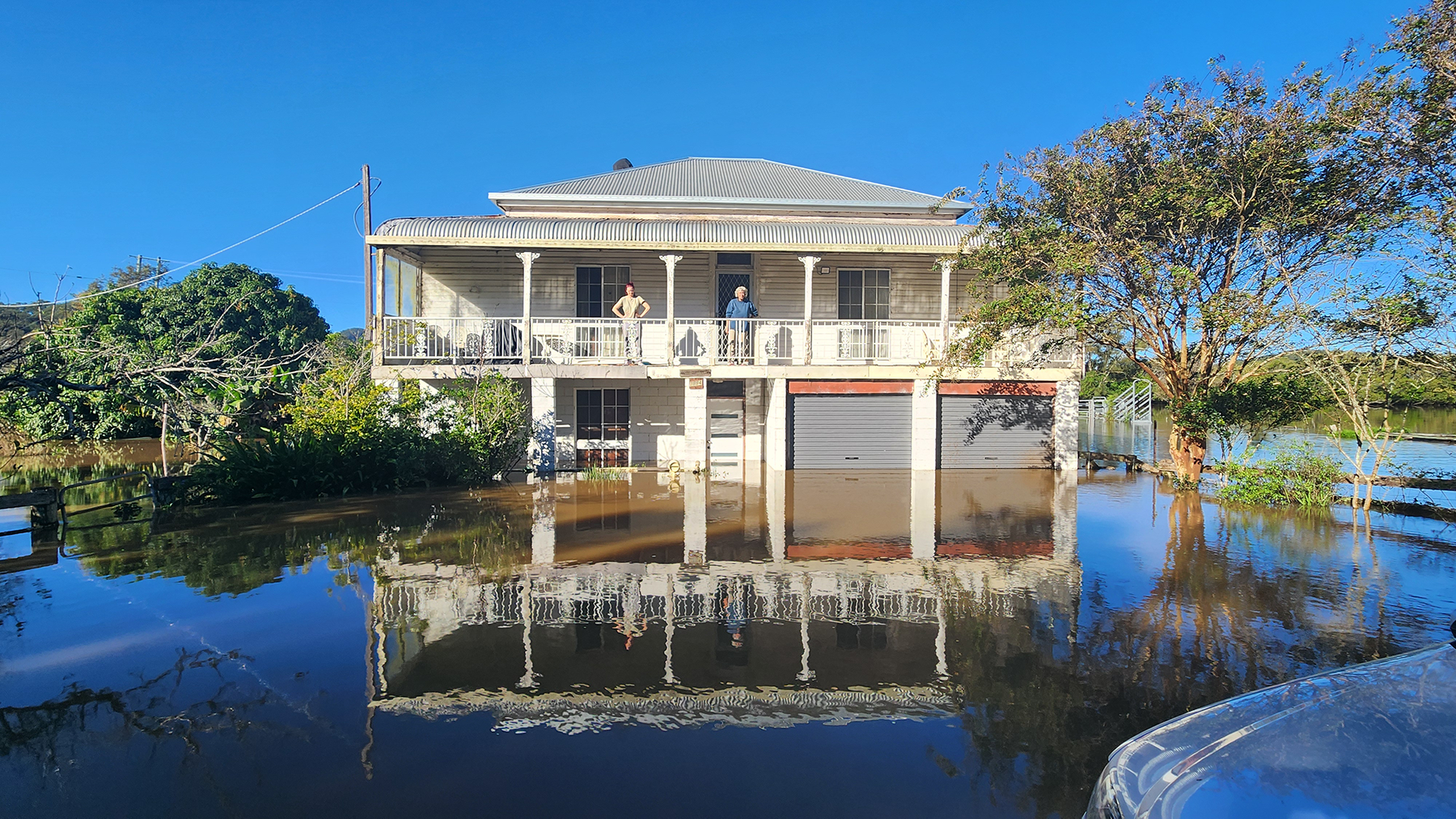
The Kempsey regional community is no stranger to floodwaters. The lowlands of NSW’s Macleay Valley provide locals and visitors with beautifully winding riverside roads, luscious green grazing fields, abundant birdlife and great fishing. However, the area is also known for its stilted riverside homes, raised driveways, low-lying fields and flood mounds—all established to reduce potential destruction from rising rivers in peak rain seasons.
In May, predicted rainfall told locals to prepare for flooding. Necessary precautions were made, furniture was moved upstairs from the lower levels, farming equipment was stored in sheds, cattle were moved to higher fields and schools closed.
The rain fell. It fell hard, and it fell for longer than anticipated in an area far greater than usual. From Yamba to Palm Beach, torrents of rain thrashed more than 670km of coastline and dumped more than 480mm of rain on Kempsey in one day.
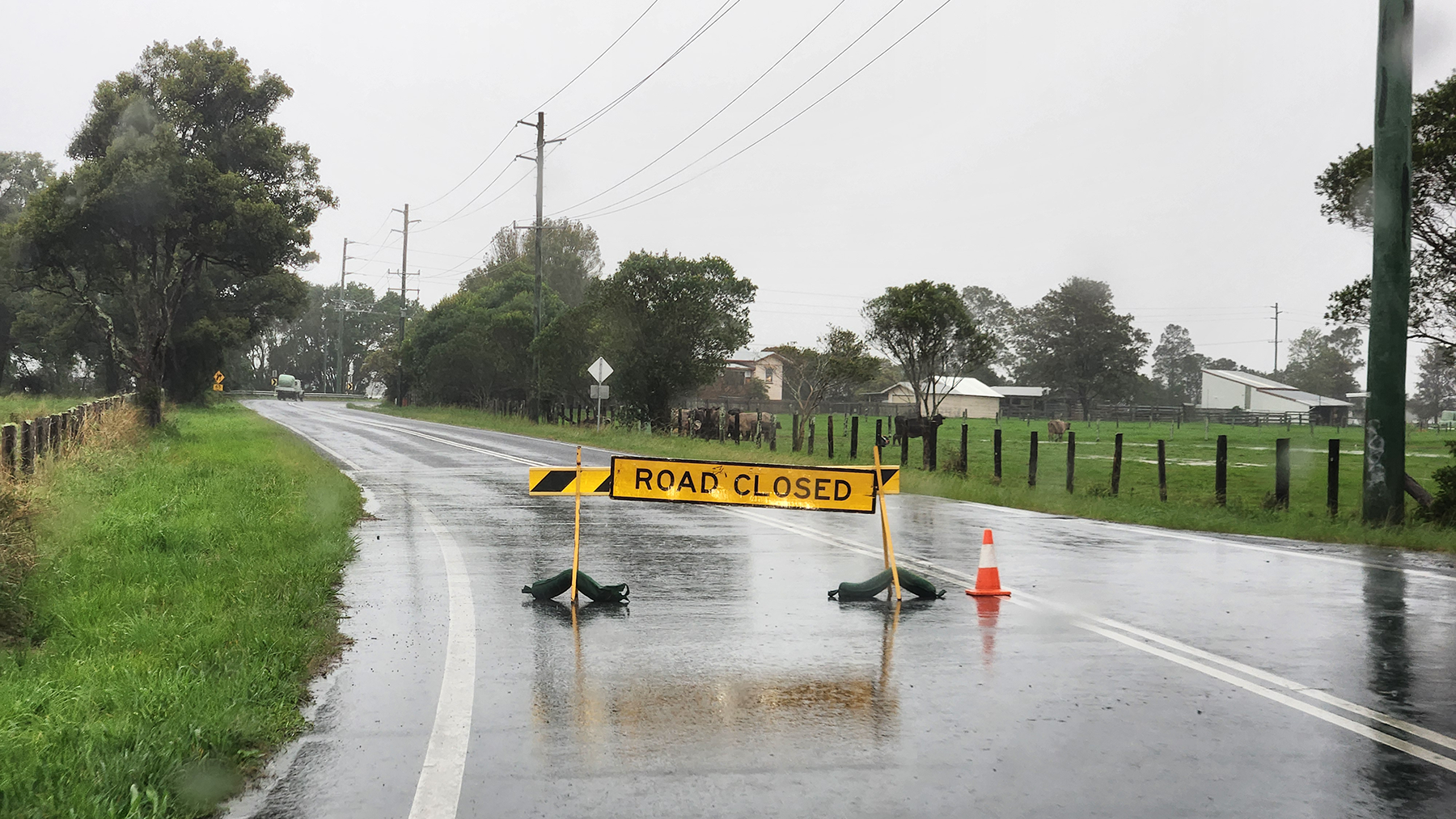
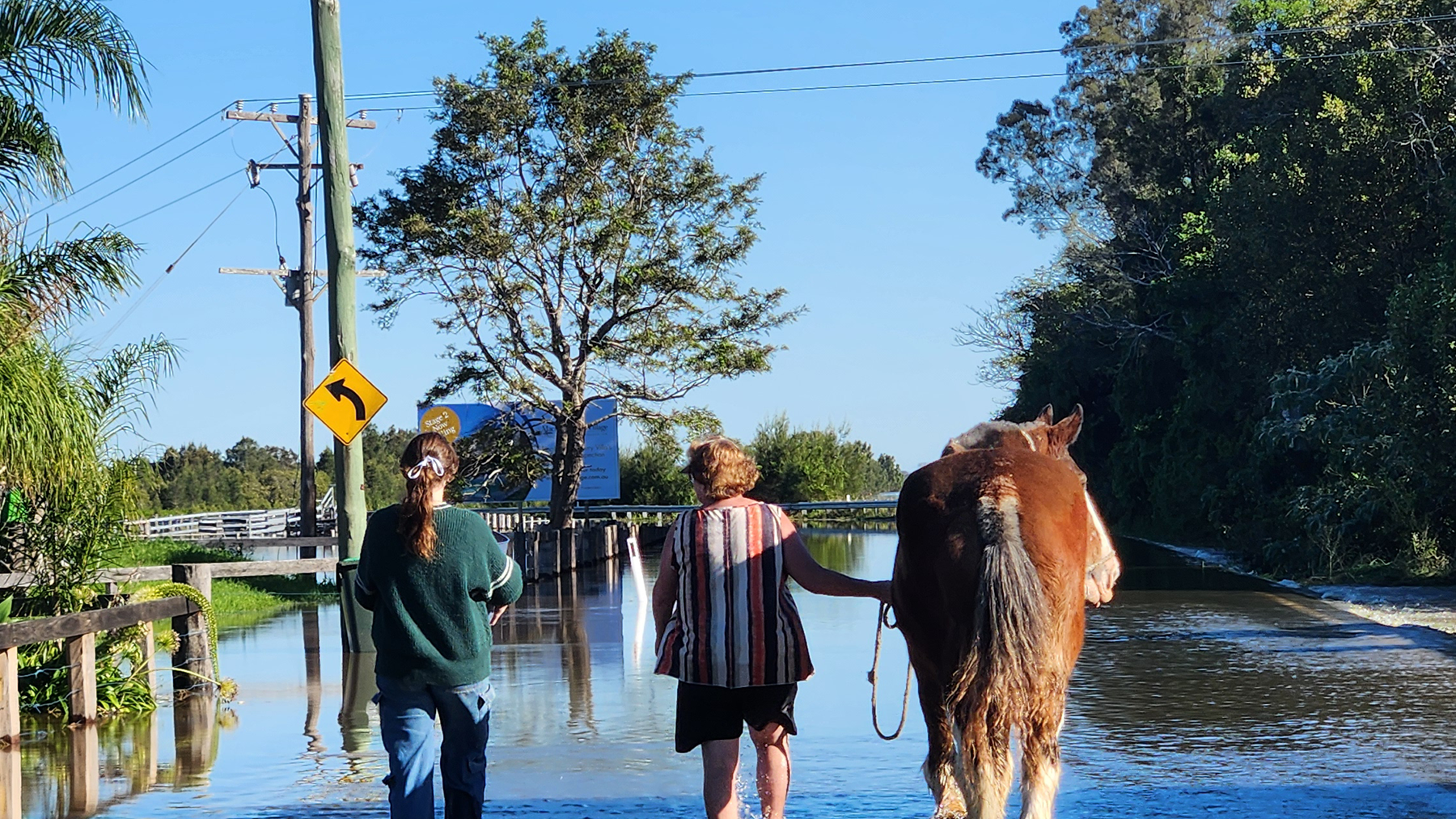
As the rivers around Kempsey rose and began to breach their banks, the ground also swelled. Having had months of intermittent rainfall, there was nowhere left for the water to go. In a very short period, backwater from nearby tributary creeks began to flow into the nearby lowlands and Kempsey farmers suddenly found themselves faced with more than 43,000 hectares of fields and homes submerged underwater.
As a new member of the Kempsey Seventh-day Adventist Church, it was awe-inspiring to watch as people sprung into action. Two years of volunteer leadership, while waiting for a pastor to lead the church, had clearly given Kempsey the ability to step up, organise itself, and “get on with the job”.
On Friday, May 23, the Kempsey Seventh-day Adventist Community Services Disaster Response team met with local ACS leaders and incoming NSW ACS director Kyle Morrison via Zoom to discuss available resources and how they planned to respond to the rising flood crisis. By May 26, Morrison along with five pastors and 13 volunteers aged from eight to 80 arrived from Griffith, Canberra and Bowral to assist with the Kempsey disaster response and recovery.
Local South Kempsey Seventh-day Adventist Aboriginal church member and Avondale University student Matthew Bottin was one of the first to volunteer to help.
“I couldn’t just sit and do nothing,” he said. “I reached out and asked if I could open the South Kempsey church to provide a safe space for community members to come, share a meal and connect. I wasn’t sure what to expect, but the response revealed a deep need—for both food and fellowship. In only 48 hours more than 50 people came to the church for meals.
“As the flood response moved from emergency relief to recovery, I joined the ACS team. I helped coordinate the distribution of food and essential supplies to the local community, generously donated by businesses and churches in the region. It was deeply meaningful to assist people in practical ways—especially the farmers, many of whom were struggling to cope.
“One moment that stayed with me was seeing the tears of hard-working farmers, a sign that our efforts were bringing comfort and real support. For me, this is what it means to be the hands and feet of Jesus: to love our neighbour in word and deed.”
Kempsey ACS disaster response leader Karina Kunz took charge on the recovery operations, quickly determining the ongoing needs of the community and which of those needs could be met by the capabilities and resources of the ACS team. Volunteer teams were created and anyone who was able and willing to lend a hand was encouraged to join.
Kunz said, “When our disaster management team started to plan our response, should a disaster hit our community, we wanted a plan that would allow anyone to volunteer. Seeing sons working alongside their fathers in the Mud Army; young girls helping in the Food Army or Food Pantry; the Hug Army and Prayer Warriors coming together to look after our wellbeing; the Truck Army delivering burgers to our farmers; and our Kids Army; all working together to bless our community, and in the process blessed me so much more.”
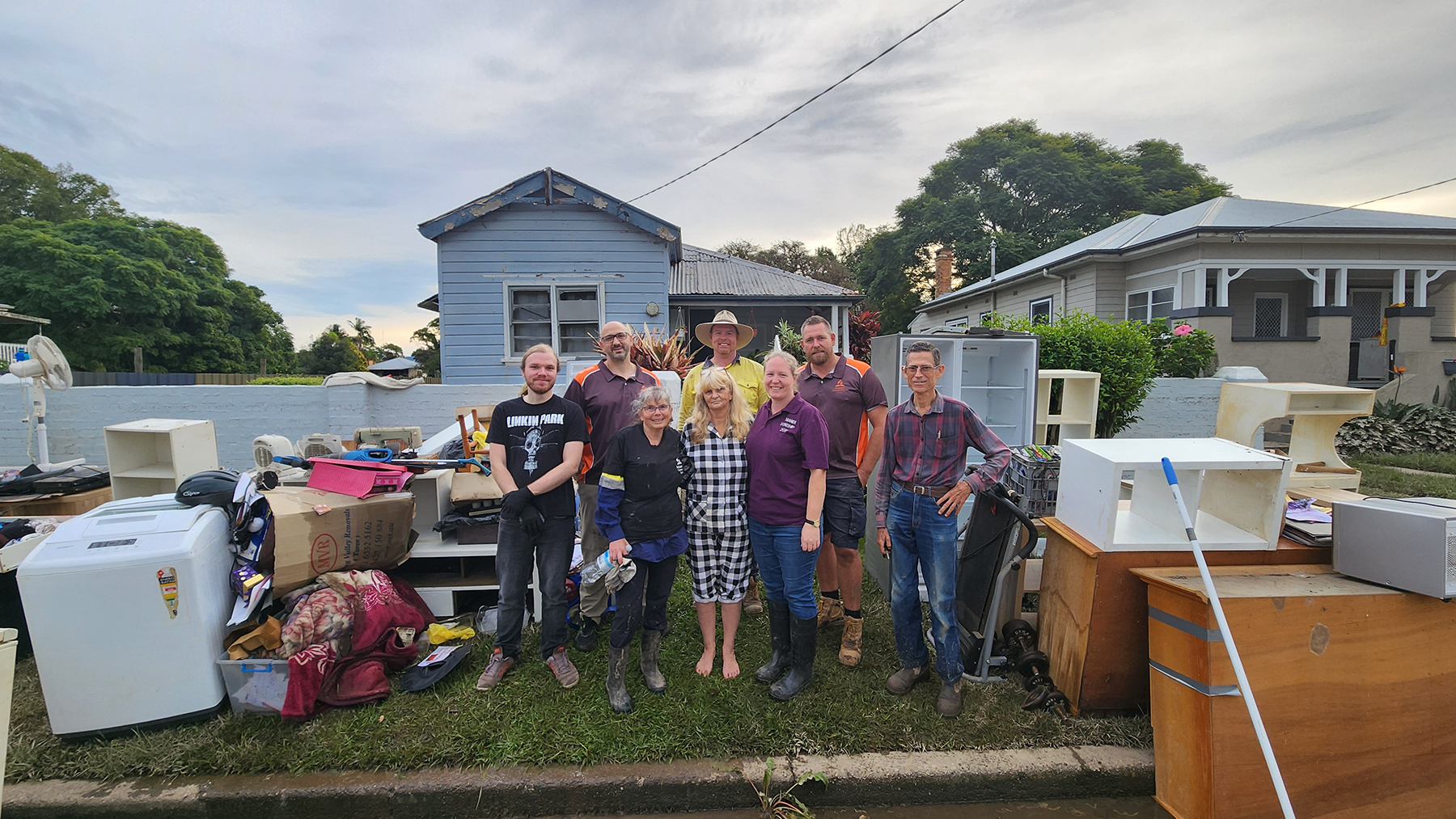
Adopting familiar Aussie vernacular, we set up a Mud Army (clean-up crews led by pastors Steven Teale and Nicholas Conduit), Food Army (led by our church youth group to cook meals for our volunteers and prepare pre-packaged meals for community members), a Truck Army (transporting food and groceries), a Prayer Army (a daily meeting of prayer warriors to pray for our volunteers and flood-affected community), a Kids Army (making thank you cards and gifts for volunteers and first responders) and the Hug Army (providing psychological first aid and care to our volunteers and flood victims).
As everyone worked around the clock, our church base was a hive of activity. We received bags of groceries and household items from Port Macquarie and Coffs Harbour Seventh-day Adventist churches to support our efforts, in addition to 210 food hampers from Food Bank. We received emergency funding from ACS to purchase cleaning equipment for our Mud Army to enter flood-affected homes and begin the dirty work of furniture removal, hose-outs and heavy lifting for our community.
Early afternoon on Tuesday May 27, Federal Member for Oxley and shadow assistant minister for emergency services Michael Kemp, heard about the impactful work of the Kempsey ACS team and contacted us with a call for help. The not-for-profit organisation The Big Umbrella had driven a food truck from Melbourne and parked at Gladstone to begin cooking free burgers for the flood-affected members of the community in the lower Macleay.
Kemp, an advocate for farming families, knew that local farmers would be slaves to their farms during the flood recovery; never leaving their cattle or stopping for meals as they rescued their livestock from flooded fields and isolated flood mounds. Kemp needed a team to deliver hot meals to labouring farmers immediately.
Kempsey ACS answered the call and rallied their troops, ready within hours for the first meal delivery of the evening. For the next four days, Kempsey church members partnered with the team from The Big Umbrella and assembled two teams, twice a day (lunch and dinner), to deliver more than 150 hot burgers and food hampers and household items to isolated farming families up and down the Macleay.
Carly, one of the food delivery volunteers, shared her experience.
“Being involved in the disaster recovery was such a fulfilling and eye-opening experience. Hamburgers seemed like a minor act among the big jobs of SES rescues, house clean-ups, and cattle-saving, but it was more than just a delivery. It was about the interactions and the listening ear that so many seemed to need. A simple gesture—standing at a stranger’s door or interrupting them, hard at work with a hot burger and saying, ‘Here’s lunch!’—is quite rare, but it was received incredibly well.
“The disbelief, gratitude, relief and emotion said it all. ‘I’ve been living here for 36 years, and no-one has ever done something like this,’ one man shared. Another woman opened the door and was brought to tears, speechless, when she realised the simple offer on hand. A burger and a hug seemed like more than enough.
It’s incredible how much a disaster can destroy a town, but restore a community. This has been an absolutely rewarding experience, and I feel so blessed to have taken on this opportunity,” reflected Carly.
When The Big Umbrella returned to Melbourne on May 30, our church members continued cooking and delivering meals and food hampers with groceries for an additional week, taking the time to stop and chat with farmers, their wives, children and elderly family members.
One community member said, “The first evening you arrived with burgers we were actually starting to run out of food and yesterday was our first opportunity to get into town for groceries. Thank-you for looking after us when we didn’t have much. Nobody checked on me through the whole flood or post-flood until you started bringing burgers, thank-you.”
Trudging through waterlogged fields to deliver hot food to local farmer Tony and his neighbour, he hugged us tight and with tears washing lines down his dirty face he said, “No-one does this. I don’t know how to respond to this. I’m at a loss, this is just so much. I don’t know how to accept help. I don’t have family; I help my neighbour and he helps me. we usually just do it ourselves.”
The opportunity to offer a helping hand during times of disaster is a privilege we are granted only because we’re also there in times of peace. The mission of helping your neighbour begins long before the disaster strikes. Working weekly in our church-funded food pantry gives our church members an opportunity to know our community. We live here, work together, volunteer side-by-side, send our children to local schools and shop locally. It is because we spend this time during the week that our presence in times of disaster is welcomed. We are already known, and we are already trusted.