

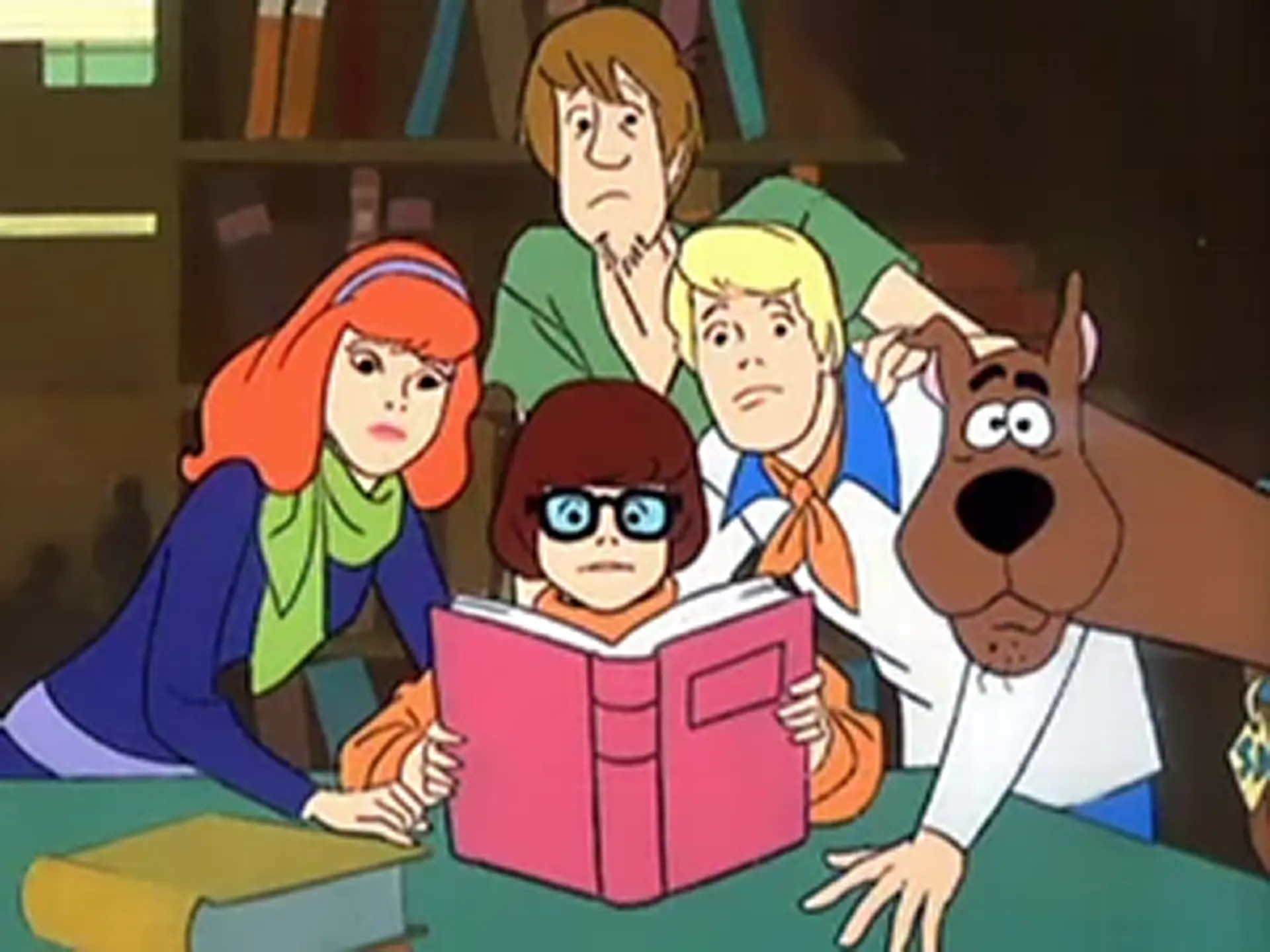
In my opinion, the ’90s were the peak of children’s television. In Australia, many kids (including me) loved racing home from school to turn on the TV and watch cartoons. One of the popular cartoons was Scooby-Doo, Where are You! Who didn’t love helping to solve the problems that the Mystery Inc encountered in each episode? A group of teenagers solving crimes with a wacky talking dog sounds like a silly concept on paper . . . but it worked.
Each episode was an investigation of a spooky mystery that posed a challenge for the Mystery Gang. At the beginning of the episode, a ghost or a monster would menace people or cause a crime. By the end of each episode, these phantoms would be exposed as merely well-disguised criminals. It was comical to watch Scooby-Doo, petrified in every episode, leap into the arms of Shaggy. Even more enjoyable was finding out how the Mystery Inc detectives exposed the lie.
People reported being stunned to silence as they listened to messages purportedly from their loved ones
Paranormal activity, communicating with the dead and the idea of existence beyond the grave have intrigued people for millennia. Movies and literature have made millions on these themes. In times of grief and loss, people seek answers about what is happening to their dearly departed. Where there has been suffering, there has never been a shortage of people ready to claim they can communicate on behalf of the dead.

spooky origins
During the 1840s, Maggie and Kate Fox became nationwide sensations across the United States with their claimed ability to communicate with the dead. The “rappings”, as they were described, promised to reconnect the living with the dead. People reported being stunned to silence as they listened to messages purportedly from their loved ones. Many were thoroughly convinced by the communications the Fox sisters were providing. People found encouragement in times of great distress.
As the years rolled by, the spiritualist movement grew in intensity. Mediums, palm readers and astrologers grew in numbers, all promising to reveal the future, commune with the dead or give supernatural guidance. As the Fox sisters grew more famous, spiritualist churches formed all over the United States, England and Australia.
So compelling were these experiences with the dead that séances began to be held by the First Lady Mary Todd Lincoln in the White House. Queen Victoria also held a séance after her husband passed away in 1861. It then came as a great shock to the American public when Maggie Fox eventually confessed publicly that it was all a hoax. In 1888, the New York World recorded a statement she made to a crowd:
“When I began this deception, I was too young to know right from wrong. That I have been mainly instrumental in perpetuating the fraud of Spiritualism upon a too-confiding public, many of you already know. It is the greatest sorrow of my life.”
There is a serious problem if we accept everything we’re told. It is frightening how quickly people will believe what they see or hear. In our present cultural moment, with the increase of AI-generated content and the preponderance of online scammers, it is more important than ever that we become critically minded. Skills of investigation, analysis and research are not only helpful—they are necessary. Humans have always needed to cultivate the practice of using logic and reason to analyse and critique what is presented before their eyes. Today is no different.
the escape artist
Around the time of the height of the Fox sisters’ fame, Erik Weisz was born to Hungarian parents. His father, Mayer Samuel Weisz, was a Jewish rabbi. Erik’s mother, whom he deeply loved, was Cecilia. The family moved to America but never learned English, choosing instead to minister to immigrants who spoke Hungarian.
As Erik got older, he developed an interest in learning magic tricks and testing the boundaries of the human body. He was a charismatic individual and a natural-born entertainer. He began travelling and performing shows, adopting the stage name of a French magician he admired: Harry Houdini.
Harry is known for his death-defying escape acts, his career as an actor and his work as an entertainer. When it all began, though, his amazing stunts were not what first put his shows on the map. His travelling act became a sensation when, alongside his wife Bess, he created a segment in which they would appear to consult with the deceased. During the show, Bess would “channel” individuals and speak to the crowds. Audiences were amazed and spellbound as intimate details were revealed. Behind the scenes, Harry and Bess would stop at the town’s cemeteries, note the names of the recently deceased and gather key information. The grieving, after all, are often more willing to believe.


Over his career, Houdini formed a close friendship with well-known author Arthur Conan Doyle, famous for his short stories about a sleuth with an almost supernatural ability to uncover facts: Sherlock Holmes. After Doyle’s son died in World War I, he and his wife turned to spiritualism for solace and answers.
Around the same time Doyle lost his son, Houdini lost his mother, Cecilia. Jean, Doyle’s wife, offered Houdini the chance to speak with his deceased mother through a séance. The three met together and Jean began to enter a trancelike state—which Doyle described as very convincing. As she convulsed, Jean’s hand began scribbling a letter—page after page—addressed to Houdini from Cecila, his mother. When she finished, Houdini read the letter and immediately realised it was not from his mother.
Despite his grief, Houdini noticed several problems. First, his mother never learned English, yet the letter was entirely written in English. It also mentioned crosses and made numerous Christian references. His mother had been a devout Jew until the day she died.
from entertainer to activist
This moment marked a new trajectory for the entertainer, and he became fiercely critical of anyone claiming to communicate with the dead. Houdini’s mission became to expose mediums, astrologers and spiritualists as frauds. In 1926, Houdini appeared before Congress to testify in support of a bill to criminalise fortune-telling and fraudulent mediumship. He introduced himself, “My name is Harry Houdini. I am an author and an investigator of psychic phenomena, as well as a professional magician and exposer of fraudulent mediums.”
Houdini developed an alliance with Rose Mackenberg and began exposing phony spiritualists in undercover operations. Over the six years they worked together, they exposed hundreds of fraudulent mediums and made many enemies. At congressional hearings, Houdini recounted these stories and dramatically offered $US10,000 cash to any medium who could genuinely consult the dead and reveal what was written on a note of paper in his pocket. No-one ever claimed the prize.
Together, Rose and Harry’s testimony in favour of the bill was ultimately not enough to secure its passage due to problematic terminology. What it did produce, however, was a vehement backlash from spiritualists across the country, many of whom publicly declared that Houdini’s death was imminent.
None of us are immune to being fooled by what we see or feel. Like the comical depictions of fearful Scooby-Doo or the very real longing of people consulting a medium in times of heartache, it is not uncommon to suspend logic and critical thinking in moments of crises.
Jacob Ugljesa
Houdini’s concern was that people failed to use reason and logic when confronted with illusion. Just because something happens on a stage—or today, on a screen—does not mean it is real. Many proclaimed Houdini himself to be supernatural. Ironically, Sir Arthur Conan Doyle, who wrote about a detective skilled at carefully weighing evidence, persistently described Houdini as possessing supernatural powers, despite Houdini’s repeated attempts to tell him otherwise. Anyone, even the wisest, can make errors of judgements when they are vulnerable.
None of us are immune to being fooled by what we see or feel. Like the comical depictions of fearful Scooby-Doo or the very real longing of people consulting a medium in times of heartache, it is not uncommon to suspend logic and critical thinking in moments of crises. The biblical Psalmist said, “Even though I walk through the darkest valley, I will fear no evil, for You are with me” (Psalm 23:4). For me, passages like this serve as a reminder to stay grounded, even when emotions run high. They encourage me to pause, reflect and approach claims and experiences with discernment. Knowing God is present in our darkest moments helps steady our thinking and prevents us from chasing easy comforts.
When we are at our most vulnerable, it is especially important to take steps to protect ourselves. Personally, I begin by reflecting and resisting the urge to reach for easy answers. In the Bible, the apostle Paul’s advice for people was to pursue maturity and wisdom rather than being “tossed back and forth by the waves and blown here, and there by every wind of teaching (Ephesians 4:14). This reminds me that clarity often comes through patience, care-ful thinking and confronting difficult truths head-on. Saying goodbye to the ones we love and navigating grief is never easy. Yet the strong and wise person confronts fear honestly, knowing that the truth is often found through deep soul-searching and the courage to engage life’s challenges.
Jacob Ugljesa is the pastor of Gold Coast Central church in Queensland, Australia. He enjoys writing, reading and spending time with his family.