

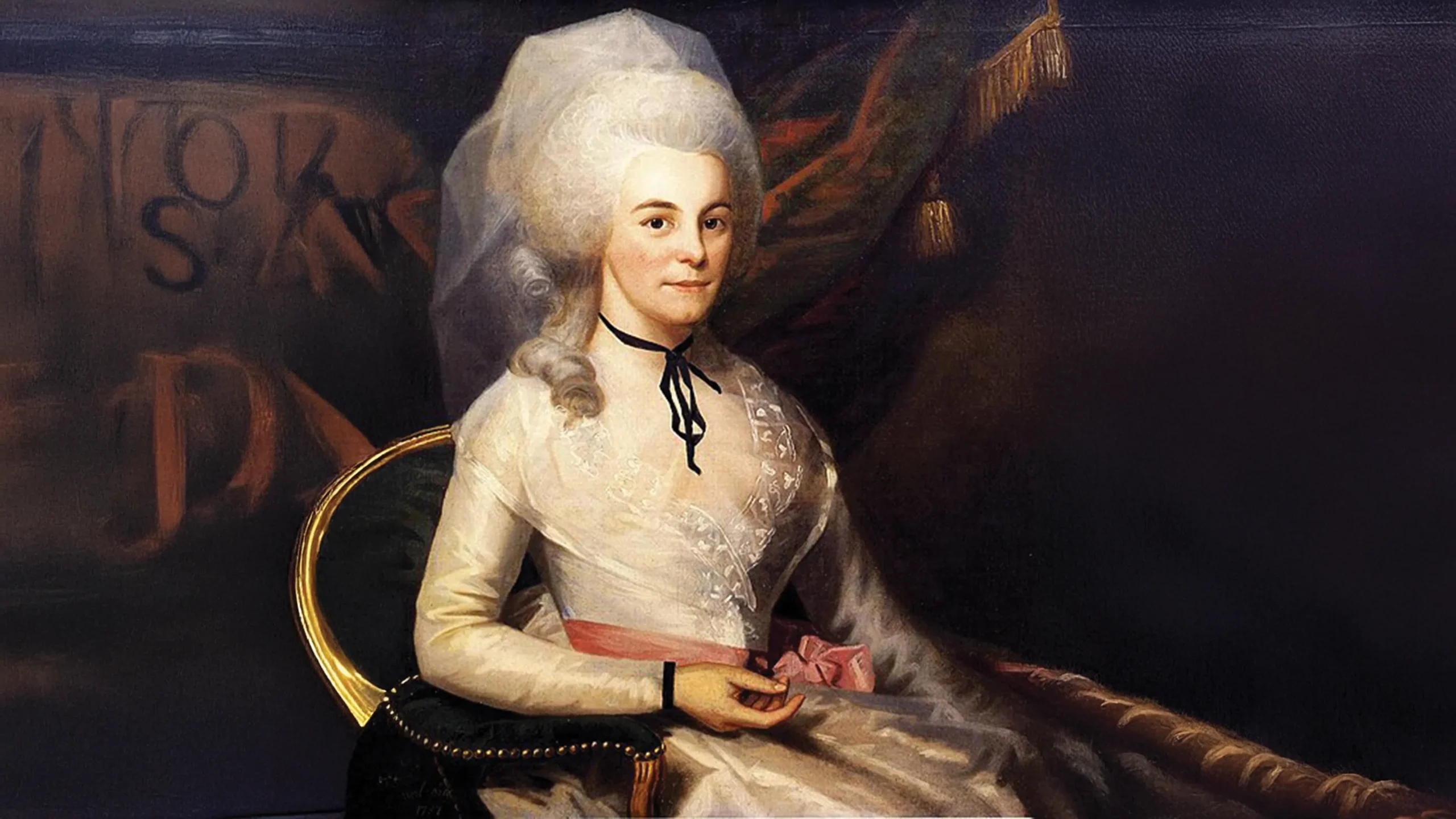
Elizabeth Schuylerwas born on August 9, 1757, in Albany, New York to wealthy landowner and Revolutionary War general Philip Schuyler and wife Catherine Van Rensselaer Schuyler. Van Rensselaer came from one of the richest and most politically influential families in New York. Eliza, as she was called, had 14 siblings but only seven lived to adulthood. Being the second child and daughter, Eliza was a natural opposite to her older sister Angelica. Where her sister was happy to learn the art of the household, Eliza was described as a bit of a tomboy, strong willed and impulsive. Her parents did not shy away from having a strong-willed daughter and she became competent in sewing and reading. Her father often took her with him when he travelled for meetings, which set Eliza up to be comfortable inside the home and in the outdoors. She also received a good work ethic and strong faith from the Dutch Reformed Church that would get her through the good times and the bad.
young love
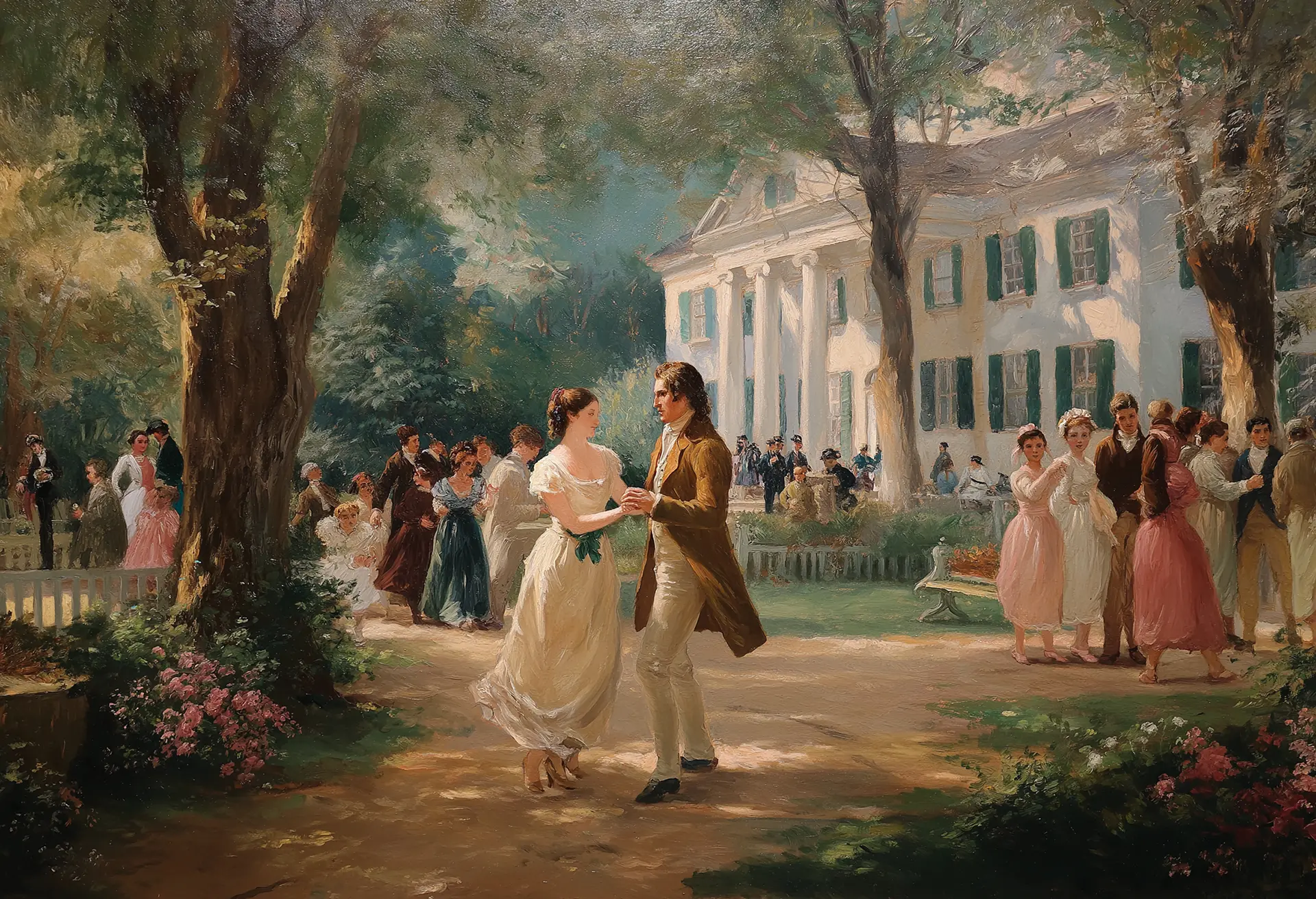
In the year 1780, Eliza went to Morristown, New Jersey, to stay with her aunt. There she met George Washington’s aide-de-camp, Alexander Hamilton. She did not like him much at first, but through persistence, their love soon became a thing of poetry. They exchanged letters every day and they were married less than a year after they had met.
Alexander was ambitious, never seeming to run out of energy and Eliza, with her passionate nature, was an excellent match for him. She helped him with his political writings, including a 31-page letter to Robert Morris which demonstrated Alexander’s extensive understanding of government finances. They were socially active, often attending theatre, parties and other social events. In 1789, Alexander became Secretary of the Treasury under George Washington’s presidency and their social life increased even further.
the good wife
As one of the founding father’s shaping the foundation of young America, Alexander’s time was in great demand. Eliza’s steadfast support was invaluable; she became the intermediary between her husband and his publisher when he was writing The Federalist Papers. When Alexander needed to write essays in defence of his ideas for the financial system he helped establish, Eliza assisted him by copying out portions of his defence and when he needed to help write Washington’s farewell address, Eliza stayed with him so that he could give the speech out loud.
In 1797 Alexander was rumoured to have had an affair. Eliza refused to believe he would do such a thing and as she was pregnant with their sixth child at the time, believed the rumours to be nothing more than slander from his enemies. However, Alexander was facing charges of public misconduct and the only way to prove the charges wrong was to confess to the adulterous affair as well as the hush money he paid the woman’s husband. His public confession came in the form of what is now known as The Reynolds Pamphlet. In response to this betrayal of their marriage vows, Eliza moved herself and their children in with her parents. Not long after the move, she gave birth to a healthy baby boy. Within weeks of the birth, Eliza came to terms with her husband’s error in judgement and reconciled with him.
tragedy strikes
In November of 1801, Eliza and Alexander’s eldest child, Philip, a young man of 19 with a bright future, participated in a duel and was shot. He was taken to Eliza’s sister’s house where both parents rushed to his side. They stayed with him through the night until finally, he succumbed to his injuries. In June of 1802, Eliza gave birth to their eighth child, a boy who they named Philip in honour of his late brother.
In the same year, Hamilton Grange, an estate commissioned by Alexander set in a picturesque setting on the edge of Manhattan, was completed and the family moved in. There was plenty of space on the large property for their children to run around. Unfortunately, Eliza would not be able to share this house with Alexander for long as in the year 1804, Alexander would also participate in a duel and like his son, also died as a result, leaving the debt of the family estate for Eliza to manage. But widowed with young children, there was no way she could afford to pay the debt, so the bank foreclosed on her and put the estate up for auction. A number of friends heard of Eliza’s plight and pooled their money to buy the estate at auction, then sold it back to Eliza at a price she could afford. Thus, miraculously, she was able to remain at Hamilton Grange with her children.
a force for good
Eliza could have chosen to simply stay on the estate and raise her children quietly. However, she was already involved in charity work to support widows with young children and, given her own difficulties, she and several other women founded the Orphan Asylum Society in 1806. A force of nature, Eliza continued to raise her children while also raising funds, collecting goods and helping to oversee the care and education of more than 700 children during her time as both the second director (vice president) and director of the Orphan Asylum Society. She never forgot her husband and was the main driving force in keeping his legacy alive. It is believed that much of the reason we know who Alexander Hamilton is today is because of his dutiful wife. It was Eliza who convinced the government to buy and publish his papers. It was Eliza who persevered until his biography was published and it was Eliza who ensured her late husband’s contribution to the founding of the United States of America was not diminished or forgotten.
Eliza Hamilton lived a life of purpose. Her influence lives on today through the musical Hamilton. Inspired by the life of Alexander Hamilton and written by Lin Manuel Miranda, Hamilton features Eliza as a steadfast support of Alexander and, in its conclusion, highlights her work with the orphans. Eliza’s contribution to the founding of the Orphan Asylum Society led to her being inducted into the philanthropy section of the National Museum of American History, which showcases the generosity of the Americans who formed the nation. The organisation itself is still active today.
In 1854, at 97 years old, after surviving her husband by 50 years, Eliza passed away. She had been the last living link to the founding fathers and was greatly respected. She was interred near her husband, her sister and her eldest son Philip. Eliza Hamilton lived with energy, generosity and unswerving devotion to her beliefs. I think we can all say with the utmost confidence that hers was a life well-lived.