
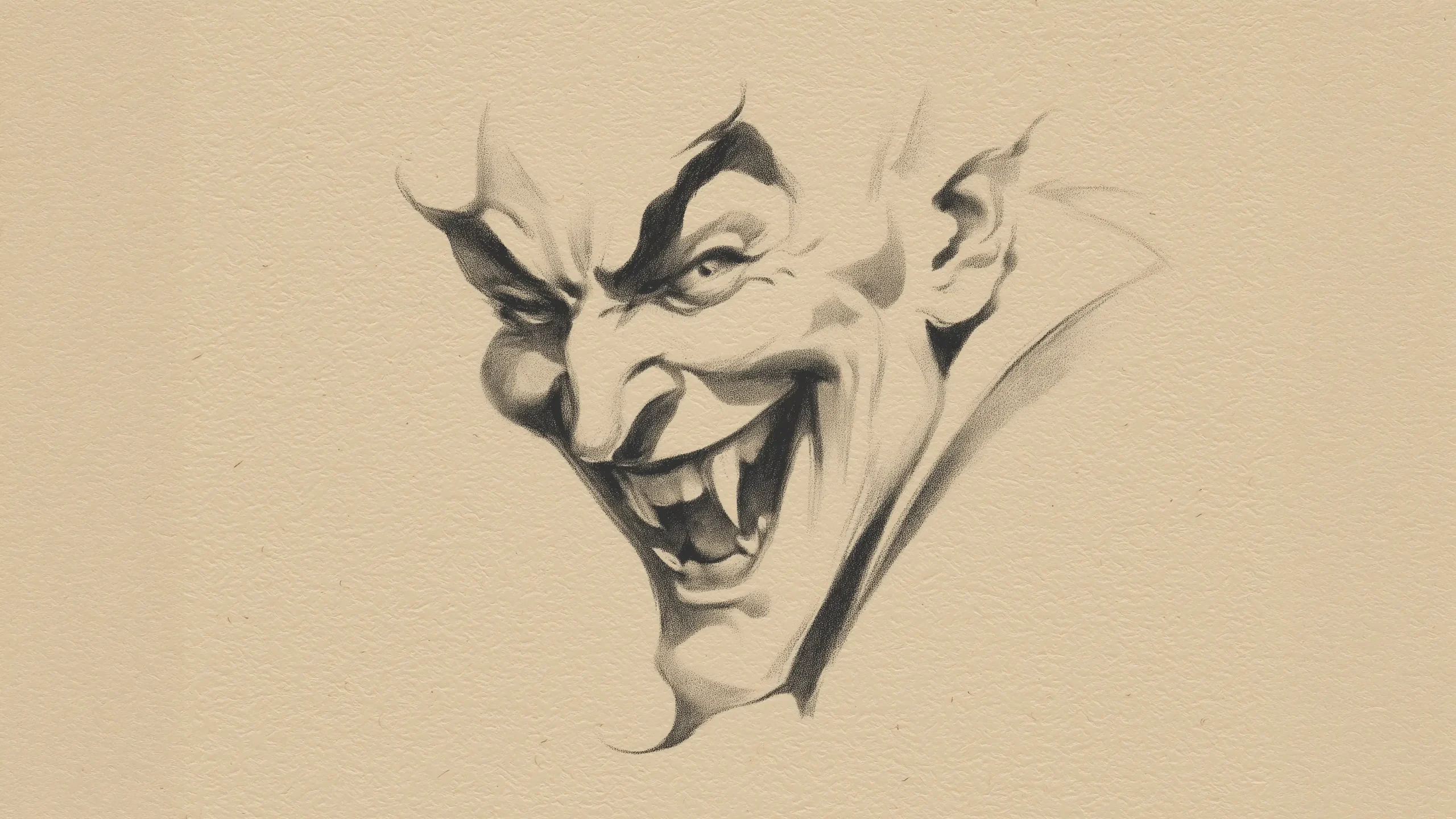
In the Middle Ages, long before Dracula took up residence in Transylvania, people in parts of Eastern Europe believed that vampires represented a very real threat to village life. It was thought that any interference with a burial—say a cat leaping over a corpse—could prevent a soul from moving on to the afterlife. The result: an undead villager returning to bring disease and death. Why can’t people control their pets?
As you might imagine, residents of vampire-plagued villages would want to be rid of the creature. In order to do that, someone would need to be able to identify the monster. Vampire hunters throughout history, in both folklore and works of fiction, are a type of outsider due to their special abilities to identify and kill the dangerous creatures.
Among the varying groups in history thought to have the power to see and expel the vampire was the Bulgarian sâbotnik. According to “folk etymology” sâbotnik was thought to refer to someone “who is born on Saturday.”1 The reason for Saturday, as opposed to, say, Monday, was that it was a day connected to the Sabbath. Sabbath was a day “bounded by taboos” which led early Christianity “to distinguish itself from Judaism” by embracing Sunday as Sabbath instead of Saturday.2
While Sunday carried its own lore (such as that children conceived on Sunday would be born with leprosy or epilepsy), it was the seventh-day Sabbath that bestowed “semi-supernatural powers” upon those who entered the world during its hours.3 Even vampires were said to not be able to rise from their graves on the seventh day.4 Even though a sâbotnik was an outsider, they were important in the protection of the village from the forces of darkness.
Now, upon reading this bit of ancient folklore, I may or may not have done a Google search (just for fun, mind you) to see what day I was born on. Tragically, it was a Tuesday. However, the seventh-day Sabbath holds out the prospect of vampire hunting even for those of us not in the ranks of the sâbotnik. As a matter of fact, there are literally millions fighting a specific type of vampire with the ancient biblical concept of the Sabbath. To discover how they are fighting, and to identify this vampire that threatens most every culture on the planet, we need to look at a very old story from the Bible.
sabbath and slavery
Before being appropriated by the Roman Empire to institute a national religion in the fourth century,5 the Sabbath was a reminder to rest. The text most often cited for the Sabbath is Exodus 20:8–11, which states:
“Remember the sabbath day, and keep it holy. For six days you shall labour and do all your work. But the seventh day is a sabbath to the Lord your God; you shall not do any work—you, your son or your daughter, your male or female slave, your livestock, or the alien resident in your towns. For in six days the Lord made heaven and earth, the sea, and all that is in them, but rested on the seventh day; therefore the Lord blessed the sabbath day and consecrated it.”
This command from God was given to a people freshly liberated from slavery where rest wasn’t an option.
The Sabbath reminded the ancient Israelites of several things. First, it was a day to remind them that they weren’t God and responsible for everything in the world. Second, it was a reminder that their value wasn’t based on what they produced. Third, it was a day to recharge and reconnect spiritually and relationally.
Rabbi and Jewish scholar Abraham Joshua Heschel wrote one of the most profound books exploring the implications of the Sabbath. In his work, he states, “Man must fight for inner liberty to remain independent of the enslavement of the material world. Inner liberty depends upon being exempt from domination of things as well as from domination of people.”6 It is a reminder that a human being “is not a beast of burden”.7
Sixty-one per cent of Australian workers have experienced burnout.
As time went on, this truth was lost. Out of a desire to keep the seventh day holy and unique, rules were set up regulating what could and could not be done on the Sabbath. Sadly, its purpose as a day of rest, reflection and reconciliation between the human and the divine was lost amid the rules. Jesus had to remind people of this truth in the New Testament when He said, “Sabbath was made for man, not man for the Sabbath” (Mark 2:27). Humans have a tendency to make work even out of times dedicated to rest. Research continues to show that in many places, people are still enslaved to systems that suck the life from them.
vampiric systems
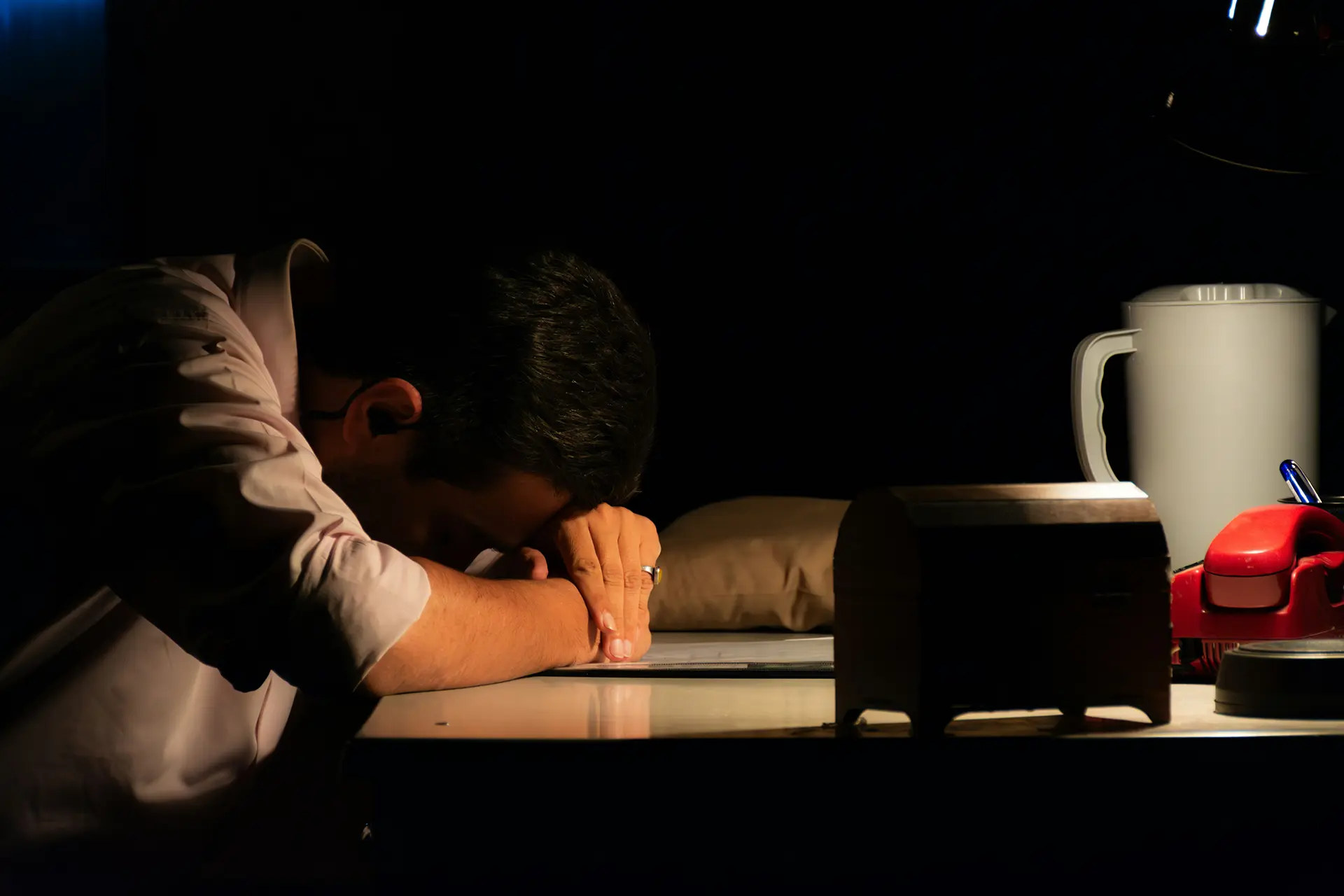
Burnout—a feeling of severe emotional, physical and mental exhaustion due to stress—is an increasingly common experience for people. A recent study revealed that 61 per cent of Australian workers have experienced burnout. This tracks with global statistics where more than half of the workforce simply feel like their life forces are being siphoned away. While every job has seasons of difficulty and stress, the spike in prolonged periods of work that create high stress should alarm everyone. Burnout leads to health crises as well as shifts in the workforce that leave businesses and services without a means to function.
Despite these factors, some companies and cultures don’t seem to care. Recently, a friend shared that their company experienced massive resignations and human resources ceased to conduct exit interviews. Instead of pausing to reflect on why so many people, including junior executives who occupied desirable positions for two years, leave so readily, this organisation just moved on, advertising the position for someone else to lose their soul in.
While today, the vampire of ancient European lore only drains the wallets of horror film fans, there are vampiric socio-economic systems that suck the life out of people in real ways. People are exploited and trafficked all over the world. People drag their feet to workplaces that don’t appreciate them. People are asked to go above and beyond under threat of termination. People have to put up with abusive systems that prioritise products, even commodifying people, rather than systems that truly care about human flourishing. My guess is most everyone has a story about how one of these “vampires” has sucked the life out of them. What if the Sabbath could be a weapon against these monstrous systems?
sabbath: a stake to the heart
Many people have rediscovered the Sabbath as a weapon against the crush of modern business. In his book The Ruthless Elimination of Hurry, John Mark Comer argues that Sabbath is necessary despite being “so foreign and alien to our culture, even our church culture . . .”8 While it was challenging to implement, Comer says the experience of taking a Sabbath—an entire day to unplug from the rat race—has resulted in personal freedom. “I feel free. Free from the need to do more, get more, be more. Free from the spirit—the evil, demonic spirit—of restlessness that enslaves our society.”9 Notice the language of likening the systems of hurry to monstrous entities.
More recently, the late conservative activist and podcaster Charlie Kirk released a book entitled Stop, in the Name of God: Why Honoring the Sabbath Will Transform Your Life. While Kirk’s public platform and tragic death have sparked controversy, the Sabbath has been brought into mainstream dialogue. Kirk wrote, “Sunday is a natural choice because it is traditionally the day set aside for worship. However, for others, Sunday may not be feasible due to work or family commitments. The key is to pick a day that works for you.”10 Despite not keeping the traditional Sabbath from sundown Friday to sundown Saturday, Comer’s work (and many others) encourages people to practise a day that works best for them.

It’s important to be gracious for those discovering this spiritual practice. Yet, I would offer two reflections. The first, is the Sabbath of the Bible has always been the seventh day. The Roman Empire’s shift to make it the national day of worship in the fourth century not only detaches it from its roots, but also puts religion in service to the socio-economic interests of the state. The Sabbath is meant to be disruptive—to break the systems and to plunge a stake into the heart of vampiric systems.
In closing, I would challenge you to begin exploring how the Sabbath might help you find a better rhythm of life. I would also focus on taking that seventh day, Saturday, as the Sabbath, precisely because it might be inconvenient at first.
The poison of busyness and obsessive productivity has flowed in our veins for a long time. The Sabbath gives us space to see, and put a stake in, the heart of the vampiric systems that bleed us dry.
To discover the power of the Sabbath for yourself, visit sabbathday.com.
Dr Seth Pierce is a pastor and university professor in communication and religion. He has authored numerous books and hosts the podcast Beast & Bible. He writes from Portland, Oregon.
- Bruce A McClelland, Slayers and their Vampires. University of Michigan Press, 2009. ↩︎
- Ibid, Slayers and their Vampires. ↩︎
- Ibid, Slayers and their Vampires. ↩︎
- Ibid, Slayers and their Vampires. ↩︎
- Emperor Constantine declared Sunday to be the national day of worship on March 7, 321 AD in the Edict of Milan. ↩︎
- Abraham Joshua Heschel, The Sabbath: Its Meaning for Modern Man. Farrar, Straus and Giroux, 1995. ↩︎
- Heschel, The Sabbath: Its Meaning for Modern Man. ↩︎
- John Mark Comer, The Ruthless Elimination of Hurry. Waterbrook, 2019. ↩︎
- Comer, The Ruthless Elimination of Hurry.- ↩︎
- Charlie Kirk, Stop, in the Name of God: Why Honoring the Sabbath Will Transform Your Life. Winning Team Publishing 2025. ↩︎