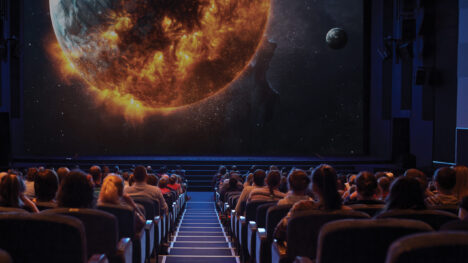

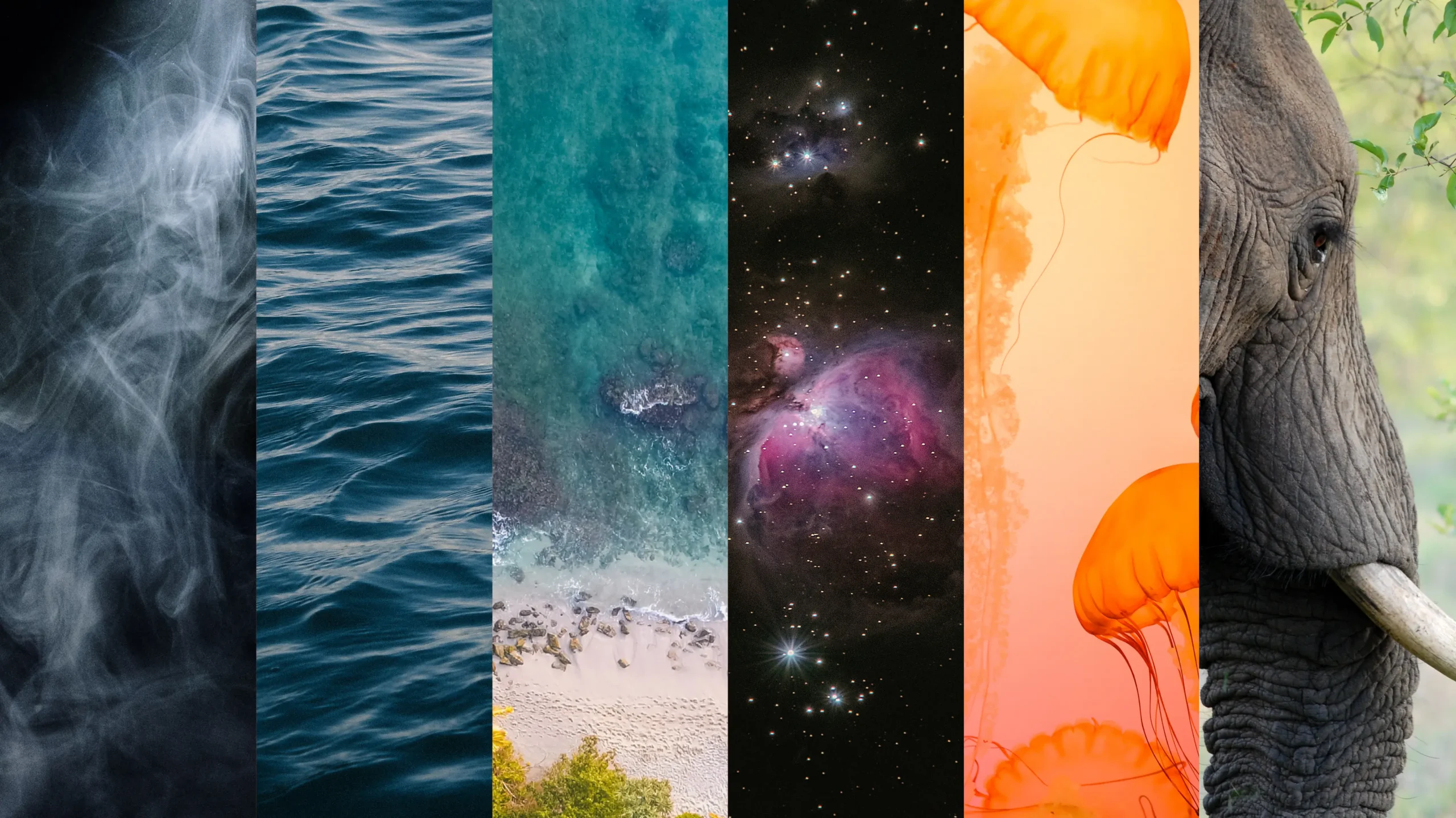
You’re standing somewhere quiet—by the ocean, under a sky thick with stars or watching rain sweep across dry ground and for a moment the world feels big. Bigger than you’ve ever noticed.
The noise drops away. Your phone, the headlines, the endless list of things to do, the low-level pressure of modern life, all loosen their grip for a second. You are simply there. You don’t suddenly become religious. You don’t solve the mystery of existence. But something in you leans into what you see.
Why does beauty affect us so deeply? Why does the world feel meaningful, even when life is hard? Why do we seem built to stop and stare?
why beauty gets our attention
The natural world doesn’t answer every question. In fact, it raises a few difficult ones. It is beautiful, but it is not innocent. The same world that gives us coral reefs, birdsong and the smell of rain also gives us disease, bushfires, floods and decay.
Still, people across time have found themselves asking whether creation might tell us something about whatever, or whoever, lies behind it all. Not everything. But something. One thing the world seems to suggest is this: if there is a Creator behind it, He is not stingy. The world is not merely practical. It is full of extravagance. There are colours in sunsets that seem almost unnecessary. There are mountain ranges that stretch beyond the horizon, coral reefs teeming with life, deserts in bloom and galaxies beyond count. The world often feels like more than a machine built for survival. It feels like a gift.
That matters, because many people picture God as stern, suspicious of joy or emotionally distant. But a world like this hints at something else. It hints at a source of life who delights in abundance—a Creator who did not simply make a usable world, but a meaningful one. The world also seems to suggest intelligence—an intelligence more like creative genius than robotic efficiency.
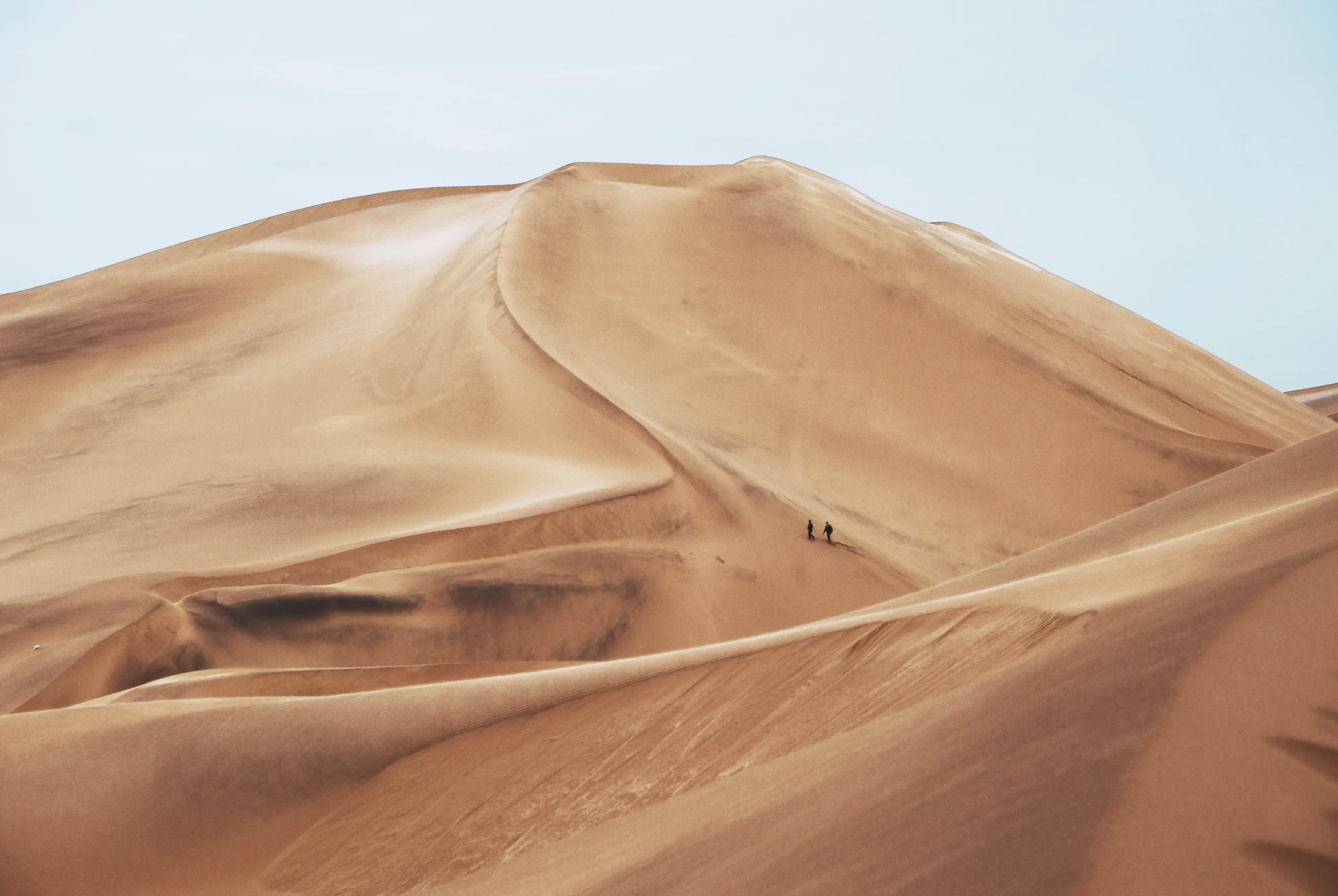
Our world has structure, rhythm, patterns and dependability. Seasons turn. Tides move. Seeds become trees. Ecosystems hold together in ways that are delicate and astonishing. Science depends on this kind of order. We can study the world because the world is not chaos.
And yet, it is not dull. It is alive, surprising, textured. Snowflakes form with staggering intricacy. Tiny birds migrate across oceans. Flowers burst into colour. And then, in the middle of all this, are humans asking, “What does it mean?”
That is part of what makes creation so compelling. It is ordered enough to investigate and beautiful enough to enjoy. It invites both thought and wonder. You can ask hard questions and still remain open to mystery.
the heavens declare
Creation seems to suggest that relationship matters. That may sound strange if your picture of God has mostly been shaped by bad religion defined by guilt, hypocrisy or control. There is a popular picture of God as a cosmic supervisor—a distant, demanding deity mainly concerned with compliance. But our world hints at something warmer than that.
If creation tells us anything about its Maker, it may tell us that connection is close to the centre. A world full of delight, beauty, nourishment, laughter, friendship, touch, music and belonging doesn’t feel like the product of a God who is allergic to joy.
Christians often put it this way: the world exists not because God needed anything, but because love gives. It suggests that behind the universe there may be not indifference, violence or loneliness—but generosity. It suggests that existence itself may be an act of welcome. Creation also suggests that ordinary life matters more than we think. If the physical world matters, then bodies matter. Time matters. Work matters. Rest matters. Meals matter. Caring for children matters. Planting a garden matters. Building a good home matters. Creating beauty matters. Protecting rivers, beaches and forests matters. The ordinary stuff of life may not be a distraction from meaning. It may be one of the places where meaning is found.
There is a reason environmental loss hits us so deeply. We don’t only lose resources; we lose places we love. We don’t grieve destruction merely because it is inefficient. We grieve it because something in us senses that beauty should not be casually thrown away. David Attenborough’s 2025 documentary Ocean struck such a chord because it did not just highlight how badly marine ecosystems have been damaged; it gave viewers hope. Attenborough said, “The ocean can recover faster than we had ever imagined.” That resonated because most people know what it feels like to stand between grief and hope, to look at harmed beauty and still long to believe restoration is possible.
That longing reveals something important about us. We don’t just consume the world; we love it. We mourn it and want to protect it. Perhaps that instinct is a clue. Perhaps it matters because it comes from a source that values it too.
why brokenness matters
But then comes the obvious problem. If creation tells us something about God, what do we do with cancer, disaster, pain and death? What do we do with the fact that the same world that fills us with wonder can also fill us with fear? That question cannot simply be brushed aside with a nice sunset.
One Christian response is that the world as we know it is not the world as it was intended. Love requires freedom and freedom carries the possibility of real damage. Whether or not you find that convincing, it makes an important distinction. It suggests that the beauty of the world may reveal God’s intention, while the brokenness of the world reveals that something has gone wrong. That idea may also help explain something else: our outrage at suffering.
When we see images of war, famine, violence or a child buried in rubble, we don’t shrug and call it normal. Something in us rises up and says, “This should not be.” Perhaps that inner protest is itself a clue. Perhaps we feel the world is not as it should be because, at some level, we know it is not. We still carry some stubborn sense that beauty belongs here and that cruelty doesn’t. That life is meant for more than survival, more than power, more than loss. Creation, then, doesn’t only give us something to admire. It gives us a reason to hope.
hope without pretending
If the world is the work of a wise and loving Creator, then beauty is not an accident and brokenness is not the whole story. That doesn’t remove doubt. It doesn’t solve every intellectual problem. It certainly doesn’t make grief neat. But it does leave room for hope—hope that the One behind the world has not walked away from it.

Maybe hope is one reason creation keeps affecting people who are not sure what they believe. Not because it proves everything, but because it keeps suggesting that reality might be more than matter and motion. That beauty might mean something. That our hunger for connection, goodness and restoration is not ridiculous after all.
For someone exploring faith, that may be enough for now. Not enough to answer every question. Not enough to remove all uncertainty. But enough to begin. Sometimes faith starts there—at the ocean’s edge or under a starlit sky—with the decision to take wonder seriously and the choice to pay attention.
And with the question that rises, almost without permission: “What kind of God would make a world like this?”