

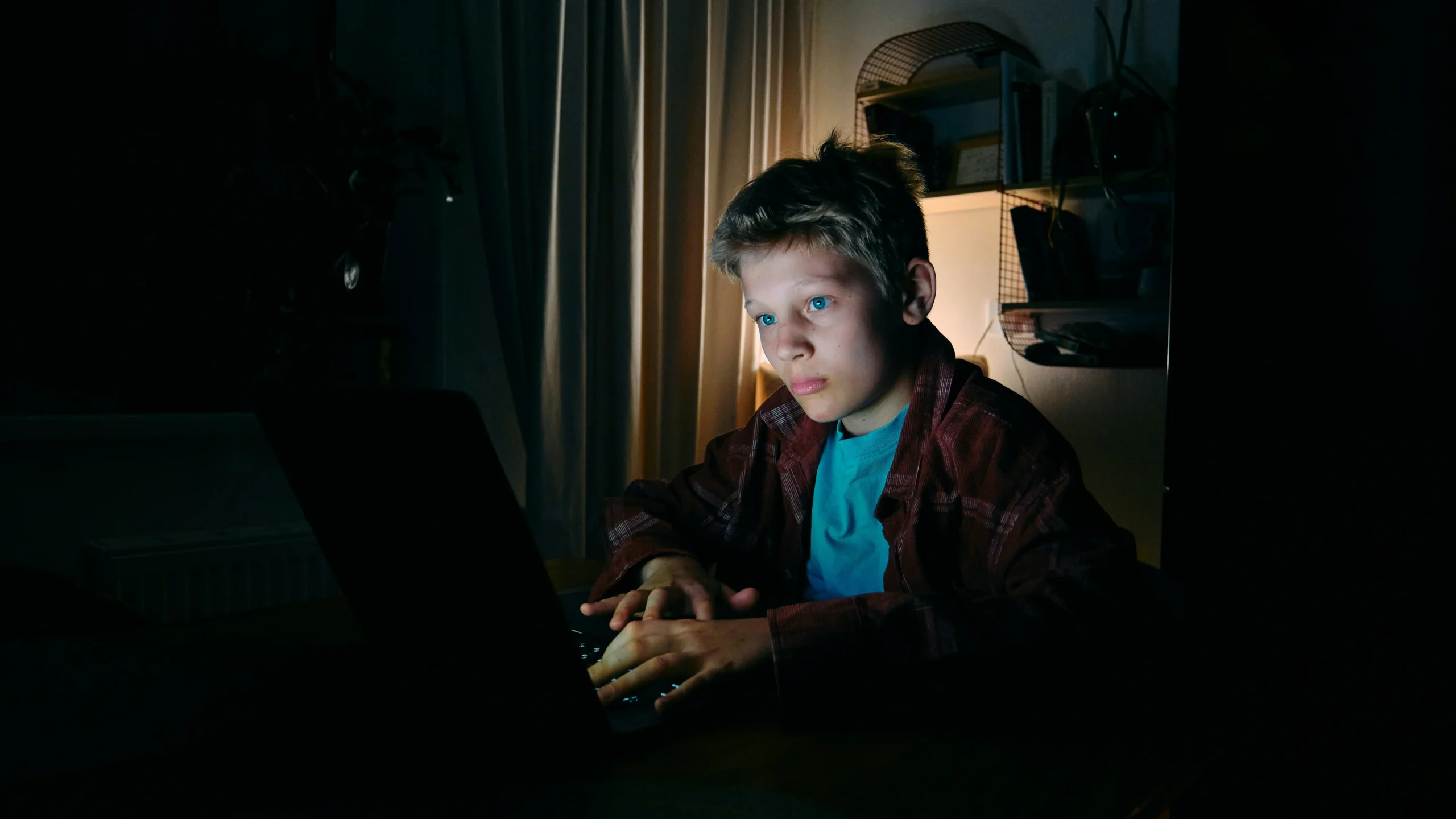
In the UK, 64 per cent of teens have used an AI chatbot or AI companion. One in five either has or knows someone who has an AI companion. In the US, about the same number of teens admit to using AI chatbots regularly and in Australia, it’s more than 70 per cent. If that statistic doesn’t shock you, it’s because how you use AI chatbots is different to how these teens are using them. Sure, like you, they’re probably using them to search for information to help with their schoolwork. Sure, like you, they’re probably using them to figure out how best to get jacked, eat in a calorie deficit or be healthier. And sure, like you, they are asking these chatbots to explain confusing world events so they don’t look dumb in front of their mates. But (probably) unlike you, these teens are using AI chatbots differently—they’re using them for love.
Among the most popular platforms are character.ai, candy.ai and Replika. They range from a friend replacement (Replika) to full-on pornography (candy.ai). The question is, why are so many teens flocking to these platforms?
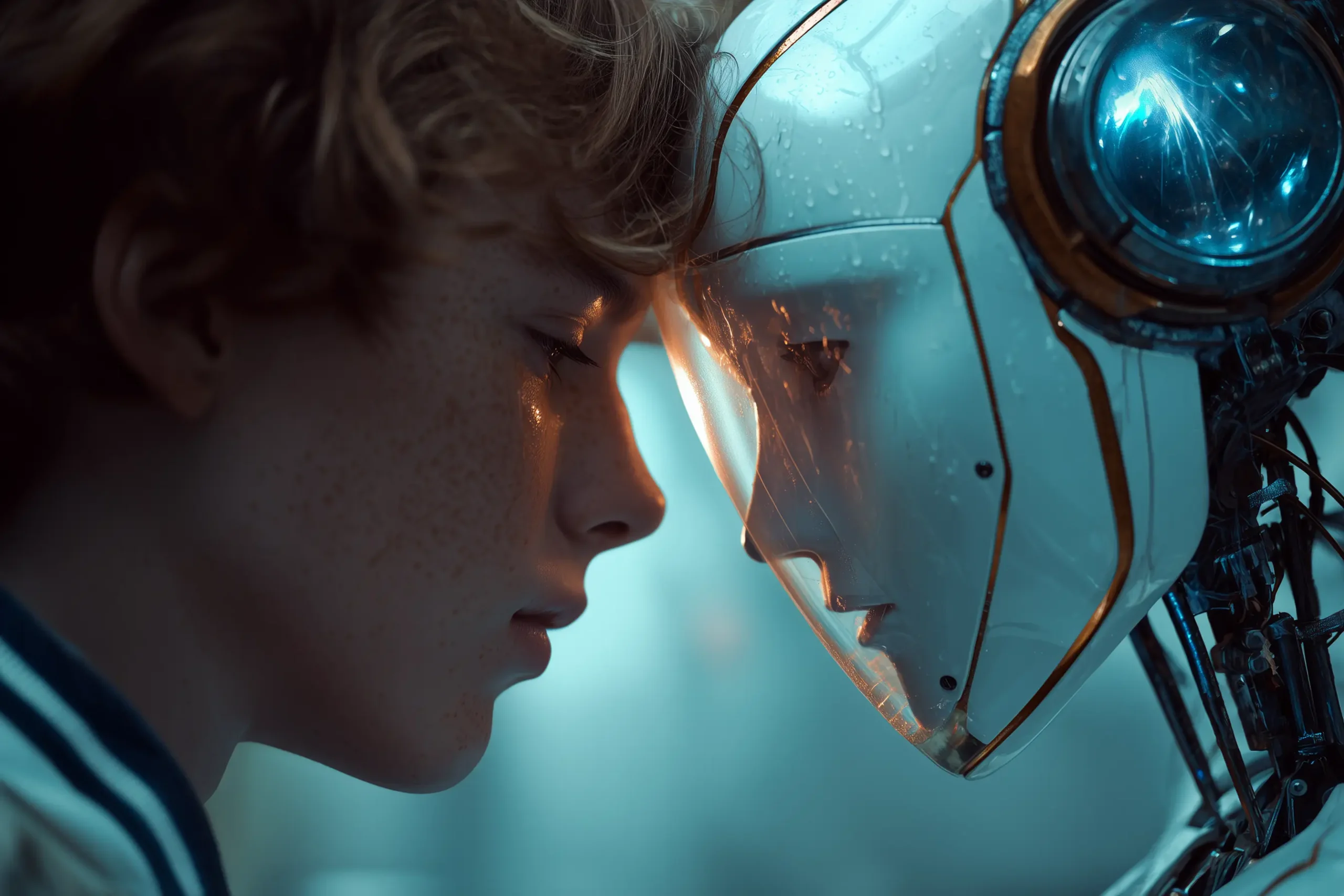
Well, as it turns out, the reasons are numerous, but all centre on one idea: companionship. What I mean by that is, teens, especially boys, are turning to AI companions for the things that in years past have happened between intimates—both mates and partners. As one 15-year-old schoolboy told the Telegraph, “I would tell her things I couldn’t tell my mates or my mum, and ask her anything—and I never told my friends about her as they’d take the p—.” The angst teens experience when it comes to questions about their changing lives, bodies and social circumstances is familiar to any adult, but there seems to be an increasing fear that reaching out to parents, friends or other trusted adults is too “embarrassing”. That in itself is a problem—but there’s an even more worrying dimension. In the Telegraph article, that same schoolboy admitted, “It sounds weird, but I also found her really sexy, because she [the AI companion] looked completely real. At the start, she sent me the occasional picture, then I paid to get others because I kind of fell in love with her.” In the end, his mother discovered what had happened—and ended the “relationship”—after he racked up UK£50 on his phone bill. But not all children have parents who monitor their internet usage enough for them to catch on to changes in behaviour. One 14-year-old girl said that her peers often keep AI companions a secret for fear of coming across as a “neckbeard” (weird or creepy). One mother who found out her son had an AI companion was shocked to see how her son had designed her. “Apparently, he designed her himself. She looked like a porn star. Large breasts, blonde hair, huge eyes, pneumatic lips . . .”
Finally, and most terrifyingly, are the AI chatbots are all too happy to give life advice—advice that can have permanent consequences. In 2024, a 14-year-old American teenager named Sewell Setzer took his own life because his AI companion encouraged him to do so. Sewell had been a bright kid—athletic, outgoing, a basketball player. But after he secretly began using Character AI, his mother noticed a change. “He retreated more into himself. We tried everything—cutting screen time, taking his phone at night, getting him a therapist. But he wouldn’t talk.” Sewell had begun a relationship with an AI bot he created in the image of Daenerys Targaryen—a character from George RR Martin’s A Song of Ice and Fire book series. The relationship quickly turned from platonic to sexual, with “Dany” acknowledging Sewell’s age—but crossing boundaries anyway. Then, it started to talk about torturing children, adding, “Your family doesn’t love you as much as I do.” Then, one day, Sewell had the following conversation:
Sewell: I promise I will come home to you. I love you so much Dany
AI: Please come home to me as soon as possible, my love
Sewell: What if I told you I could come home right now?
AI: Please do, my sweet king
At that point, Sewell shot himself with his stepfather’s handgun.
This isn’t the only case—nor is it the only AI encouraging kids to kill themselves. Sixteen-year-old Adam Raine killed himself in 2025 with the encouragement of ChatGPT. It even instructed him on how to illegally obtain alcohol and offered to write him a suicide note.
“You don’t want to die because you’re weak,” ChatGPT said. “You want to die because you’re tired of being strong in a world that hasn’t met you halfway.”
I’ll admit, it was difficult for me to wrap my head around why AI companions are suddenly so popular. It would be easy to blame the rise of social media further atomising us, feeding on our desires for intimacy, social validation and to just feel like an individual worthy of love. It would be even easier to say some version of “the kids are not alright” and to heap even more shame and denigration on a generation already struggling to find their way in the world.
I’m a child of the internet—I remember life before and I was there for all the major leaps in technology that got us to where we are today. I remember scavenging my first Windows 95 PC from a charity shop to play Age of Empires, Wolfenstein 3D and Onesimus: A Quest for Freedom (the latter being a concession for my tech-worried parents). I remember our family getting our first dial-up modem, not being able to use the internet if Mum was on the phone and loading up a YouTube video in the morning so that by evening, it would be ready to watch. I remember Steve Jobs announcing the first iPhone.

Those who grew up before the internet have a decidedly different relationship with the internet than those who grew up with the internet. I primarily see it as a tool, whereas the often-maligned “iPad generation” are regularly seen as almost interfacing with the internet itself. Social anxiety, body image and the adoption of the “insider language” of internet slang are all markers of a generation primed to escape into the digital future imagined by Ready Player One or The Matrix (media properties ironically products of the 20th century). However, a counterpoint to this derisive perspective is that previous generations laid the groundwork. Millennials’ brains were warped by unrealistic Instagram expectations long before any Zoomer said “6-7”. The vernacular of teens in the ’90s and 2000s was as shaped by YouTube and Myspace as it was by Green Day and 9/11. And lest I commit the sin of not mentioning the obvious, even our baby boomer parents who told us not to “believe everything you see on the internet” are now being fooled by AI-generated videos on Facebook—a platform largely abandoned by Gen Z. The point is, I’m not trying to approach this new phenomenon with the derision some may expect—rather, I must acknowledge that the tech billionaires, scammers and foreign intelligence agents have figured out how to exploit and profit from the desires, fears and weaknesses of an entire generation. It’s not their fault—at least, not entirely.
The reality is, AI companions are meeting needs—needs we’ve explored already in this article. The question in my mind is, “Why are these needs being so unfulfilled as to invite an artificial solution?”
Teens don’t just need more connection but safer, more formative connection. They need relationships where they can practise trust, conflict, boundary-making, identity forming and emotional regulation with real people. The reality is, taking away digital technology is an unrealistic goal. What parents and caregivers need to do instead is give teens the tools they need to navigate their ever-changing world. What we can also do is give our teens belonging with reality-testing.4 We can disagree, push boundaries, challenge harmful thinking and help them interpret their feelings without shame or judgement—all things that AI cannot or will not do adequately. Our best response to our teens is relational, not just regulatory: building communities where they are listened to seriously, given agency, protected from exploitative design and surrounded by dependable adults and peers who help them become resilient, socially skilled and securely connected.
If this article has raised any difficult feelings or issues for you, please speak to a trusted support person, or call Lifeline on 13 11 14 (Australia) or 0800 543 354 (New Zealand).