


Chris Williamson, the voice behind the wildly popular Modern Wisdom podcast, appeared on Australian breakfast television during his Australia, New Zealand and Bali tour where he shared the following story:
“In the mid-’90s, there was a woman living in Edinburgh in quiet poverty. She had come out of an abusive marriage and fled to Portugal with her daughter and a manuscript she was determined to finish. At one point, her husband tried to stop her from leaving by hiding it. She was clinically depressed, at times suicidal and couldn’t afford to heat her apartment. She would take her daughter to a café just to stay warm while she wrote. Her book was rejected by 12 different publishers—that’s 12 people telling her she wasn’t good enough. It wasn’t just discouraging; it was an existential crisis. But instead of quitting, each rejection drove her to work harder. That woman was JK Rowling, who went on to sell over 500 million copies of the Harry Potter series and become richer than the Queen.”
His point was that most of the growth that happens in our lives comes from our lowest moments. “Adversity is a terrible thing to waste,” he went on to say.
Williamson makes a good point—one that many would agree with in theory. But there’s a problem. Adversity kind of stinks. It’s uncomfortable, it disrupts our plans and it exposes our weaknesses. That’s why most of us try to bypass adversity rather than use it for our benefit.
When we locate the problem entirely outside ourselves, we start to believe we’re powerless to change.
We all admire stories like Rowling’s. We love the idea that adversity can forge resilience, strength and greatness. But when it’s our turn, we just want it to stop. In rushing to escape it, we risk wasting the very thing that could shape us into something more.
But if there’s one thing life has taught me lately, it’s that experiencing adversity in our lifetime is a guarantee. The question isn’t, “Will I face adversity?” but “How will I respond when it comes?” The way in which I respond will either stunt my growth or accelerate it.
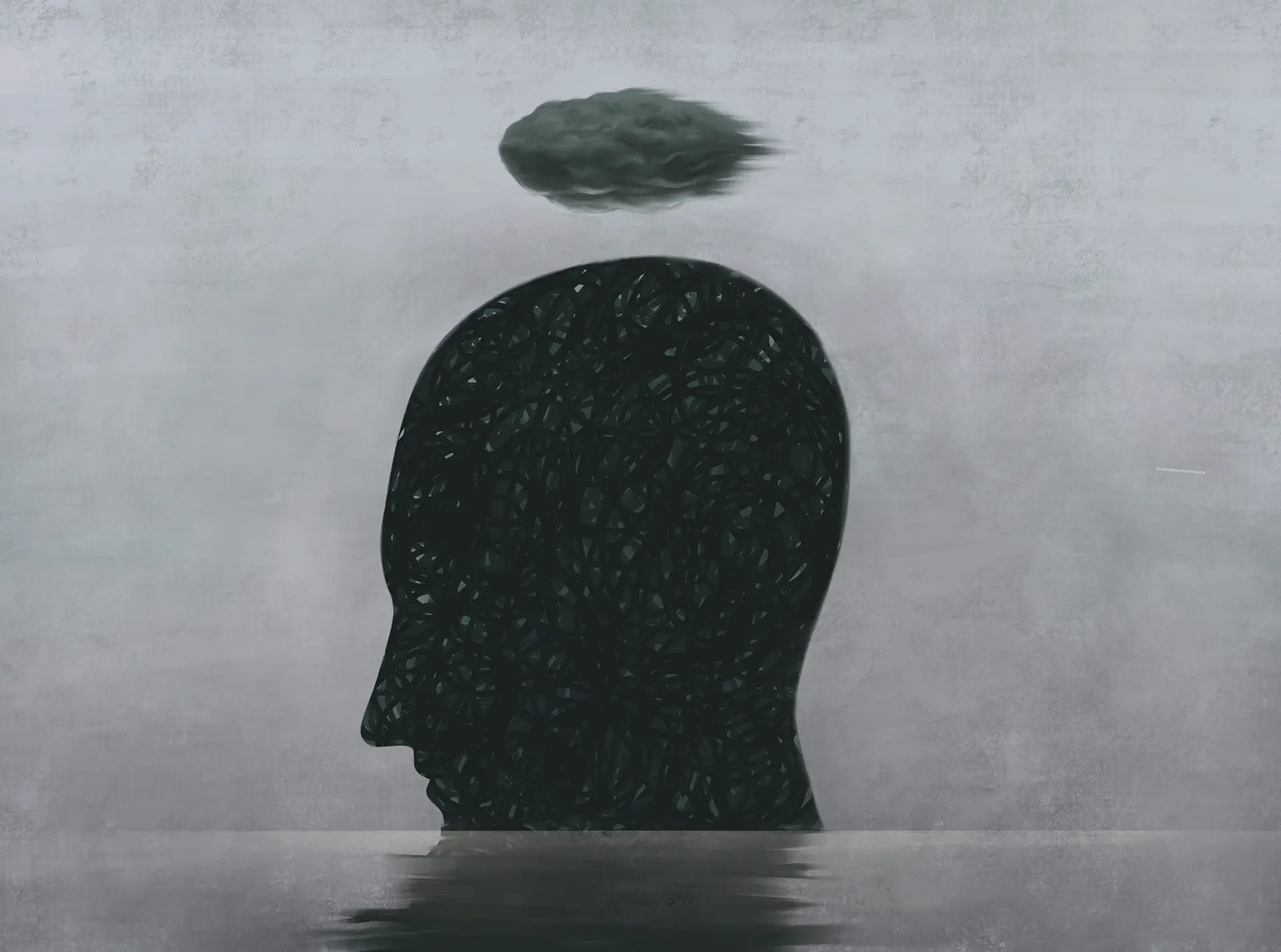
If we want to grow through adversity, there are a couple of common pitfalls to avoid. Let’s talk about these first.
pitfall 1: the victim mentality
The victim mentality, in a nutshell, is when we attribute the root of our problems to things outside of our control.
Now don’t misunderstand me. That isn’t to say other people are never at fault. Of course they are. But true victimhood is when we blame others as a way of denying our responsibility (read: response-ability).
We are responsible for our response, even when things aren’t our fault. Imagine walking into an elevator and finding a man bleeding out on the floor. You didn’t cause the situation, but in that moment, you are responsible for doing something about it.
Why is the victim mentality such a barrier to growth? Because when we locate the problem entirely outside ourselves, we start to believe we’re powerless to change. Once we believe that, then we stop looking for opportunities to level up. After all, if the problem is “out there”, the solution must be “out there” too. Which means we never take ownership of what we can do, how we can respond or the exciting possibilities that might be staring us in the face.
So, if we want to grow through adversity, we must resist the pull of victimhood and take responsibility for our response, regardless of whether things are our fault or not. That’s the first hurdle.
pitfall 2: toxic positivity
Toxic positivity is the tendency to only show positive emotions while minimising painful ones. When expressed, it might sound like: “Other people have it worse” . . . “You should be grateful” . . . “Good vibes only” . . . “I’m too blessed to be stressed”.
Toxic positivity implies that feeling sadness, anxiety, grief or hopelessness is wrong, inappropriate or selfish. This puts a heavy burden on people who are already struggling. They begin to feel guilty for feeling normal emotions and as a result, they often hide their pain.
When we gloss over suffering and pretend things aren’t that bad, we lose the opportunity to engage with what’s really going on. We don’t name our wounds, ask for help or learn from the struggle.
The principle is simple: whatever we can’t acknowledge, we can’t address. Whatever we can’t talk about, we can’t work through. Whatever we can’t be real about, we can’t grow from. If pain is a powerful catalyst for change, but we refuse to face it, we’ll miss out on what it has to offer. That’s exactly what toxic positivity does. It keeps us stuck on the surface, when the real work happens underneath.

how do I grow?
At the heart of it is one key skill: reframing. Reframing is the ability to intentionally shift how we interpret what’s happening to us. That doesn’t mean ignoring reality or acting like it doesn’t hurt. It means choosing to look for what else might be true alongside the pain and discomfort and training your mind to make that choice reflexively.
Here are some key reframes that I’ve found helpful in developing this mindset:
recognise the bigger picture
Difficult seasons are rarely one-dimensional. They carry pain, yes, but they also carry potential. If we don’t condition ourselves to see both, we risk experiencing only half of what they have to offer.
focus on what you can control
When adversity hits, it’s easy to fixate on everything that’s out of your hands. But growth doesn’t happen there. It happens in how you respond. Shift your attention to what you can influence: your mindset, your actions, your next step.
trade guilt for growth
Beating yourself up can feel like taking responsibility, but it only keeps you stuck in the past. Guilt, when it lingers, distracts you from what really matters: learning, adjusting and moving forward. Take ownership, yes, but then get to work on becoming better.
slow down to move forward
Urgency, which is natural to feel when you’re in a tough stretch and want things to change, can trick us into chasing quick fixes and shortcuts, but that often does more harm than good. Instead, channel that urgency into doing the right things well. Progress may not feel fast, but it will be real.
don’t just hope, take action.
Hope has its place. It’s easy to find yourself wishing things would improve, especially in difficult seasons. But when hope becomes a substitute for action, it keeps us stuck, waiting for circumstances to change while we remain the same. Growth begins when we move from hoping things will change to actively participating in that change. Imagining how good it will be when we’ve done the thing isn’t actually doing the thing. Only when we do the thing, are we doing the thing!
catch your thoughts
If you’re anything like me, you’ve spent a lot of time reinforcing the very patterns these reframes are pushing against, and over time, they’ve become part of your default way of thinking. Which means it’s not enough to just read these ideas and move on. You need to retrain your inner dialogue. This is a practice that has really helped me.
First, as you go about your day, notice when you feel stuck, anxious or frustrated. Pause and ask yourself: what story am I telling myself right now?
Then, identify the internal narrative and deliberately replace it with a better one. Something grounded, constructive and aligned with the kind of thoughts expressed above. Write it down or record it as a voice message so you can come back to it.
Repetition is key here. The more you learn to catch and reframe your thoughts, the more natural it becomes. Over time, it won’t feel like something you have to do. It will become a more natural response.
If you change the way you think about adversity, you will in turn change the way you experience it. Because let’s be real, adversity isn’t going anywhere. But the way you meet it can.