

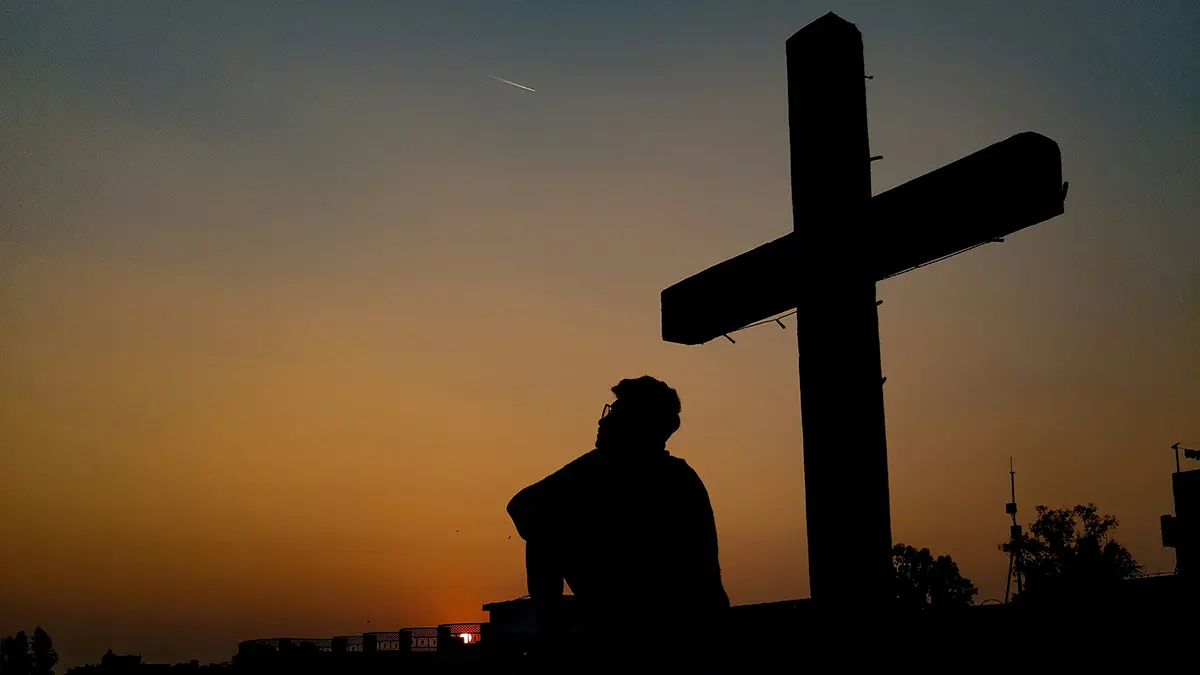
There are moments in life when we all pause and wonder if something or someone is out there. Sometimes, it happens in the stillness of a sunrise, the overwhelming vastness of the stars or the deep ache of injustice in the world. Other times, the question arises in a debate, a passing conversation or a personal crisis.
Is God really there?
For centuries, people have wrestled with this question. Some dismiss it outright, convinced that science and reason have made belief obsolete. Others avoid it altogether, reluctant to dwell on what seems unprovable. Karl Marx once famously called religion “the opium of the people”. Richard Dawkins says, “Religion teaches you to be satisfied with nonanswers. It’s a sort of crime against childhood.” But what if belief in God is not an emotional crutch or a relic of the past? What if it is the most rational conclusion one can reach?
This is not about wishful thinking or blind faith. It is about evidence. When we examine the world around us, it tells a story of creation, design, morality and love.
cause: the universe had a beginning—so what started It?
For most of history, people assumed the universe had always existed. Philosophers and scientists alike believed it was eternal, without a starting point. That changed with modern cosmology.
Today, nearly all physicists agree on one thing: the universe had a beginning. This raises an inescapable question—what caused it?
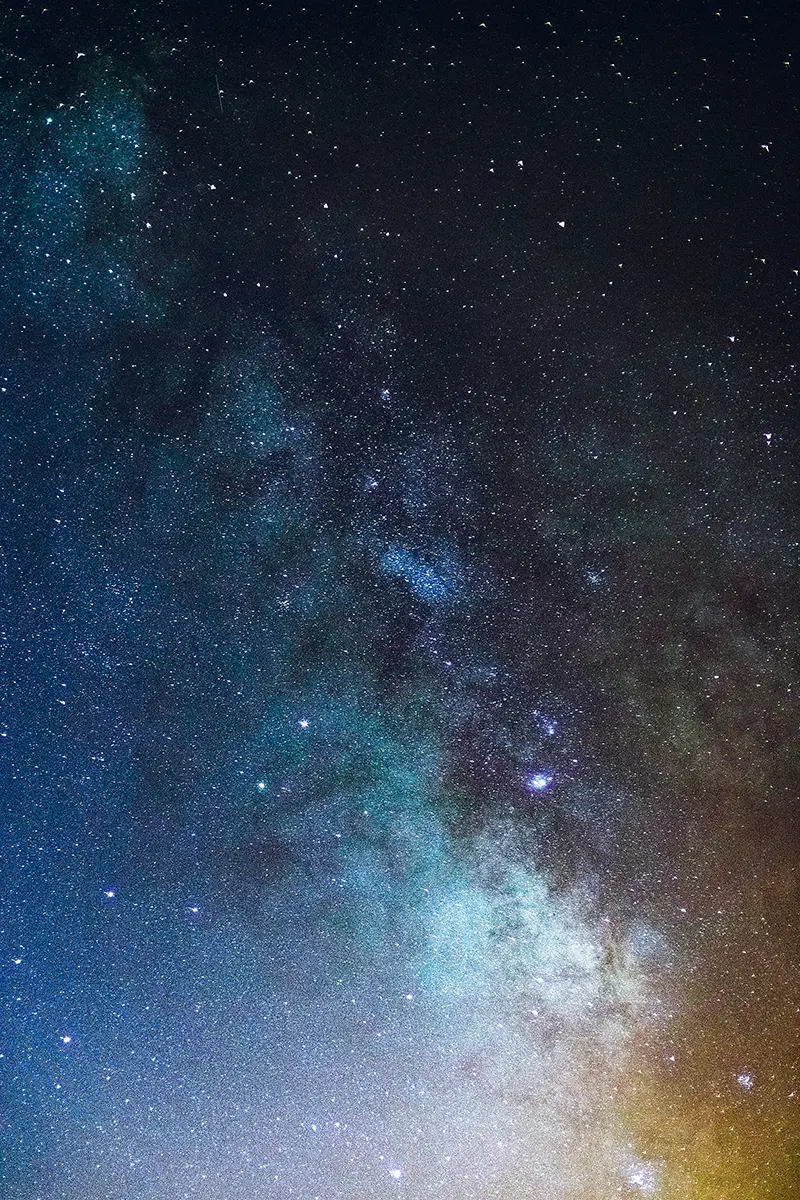
Stephen Hawking, one of the most well-known theoretical physicists of our time, put it plainly: “Almost everyone now believes that the universe, and time itself, had a beginning at the Big Bang.”1 If the universe had a beginning, then something must have brought it into existence. The fundamental law of causality states that everything that begins to exist must have a cause. Since the universe itself, including space, time and matter, came into being, its cause must also be outside space, time and matter.
This realisation has left many scientists in an uncomfortable position. Alexander Vilenkin, a leading cosmologist, acknowledged this dilemma when he wrote, “With the proof now in place, cosmologists can no longer hide behind the possibility of a past-eternal universe. There is no escape; they have to face the problem of a cosmic beginning.”2
That problem forces an unavoidable question: what, or who, was the first, or “uncaused”, cause?
Nobel Prize-winning physicist Arno Penzias, who helped discover the cosmic microwave background radiation, reflected on his findings. “The best data we have are exactly what I would have predicted had I nothing to go on but the five books of Moses, the Psalms and the Bible as a whole.”
The idea of a created universe is not just a religious belief—it is a conclusion that science itself has pointed toward.
But it’s not just that the universe had a beginning. It’s that it had a beginning so finely calibrated that even the slightest variation in its initial conditions would have made life impossible. This leads us to another profound question: why does the universe appear to be designed specifically for human life?
creation: we live in the perfect pale blue dot engineered for life
Look up at the night sky and consider this: the universe could have been chaotic, lifeless or utterly inhospitable. Instead, it operates with astonishing precision, fine-tuned for life. Scientists call this the Anthropic Principle—the idea that the fundamental forces of the universe appear calibrated to support human existence.
This fine-tuning begins at the atomic level. The strong nuclear force, which binds protons and neutrons, is set at precisely the right strength. If it were slightly stronger, hydrogen—the key element in water—would have fused too quickly into heavier elements, leaving no water, no fuel for stars—and no life. If it were weaker, atoms would not hold together at all, meaning no molecules, no chemistry, no existence.
Beyond the atom, the cosmological constant, which controls the universe’s expansion, is equally precise. A slightly faster expansion would have torn matter apart before galaxies could form. A slower one would have caused the universe to collapse. The fact that our universe expands at exactly the right rate to support stars, planets and ultimately life, is extraordinary.
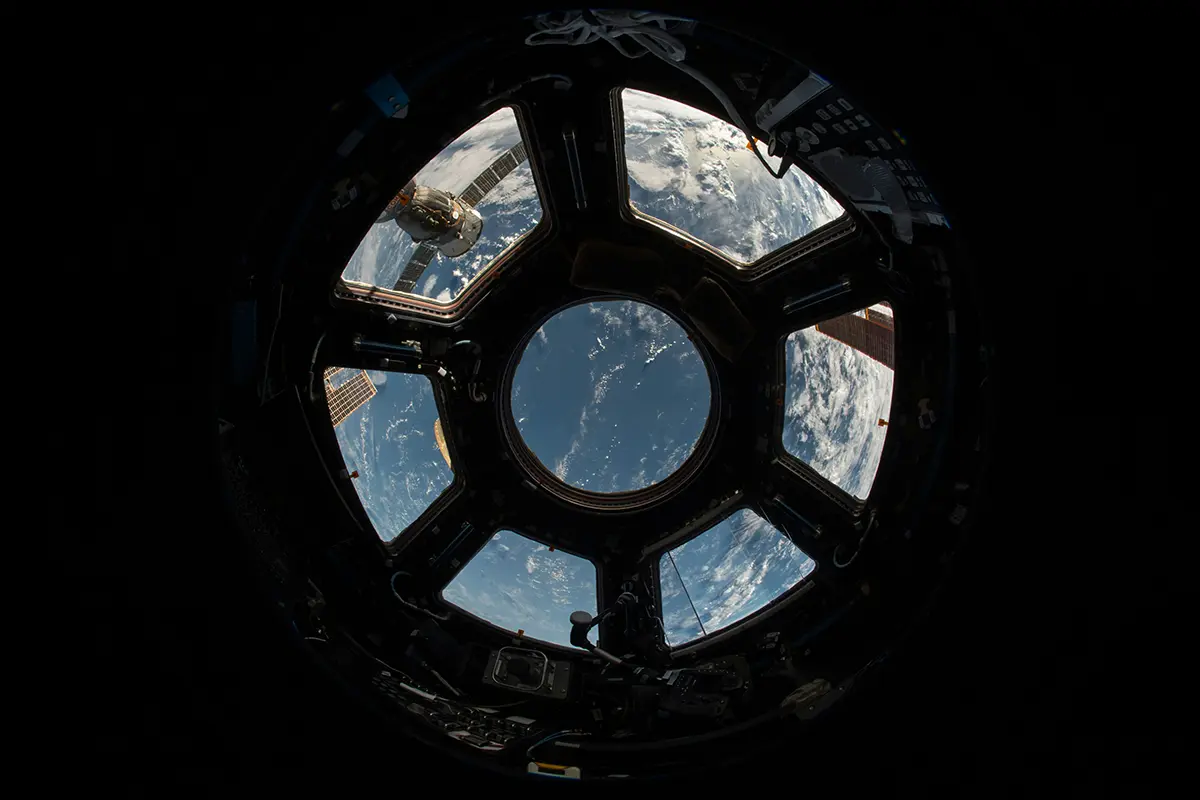
Even with a stable universe, life requires a home. Earth sits in the Goldilocks Zone, the narrow band around the Sun where conditions are just right for liquid water. A small shift closer and our oceans would evaporate. A bit farther and everything would freeze.
Earth’s oxygen levels, precisely at 21 per cent, provide another example of fine-tuning. Any lower and life would suffocate. Any higher and the atmosphere would become dangerously flammable. Even the Moon, often overlooked, stabilises Earth’s axial tilt, ensuring consistent seasons and a stable climate.
The more we understand the universe, the more it appears delicately arranged for life. NASA astrophysicist John O’Keefe once remarked, “If the universe had not been made with the most exacting precision, we could never have come into existence. It is my view that these circumstances indicate the universe was created for man to live in.”3
Such precision suggests more than coincidence. The fine-tuning of the universe is not just a scientific marvel—it is an invitation to consider the possibility of a Designer. But there is another layer of evidence—one not written in the stars, but written into our very nature.
conscience: the reality of morality
Beyond the physical world, there is another reality we all experience but rarely pause to question: morality. We instinctively know that some things—murder, abuse, oppression—are objectively wrong, not just matters of personal preference. But if we live in a universe governed solely by blind forces and random chance, why do we possess such a deep, universal sense of right and wrong?

CS Lewis, once a sceptic himself, wrestled with this very question. Initially, he rejected the idea of God because the world seemed cruel and unjust. But then he asked, “Where did my idea of justice come from?”4 If the universe were truly meaningless, why would he, a product of that universe, feel such intense moral outrage against injustice?
Lewis compared it to a fish in water. A fish does not feel wet because water is its natural environment. Likewise, if evil was the natural state of the universe, humans would not recoil from it. We would accept it without question. But we do not. We rage against evil because we intuitively recognise things are not as they should be.
This realisation dismantled Lewis’ atheism. If real justice existed, then it pointed beyond human opinion to something higher—a moral lawgiver. “A man does not call a line crooked unless he has some idea of a straight one,”5 he observed.
Our outrage against evil and longing for justice make sense only if there is something beyond us that gives morality a foundation. That something is actually a Someone who revealed Himself in the flesh to us.
the comeback story
Christianity stands or falls on one claim: that Jesus rose from the dead. The apostle Paul affirms, “If Christ has not been raised, your faith is futile” (1 Corinthians 15:17). If it never happened, Christianity collapses. If it did, everything changes.
Dr Gary Habermas, a leading scholar on the resurrection, developed what he calls the Minimal Facts approach which uses only facts that even sceptical historians accept. Here are a few of his key arguments.
Jesus’ crucifixion is one of the most certain events of ancient history. His terrified followers suddenly became fearless preachers, willing to suffer and die for their claim that He was alive. That does not happen for a lie. Paul, Christianity’s fiercest opponent, abandoned everything after seeing the risen Jesus. Jesus’ own brother James, once a sceptic, became a church leader and eventual martyr.
Scholars agree the tomb was empty. If Jesus’ body had been there, Christianity would have been debunked, instantly. Yet, even His enemies admitted it was gone. The first people to find it were women, whose testimony carried little weight in that culture. If the story were fabricated, this is not a detail its author would invent.
Alternative explanations fall apart. Hallucinations do not explain an empty tomb. Conspiracies unravel when people are tortured and killed. Legends take centuries to develop, yet the resurrection was preached immediately. The simplest explanation is that Jesus truly rose.
And if He did, then His words still matter. His promises still stand. If He conquered death, then He is exactly who He said He was—the Son of God, the Saviour of the world.

a vision that satisfies
The question of God’s existence is not just an intellectual exercise. It is a question that shapes everything: how we live, what we value and what we believe about life’s purpose.
Modern secularism offers many promises—but often fails to deliver on life’s deepest needs. Christianity offers a vision of reality that is not only intellectually credible but also existentially satisfying. It offers a foundation for human dignity, an answer to suffering and a hope that outlasts death.
So, perhaps the real question is not whether God is there, but whether we are willing to seek Him.
Because if God really is there, it changes everything.
Quintin Betteridge was born in South Africa, but now calls Australia home. Pastor of Kingscliff Seventh-day Adventist Church (NSW), he is passionate about making the Bible applicable to everyday life.
1. Stephen Hawking and Roger Penrose, The Nature of Space and Time. Princeton, NJ: Princeton University Press, 1996.
2. Alexander Vilenkin, Many Worlds in One: The Search for Other Universes. New York, NY: Hill and Wang, 2006.
3. John O’Keefe, “The Theological Impact of the New Cosmology.” In Robert Jastrow, God and the Astronomers. New York, NY: W W Norton, 1992.
4. CS Lewis, Mere Christianity. New York NY: HarperOne, 2001.
5. Ibid, Lewis.