

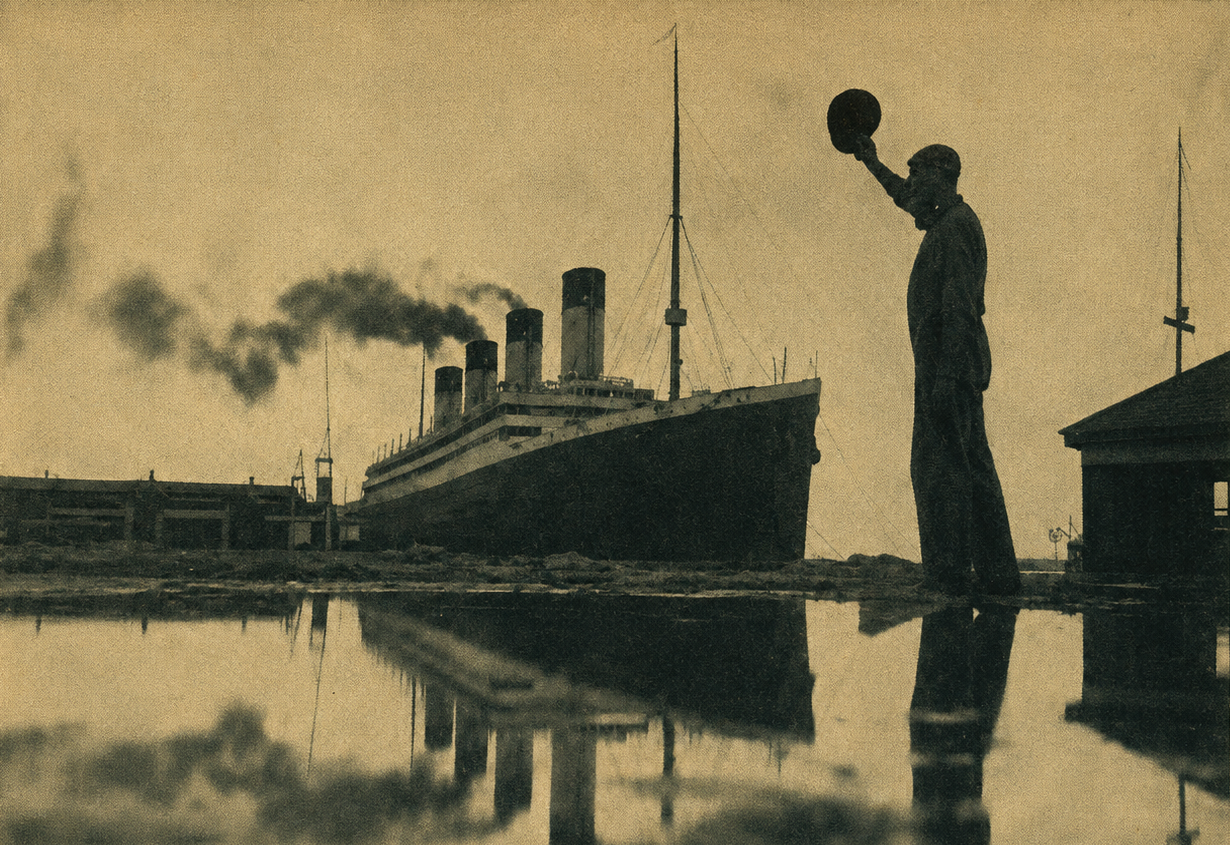
The awful tragedies which are reported almost daily in the press tell us that we are indeed living in perilous times. There are perils on land and sea that were unknown to previous generations. We are paying a penalty for our love of travelling at a high speed—a penalty surely out of all proportion to the time saved by modern methods of travel. When men were content with the ten miles an hour speed of the stage coach or the uncertain rate of speed of a sailing vessel, the world was never shocked by the tragic and heart-rending events that now form the current news of the day.
The whole world has literally trembled with agitation and sympathy as the tragic news of the wreck of the Titanic has come to hand. The event is unprecedented in its gruesome details, for never before has it been possible for so great a calamity to occur at sea, because never before have men attempted to construct such huge leviathans as the Olympic and the Titanic.
One of these so-called “unsinkable” ships in which men put so much faith has shown to the whole world that the wonderful ingenuity of man has limitations. The very magnitude and titanic power of the vessel not only proved a trap that enticed an enormous number of people who trusted themselves to her, but its colossal proportions and its enormous number of passengers also impeded the work of saving life in such a tragic emergency. The self-sacrificing, noble bravery of the officers of that ill-fated steamship was totally inadequate to save the lives of the greater part of their human freight.
The loss of the vessel and its cargo, valuable as they were, is nothing to be compared with the loss of human lives. More ships can be built, and the cargo can be replaced, but what of the lives of the 1600 souls who were lost? It is too awful to contemplate.
No less than 50 wives, 15 of whom were brides, were torn from their husbands and compelled to take to the boats. What can compensate these 50 widows for the loss of their life companions and protectors and breadwinners? Children have lost their parents, husbands their wives and wives their husbands.

One of the survivors, Lady Duff-Gordon, relates some graphic details of the disaster. She says:
I was asleep when the crash came. Previously I had been watching fields of ice. An officer pointed out one apparently 100 feet high and several miles long. I was awakened by a long grinding crash. I aroused Sir Cosmo and he ran to investigate. He returned and said, “We have hit a big berg.” We then adjusted life preservers and went on deck. There was no excitement. The ship listed slightly, but nobody dreaded that she could sink. There was little alarm even when the officers came running to announce that the women and children must go into the boats. We thought it was an ordinary precaution.
Our boat was the 12th or 13th launched. It contained five stokers, two Americans named Solomon and Stengel, two sailors, Sir Cosmo, myself and Miss Frank, an English girl. Numbers of men standing near made jokes at us because we were going out on the ocean. “You’ll get your death of cold out amid the ice,” they said. We cruised around for two hours.
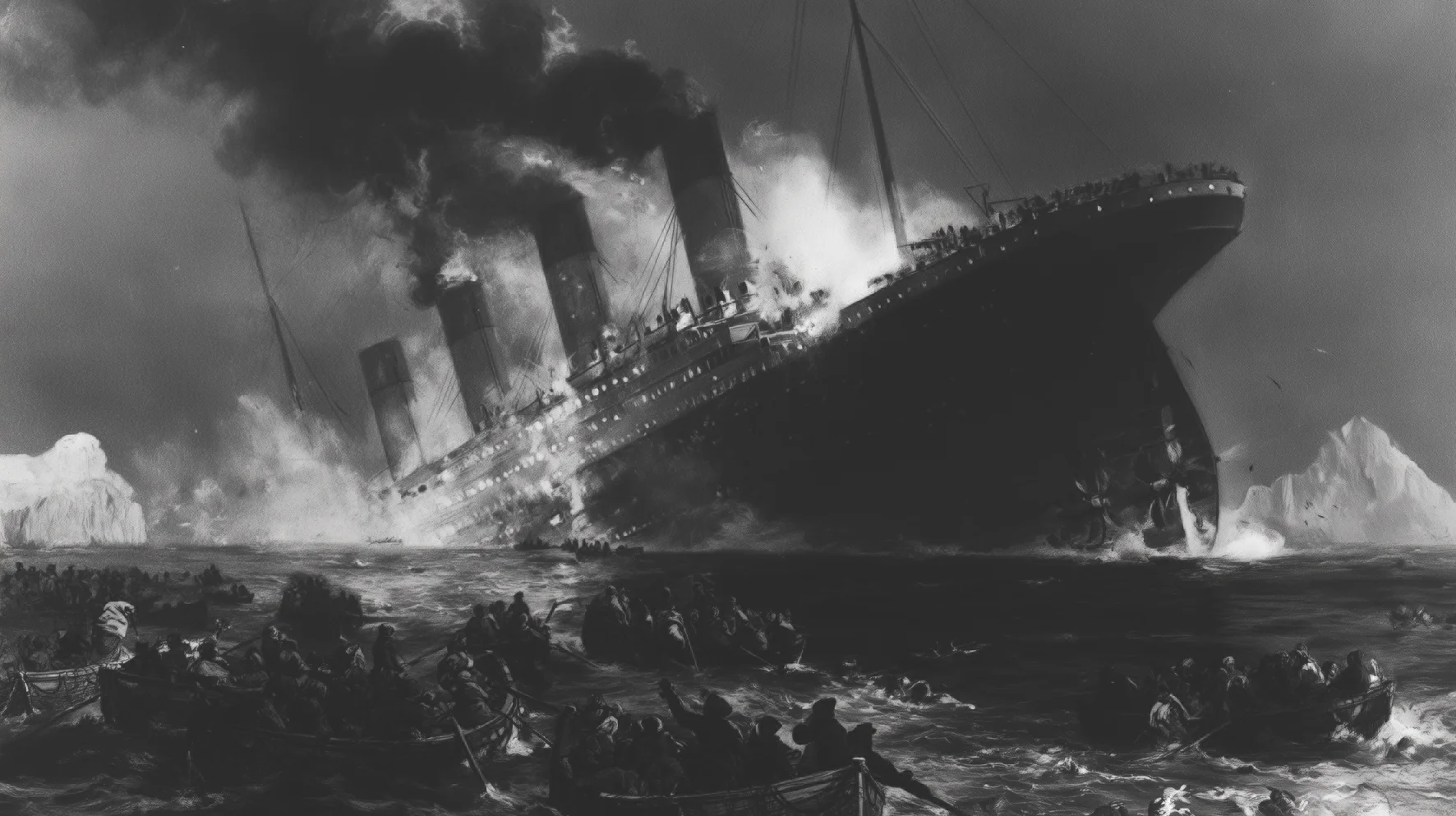
Suddenly we saw the Titanic give a curious shiver. There were no lights on the ship except a few lanterns. We heard several pistol shots and great screaming from the decks as the stern lifted into the air. There was a tremendous explosion, then another explosion and the whole of the forward part went under the water. The stern rose 100 feet like an enormous black finger against the sky. Little figures hung to the point of the huge finger and then dropped into the water.
The screaming was agonising. I have never heard such a continued chorus of utter agony. A minute or two later the Titanic’s stern slowly disappeared as though a great hand was pushing it gently under the water. As it sank the screaming of the poor souls aboard seemed to grow louder. We were 200 yards away watching her go down slowly, almost peacefully. For a moment there was an awful silence. Then, from the water where the Titanic had been, arose a bedlam of shrieks and cries from women and men clinging to wreckage in the icy water. It was an hour before the awful chorus of shrieks ceased, gradually dying into a moan of despair. The very last cry was a man’s “My God! My God!” He cried monotonously in a dull, hopeless way.
It is possible that this appalling accident may cause the great shipping companies to change some of their ideas. It has been demonstrated beyond all question that these so-called “unsinkable” ships are not unsinkable. Provided no unforeseen disaster occurs, they are practically unsinkable, but the public has been led to believe that even in an accident these modern triumphs of the shipbuilders’ art are unsinkable.
So confident, in fact, were many of the passengers in the safety of the Titanic that they could not be induced to leave her and take to the boats. Those who did were denominated “land-lubbers”. Too late did they realise that the skill of man was too inefficient to cope with the perils of the sea.
The dreadful fate of the Titanic is known, and it is a source of considerable satisfaction to report that between 700 and 800 souls were saved from a watery grave by taking to her boats. That is, indeed, something to be profoundly thankful for. Bad as the disaster is, it may have been much worse, for the Titanic might have met the same fate that has overtaken many other ships which have mysteriously disappeared without leaving a survivor to tell the tale or even a trace of wreckage to mark the place where she met her doom.
It may not be generally known that the number of ships which put to sea and are never heard of again is rapidly growing. Although men are becoming more skilled in the art of navigation, and although they are constructing ships of such strength and magnitude that it would almost appear as though they could weather any storm, yet the fury of the angry elements is increasing to such an extent as to offset much of the efforts which men have made in combating them.
There is a lesson for us in these frequent tragic occurrences and it is well that we should learn it. Among the signs of the end of the world spoken of by the Saviour is the roaring of the sea and the waves:
“And there shall be signs in the sun, and in the moon, and in the stars; and upon the earth distress of nations, with perplexity; the sea and the waves roaring; men’s hearts failing them for fear, and for looking after those things which are coming on the earth: for the powers of heaven shall be shaken. And then shall they see the Son of man coming in a cloud with power and great glory. And when ye see these things begin to come to pass, then look up, and lift up your heads; for your redemption draweth nigh” (Luke 21:25-28, KJV).
Mariners tell us constantly of the unprecedented storms which they have to encounter, of the mighty tidal waves, of peculiarly agitated seas owing to submarine earthquakes, of tornadoes, typhoons, water-spouts, and even changes of ocean currents, all of which add to the perplexities of the modern navigator and make his work more perilous. Yes, the terrible disasters at sea that are peculiar to this age, owing to the modern desire for travelling, or, as the prophet Daniel says, the “many running to and fro” (12:4, KJV) are one of the signs that we are living in the last days.
While we mourn the loss of valuable lives and property, these signs should cause us to “lift up our heads and rejoice, knowing that our redemption draweth nigh,” (Luke 21:28, KJV) and that soon this reign of sin and death will come to an end.
Unsigned, likely written by then-editor Albert W Anderson.