

“Obi-Wan never told you what happened to your father.”
“He told me enough! It was you who killed him.”
“No. I am your father.”
1980’s Star Wars: Episode V: The Empire Strikes Back gave us one of the most iconic movie lines of all time. It’s a shame it is so widely known because Darth Vader being Luke Skywalker’s father is such a huge twist. Even as a kid, the first time I watched this movie, I already knew the twist was coming from seeing it shown or parodied in so many ways, but the emotion Luke demonstrated still shocked me. I felt like I knew the words spoken, but seeing the scene for myself helped me grasp the emotion behind them.
I can’t even imagine what it would feel like to discover your dad was such a dark, ruthless figure who had hurt so many people and caused so much destruction. How would it feel to know that the same genes that run through him run through you too? Are you also equally capable of such evil?
Also, can you imagine seeing your son react like that to discovering his parentage? I know Vader is evil and he wanted to make Luke angry, but I can’t help but think of how much it must hurt deep inside to see your son try to deny his connection to you. Maybe I just wouldn’t be cut out for the dark side. I’m more than okay with that.
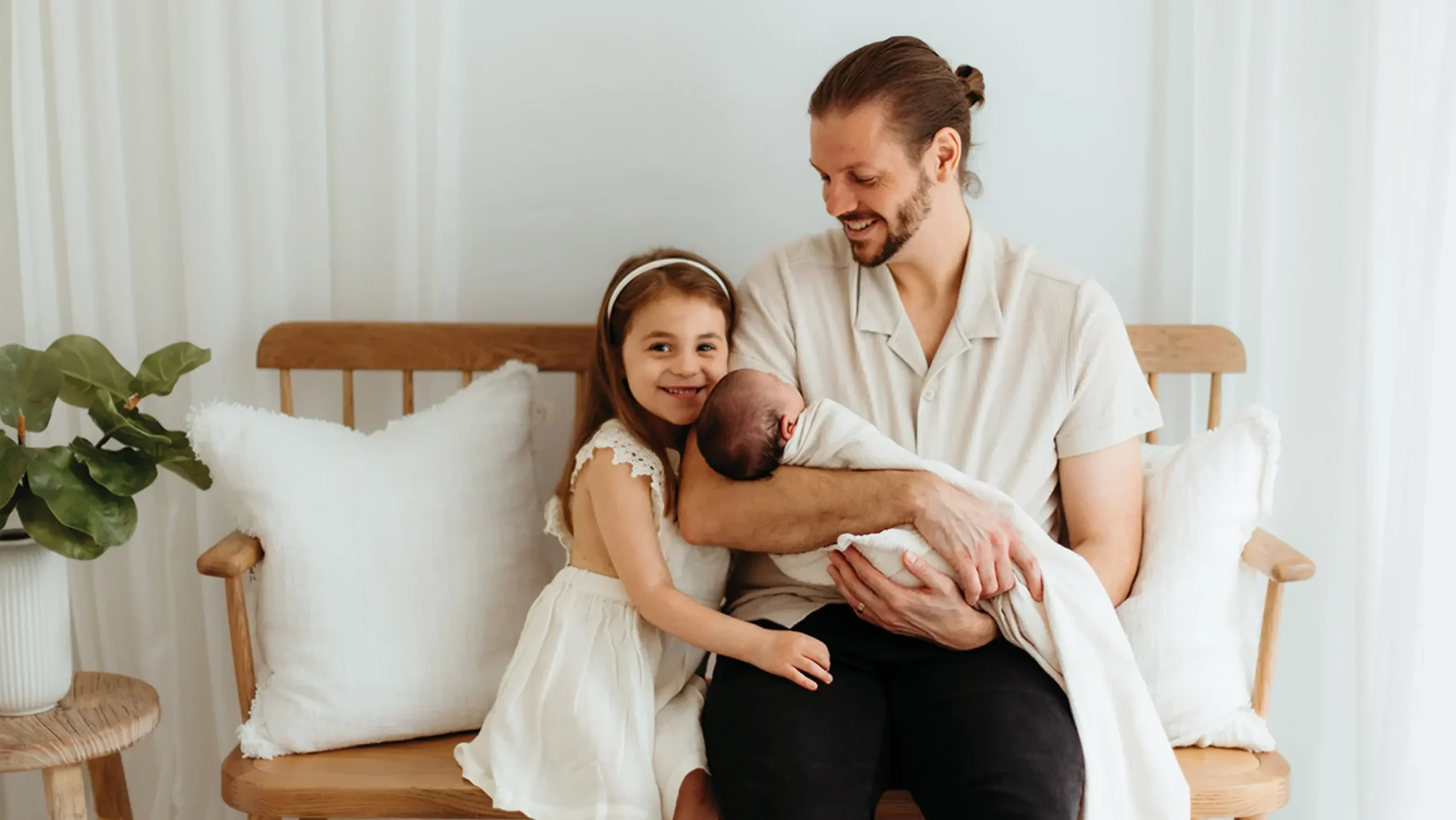
For me, this scene planted a question that has lain in my mind for the rest of my life: if I became a father, what kind of father would I be? What sort of response would my children experience to me being their parent?

Growing up, we progressively paint a picture of what fatherhood looks like from our experience, our friends’ families and, of course, what we see in media. The images of fathers I saw were so varied. Most of the time, it seemed that a dad’s role was just to be the family’s breadwinner—and a kind of comic relief. Sometimes I would see dads who were amazing hero figures, but they seemed few and far between.
I was blessed to become a father not once, but twice. In many ways I didn’t feel ready. I wasn’t sure I would be good enough to actually be what my kids needed. Would I be too selfish? Would I be wise enough? Could I provide? I had so many doubts, but I was determined to be involved in my children’s lives and to give them my all.
While I’m not perfect, I have been shocked at how much becoming a father changed me. Not just my schedule or my house (there are so many toys now), but me as a person. The biggest way I feel I have changed is that my spectrum of emotions has grown. It’s like I can feel deeper joy, sadness and empathy than ever before. Apparently, becoming a parent activates our brains’ “parental caregiving network”, which engages the parts “most responsible for emotional processing, social understanding and empathy”.
In this way, our brains (both men and women) are rewired as we become active parents in our kids’ lives. The love and care I felt for my daughters were so impossibly deep, I honestly didn’t even know it was possible. I thought I had my emotions figured out but once I become a father, it’s like I felt whole. I felt a new sense of what it meant to be a man and I cared more deeply than I ever had before. This went on to positively affect not just my relationship with my children, but my wife, my friends and my coworkers.
It’s even changed the way I watch movies. I find myself tearing up so much more (which I hate, as I never used to cry in movies . . . except The Lion King; we all get a pass for The Lion King) because I empathise far more with the characters than I used to.
One other key element of my life that it changed is the way I see God.
I had seen and heard for years that the God of the Bible is referred to as our heavenly Father. I guess I had just never thought much of it. I knew that the Bible talks about Him as loving His children (humanity), but I just thought that meant He liked us—a lot. Or maybe something like when a mate says, “Love you, bro.” It seemed like it must have been more significant than that, though. Then I read this:
“See what great love the Father has lavished on us, that we should be called children of God! And that is what we are!” (1 John 3:1).
This letter is traditionally ascribed to John the Apostle, one of Jesus’ followers. He describes this great fatherly love and I must wonder—is it that same impossibly deep love that aches right to your core? Is it that same love that keeps me constantly wondering about my kids even when I’m not around them? Is it that same love that makes me want to do more to help them be the best they can be? That must be what He feels for us. So, would He feel that same way I would if my kids rejected me? If they stopped talking to me? I guess He must. He must feel that same way for each one of us. That’s mind-blowing.

Jesus told the story (Luke 15:11–32) of a young man who demanded his share of his father’s inheritance early, effectively turning his back on his family. He left home in search of freedom and excitement but quickly wasted everything on reckless living. When a famine struck, he found himself hungry, alone and so desperate that he was reduced to feeding pigs and longing to eat their food. Realising how far he had fallen, he decided to return home, hoping his father might accept him as a servant. But while he was still a long way off, his father saw him, ran to him, embraced him and welcomed him home with tears of joy. Instead of punishment, there was forgiveness. Instead of shame, there was a celebration. The son who had been lost had finally come home.
This story is a parable and has quite a few things to teach us, but the main point I want to focus on now is of the father’s unconditional love. Despite his son being gone for a long time, the father still saw him from a long way off and ran to him. To me, this suggests that he was constantly on the lookout for his son to return home and, at first glance, there was no holding back. His love never stopped despite all the son had done. That’s the Father’s love.
No matter where you are at, this is what God feels for you too. He longs to embrace you and welcome you home—no matter the life you have lived.
This is the true picture of fatherhood. This is what I long to be for my daughters.