
Years ago, I wandered into a vintage bookstore in a country town. On the dusty shelves was a royal blue clothbound book, simply titled Essays. Inside were writings from some of history’s great thinkers—Seneca, Plato, Montaigne and Aristotle. I expected to find philosophical musings on how to live and love well but what surprised me was how often they returned to one nearly lost word: temperance—what we now might call “moderation” or “self-control”.
According to Plato, temperance was one of the four cardinal virtues alongside wisdom, justice and courage. For the Stoics, temperance was never about total abstinence. It was about practising balance so one could enjoy pleasures without being enslaved by them, prioritising long-term wellbeing over short-term gratification.
For many, the word temperance brings to mind the 19th-century Temperance Movement and its crusade against alcohol. Though they were calling for a full ban, its origins show why balance matters. What was once reserved for harvest celebrations, weddings, victory feasts and coronations had become a daily crutch. As alcohol crept into ordinary life, it brought about spikes in domestic abuse, public disorder and financial ruin. In response, a movement rose up and in essence said, “This stuff has got to go!”
Ancient philosophers mostly spoke of temperance in relation to three things: food, alcohol and sex—things humanity has long struggled to engage with wisely. Their antidote was discipline: fasting to master appetite, abstinence to strengthen the will and deliberate discomfort—cold plunges, hard beds, early mornings—to remind the body who was in charge.
Today, we face the same battles. Statistics show that the world is more gluttonous than ever, that alcohol is still wreaking havoc and more are suffering due to our oversexualised minds. Centuries ago, an ancient proverb warned, “Wilful waste makes woeful want.” But since the 1960s, the common thought shifted to—and has remained—“If it feels good, do it”.
The Stoics tried to warn us but clearly, we’re still struggling. So, maybe it’s time to pause and check ourselves—to notice where we’ve tipped out of balance. It’s not so we can strip our lives of joy, but to set ourselves up for a stable, satisfying life—rather than being controlled by our every impulse.
food, glorious food
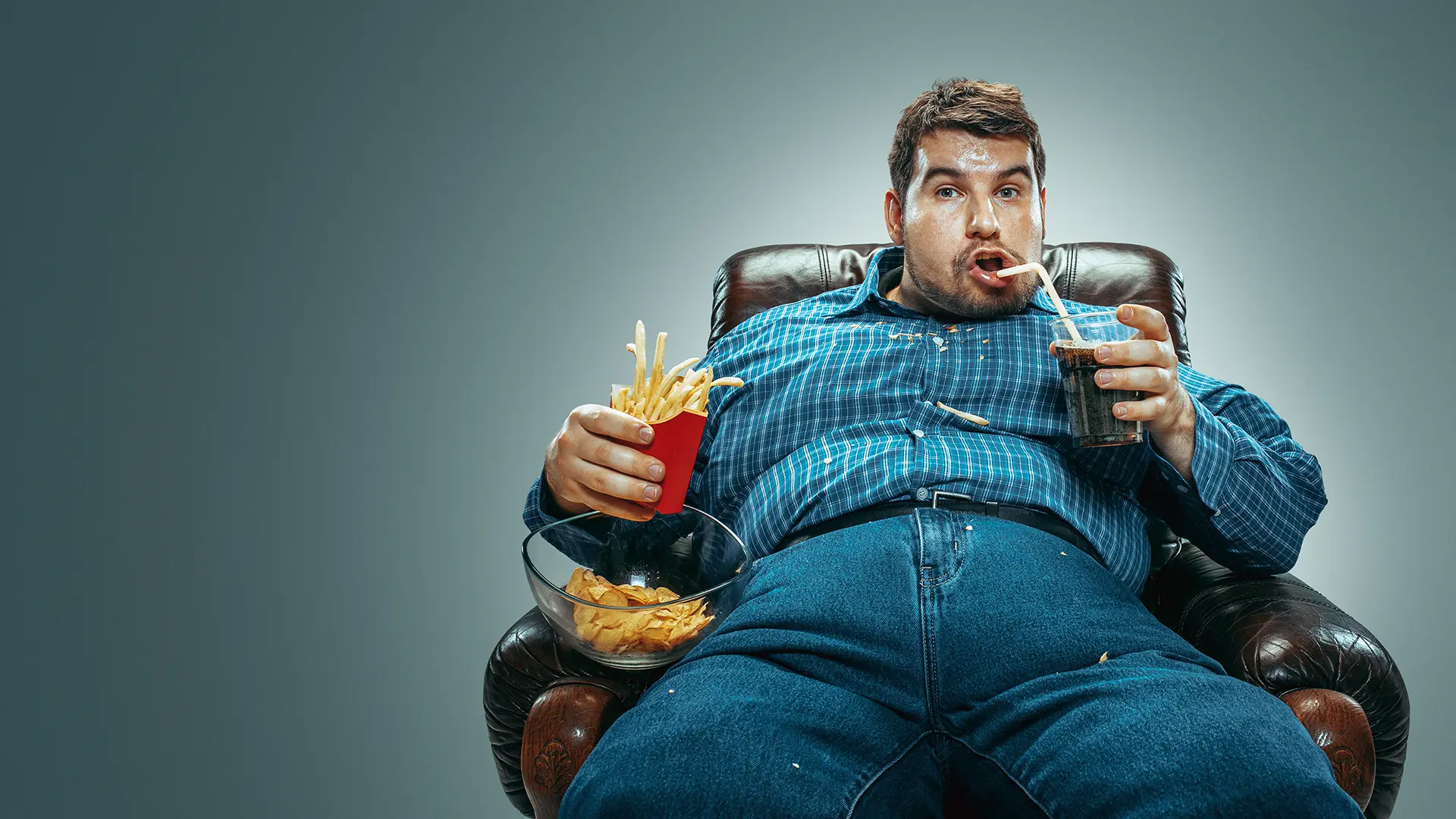
For the first time in history, there are now more obese adults than underweight adults. From 1975 to 2015, obesity in men has tripled and in women has more than doubled. While some causes of obesity are psychological, genetic or economic, much of it comes down to one thing: our love for food.
In Charlie and the Chocolate Factory, Augustus Gloop dives headfirst into Willy Wonka’s chocolate river, gulping it all up until he’s swept away, never to be seen again—all because he was unable to resist. The story feels whimsical, until you realise it’s not so different from another one. In the biblical narrative, Adam and Eve lived in paradise—but they reached for the one thing they were told not to touch: the Tree of the Knowledge of Good and Evil. Humanity’s downfall wasn’t violence, greed or murder, but something much more ordinary: the inability to say no to delicious food.
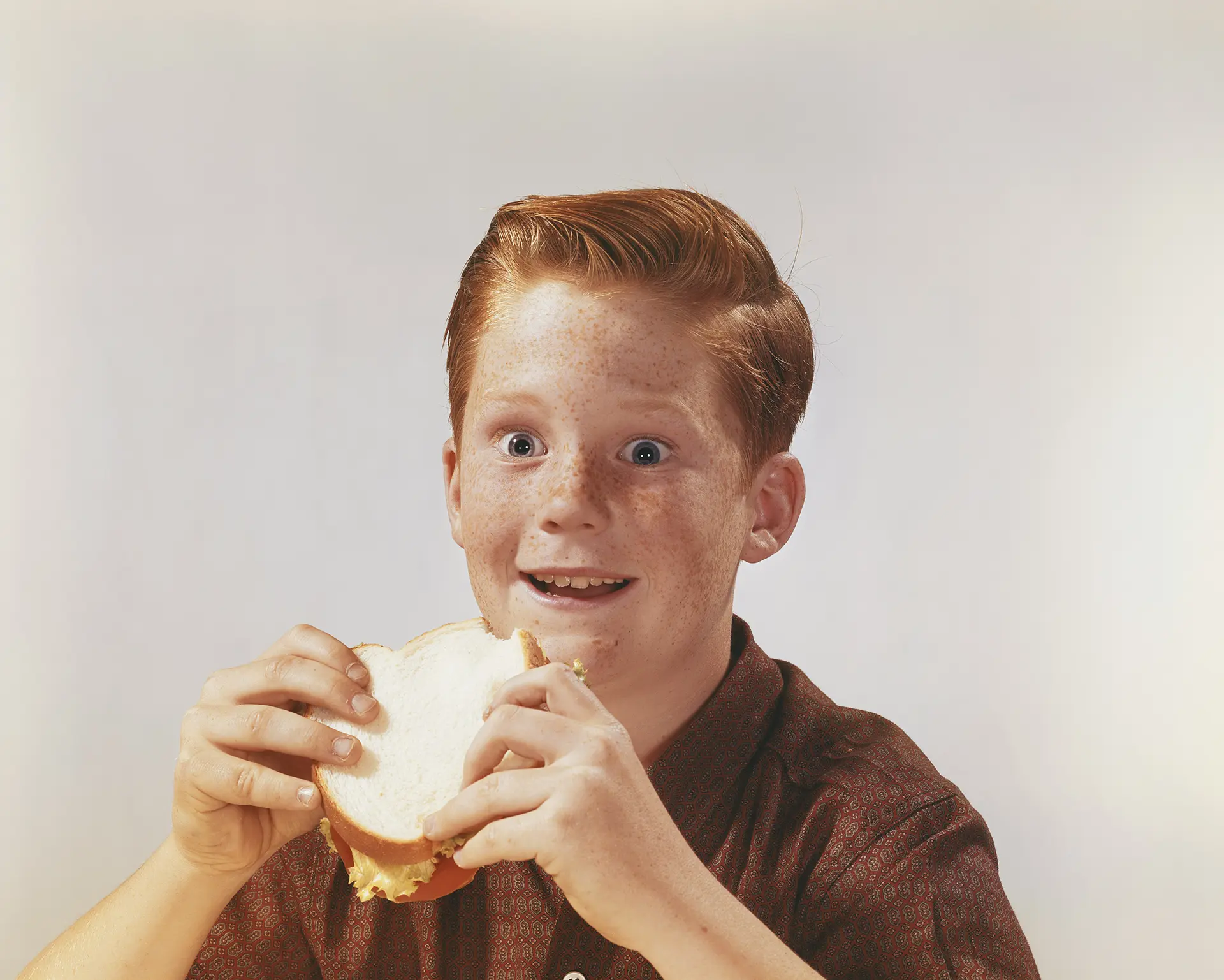
Appetite is the first impulse we learn to indulge (or restrain) and it’s often the hardest, because it doesn’t carry the obvious dangers of alcohol or drugs. However, its consequences can be just as disastrous. Eating too much, too often and the wrong kinds of foods not only results in us packing on weight, but also clouds the mind, dampens our mood and harms the body. The consequence of this is a world where wants routinely outweigh needs, where taste is indulged at the expense of health and preventable diseases claim the lives of children, friends and parents decades too early. The great irony of our obesity problem is that it persists while one-in-10 go to bed hungry each night, and nearly half of deaths in children under five are linked to malnutrition.
The ancient Romans believed that if you had mastery over appetite, you had mastery over everything. Centuries later, author Ellen White echoed the same warning: “Those who permit themselves to become slaves to a gluttonous appetite, often go still further, and debase themselves by indulging in their corrupt passions, which have been excited by intemperance in eating.”¹

booze & blues
Years ago, I worked with someone who, every afternoon, would knock off work and head straight to the pub. One day he said to me, “I don’t really drink.” Confused, I asked, “What do you mean? Don’t you go to the pub every day?” He shrugged, “Yeah I have a drink every day, but I don’t drink, drink every day.”
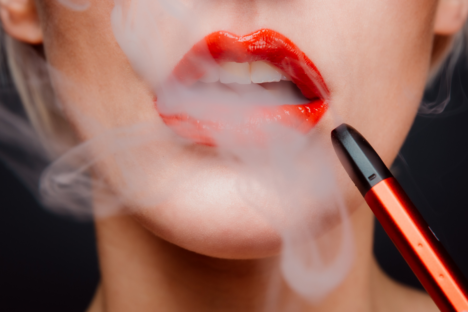
Much like in the 19th century, alcohol has crept into our everyday lives. A special occasion now applies to mowing the lawn, getting the kids to bed or surviving another week at work. And to make peace with the habit, we tell ourselves “everything in moderation”, “Jesus drank it” or “it’s full of antioxidants”—while overlooking the toll it takes on our bodies and our society.
We’ve long heard that a drink or two is good for us, but recent research shows that there is no safe level of drinking. A UK study of 40,000 people found that even one drink a day is linked to cognitive decline and brain shrinkage. The American Cancer Society says any amount increases the risk of seven different cancers. Alcohol also weakens the immune system, disrupts hormones, raises the risk of Alzheimer’s and diabetes, spikes stress hormones and upends REM sleep (the kind that keeps the brain healthy).
The societal consequences are equally profound. In 2022–23, Australia’s alcohol-related costs reached $A75 billion, covering healthcare, criminal justice, workplace losses and road accidents. But beyond dollars, alcohol strains relationships, fractures families and forces children to bear the hardest burden—neglect and abuse.

lust unchecked
The popular dating app Bumble recently put up a billboard that said, “You know full well a vow of celibacy is not the answer.” Though it caused a stir, it encapsulated the cultural pivot from strict restraint to total sexual freedom. Yet even something as good as sex can tip into excess.
In Dopamine Nation, psychiatrist Anna Lembke explains how the brain’s reward system, wired to seek pleasure and avoid pain, can be hijacked by constant stimulation. As one former porn addict reflected, “The more I watched, the more I needed—until it wasn’t even about pleasure anymore, just escape.”
Today, sexual stimulation is everywhere, woven into media, entertainment and porn that we access from our pockets. It’s no surprise then that roughly 91 per cent of men and 60 per cent of women regularly consume pornography. The effects of this ripple go far beyond one’s private life. Research links porn use with greater sexual objectification, diminished empathy and a higher tolerance for aggression toward women. Ironically, it also can lead to less sex and a decline in relationship satisfaction. At its worst, this obsession fuels a global sex industry that forces nearly one million new children into prostitution each year.2
The long-held Christian teachings around sex are often viewed as dour and prudish yet, to many people’s surprise, God is pro-pleasure! Sexual boundaries were never meant to steal our joy, but to foster intimacy and to safeguard our relationships.
a daily practice
The Greek word Aristotle used for intemperate was the same as that for undisciplined. The intemperate person, he argued, is immature—unable to govern desire and stuck in the candy-grabbing stage we see in Augustus Gloop. Today, in our dopamine-rich world, many of us aren’t far behind.
Across centuries, certain pleasures have persistently tested our self-control, and great minds have warned that if unbridled, can dominate us and harm those around us.
So, as one year closes and another begins, might it be beneficial that we pause and ask ourselves, “Is desire ruling my life?”
Aristotle framed temperance as a skill—a daily practice of aligning our choices toward what brings lasting fulfilment, not just fleeting pleasure. Modern neuroscience confirms the stakes: overstimulation rewires the brain, making unrestrained desires harder to resist, while intentional restraint restores balance. As Anna Lembke reminds us, “The relentless pursuit of pleasure (and avoidance of pain) leads to pain . . . Pressing on the pain side resets our balance to the side of pleasure.”
Reclaiming balance won’t happen overnight. It will take small, deliberate, even uncomfortable steps. But each step brings you closer to a life shaped by intention rather than impulse—a life richer, steadier and more deeply satisfying.
In the words of one final wise thinker, Benjamin Franklin, “Temperance puts wood on the fire, meal in the barrel, flour in the tub, money in the purse, credit in the country, contentment in the house, clothes on the back and vigour in the body.”
Zanita Fletcher is a life coach and assistant editor for Signs of the Times South Pacific. She writes from the Gold Coast, Queensland.
1. Ellen White, Spiritual gifts: Vols 3 & 4, Seventh-day Adventist Publishing Association, 1864.
2. Nicholas Kristof & Sheryl WuDunn, Half the sky, Virago Press, 2009.