

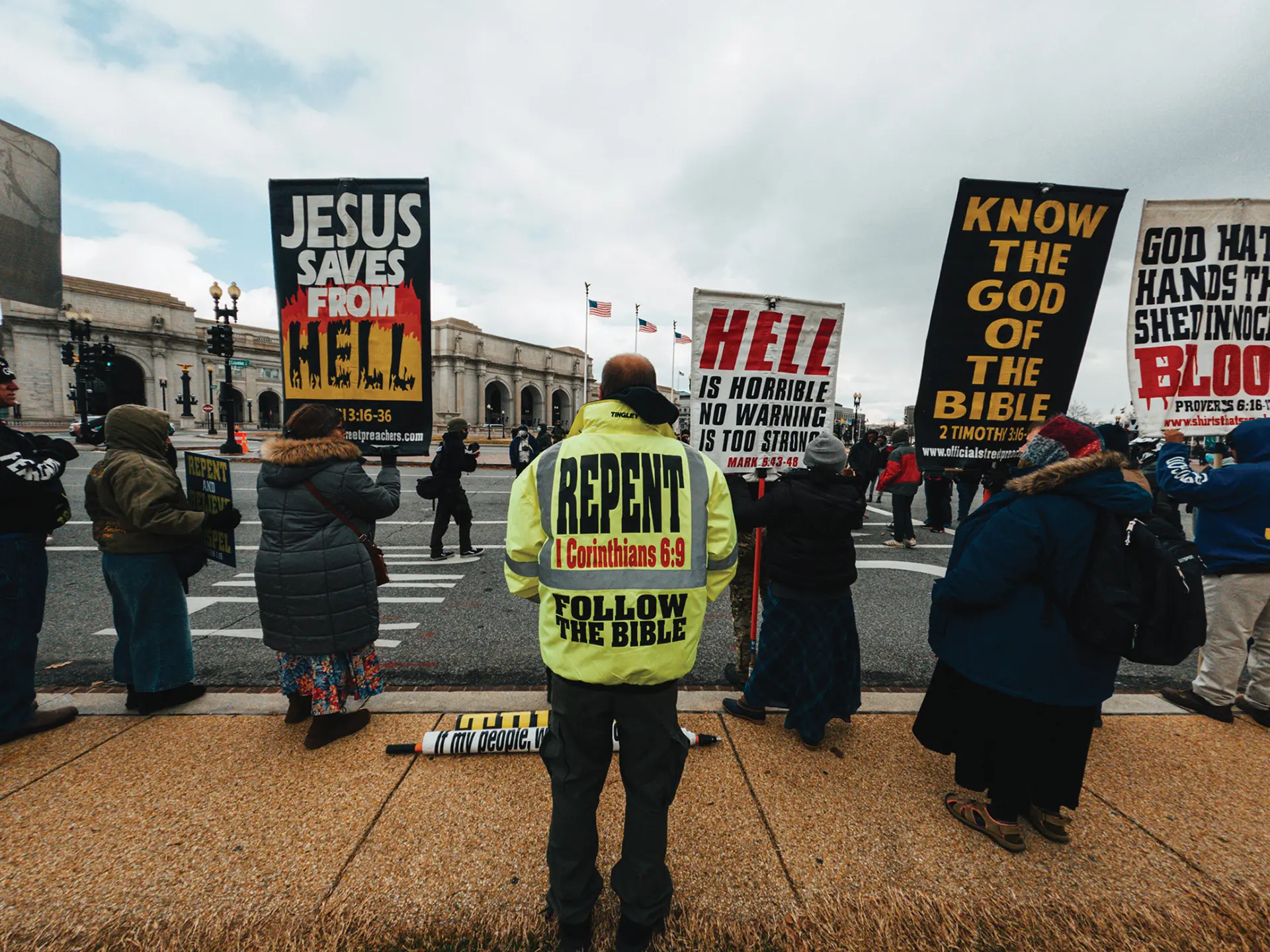
Many of us have passed by someone on the street corner holding a sign or shouting, “The end is nigh—repent and be baptised”. It’s a familiar stereotype, often dismissed or ridiculed. But behind the loud warnings and dramatic slogans lies a deeply-held hope for millions of Christians around the world: hope in the second coming of Jesus Christ.
This belief isn’t fringe. Across denominations, there’s a shared hope in the return of Christ—a moment described in biblical texts that draw from both the Old and New Testaments. For many Christians, Christ’s return represents more than just a spiritual event—it symbolises the restoration of a broken world and the renewal of both humanity and the planet itself.
what will happen?
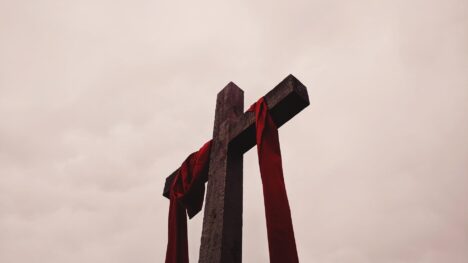
The narrative goes like this: when Christ returns, it won’t be in secret. It will be a visible, global event. He will not physically touch the earth but will appear in the sky (Revelation 1:7) and His followers will rise to meet Him in the air. From there, they will spend a millennia in heaven while the earth remains desolate—a lifeless wasteland where the devil and his angels are bound, confined to witness the results of their rebellion (Revelation 20:1–6). After this period, Christ will return again with the redeemed to bring final judgement to the lost and to purify the Earth completely. What follows is a vision of restoration—suffering, injustice, environmental destruction and illness will be no more. The earth will be renewed, transformed into a perfect and eternal home, restored to its original beauty (Revelation 21:1).
a unifying vision
Whether or not you subscribe to the theological details, there’s something powerful—even universal—about this vision. It speaks to a deep longing many of us share: the desire for justice, for healing and for the restoration of everything that is broken in the world. In a time marked by war, political division, climate chaos and personal hardship, the idea that renewal is even possible resonates far beyond religious dogma.
The Bible also speaks of a difficult period preceding this return—often referred to as the “time of trouble”, drawn from the symbolic and poetic imagery of the book of Revelation. To many, the book is confusing or intimidating, full of cryptic language and unsettling imagery. But it can also be seen as a kind of protest literature. Originally written to ancient Christians enduring intense persecution, its original audience received it as a poetic call to persevere through chaos, with the hope of a better world to come.

the book of hope
When I read Revelation, I don’t see a book of doom. I see a story that declares, “Even when things feel hopeless, hope is coming.” In Christian theology, this change is tied to the return of Christ. But even outside religious belief, there’s something essential about that kind of hope—hope that inspires action, care and compassion.
Hope, in this sense, is not passive. It’s not just wishful thinking—it’s active. Hope calls us to live differently, to believe in better possibilities and work toward them. It empowers us to care for one another and our environment, to work toward restoration—and to move with purpose even when the future feels uncertain.
The most valuable message Christians can offer today isn’t that the world is ending and we must repent or face doom. Rather, it’s the message that renewal is possible—for our planet, for our communities and for our individual brokenness.
This shift in thinking has been deeply personal for me as a health professional. For a long time, my approach—like many in the field—focused on identifying what wasn’t working: the habits people needed to break, the health risks they faced, the goals they hadn’t yet met. But over time, I began to realise how limiting and discouraging that perspective can be. I’ve since embraced a new way of thinking—one that centres on strengths, not shortcomings. Now, I look for what is working. I celebrate progress, however small. I affirm the choices people are already making that move them towards wellbeing. It’s a mindset shift that has transformed the way I support others—and one that I believe we need more broadly. What if we looked at the world this way, too? What if we focused less on what’s broken, and more on what can be built upon? On the good that’s already happening and how we can grow it?
hope in our bodies
That mindset also reshaped how I view the human body. Within the Christian tradition, our bodies are considered “temples”, deserving of respect, care and reverence. This belief isn’t about restriction or guilt, but about honouring the miracle of our physical being. Nurturing our bodies with rest, nutrition, mindfulness and movement becomes an act of stewardship—something sacred. It’s a reminder that personal health and global healing are intertwined and that restoration begins not only around us—but within. Living with hope, then, includes how we live in our bodies. When we care for ourselves, we participate in a larger vision of wholeness and harmony that extends beyond the individual.
Instead of focusing on an “end of the world” scenario driven by fear, guilt or judgement, why not instead focus on the possibility of transformation? Whether you believe in a literal second coming or not, the idea that the world can be restored—that peace, equity, health and environmental balance are worth striving for—is something that can unite us all.
That’s where I believe Christianity, at its best, has something beautiful to contribute. Not as a warning—but as a vision. The ancient Greek word apokalypsis—from which we derive the word apocalypse—literally means “unveiling”. Reading apocalyptic literature is an opportunity to see the world as God sees it—to see the future as He sees it. The book of Revelation is not a fear-based ultimatum but a framework of hope that can motivate real-world action—living with care, treating others with dignity, protecting our environment and appreciating the miracle of life and the human body.
Christians believe they are called to be guardians—of the earth, of their bodies and of their communities. For those who believe in the second coming, the goal isn’t just to anticipate the event, but to live in a way that reflects the values it promises: justice, peace, restoration. In that sense, the second coming isn’t just about what happens at the end—it’s about how we live now. It’s about modelling what a life of compassion, humility and stewardship looks like in the real world.
So yes, for many Christians, the return of Christ is a future hope. But for all of us—whether of faith or not—there’s value in the message it brings: don’t give up on each other. Respect the people around you for who they are. Care for the planet that sustains us. Live with hope that things can, and will, be better.