

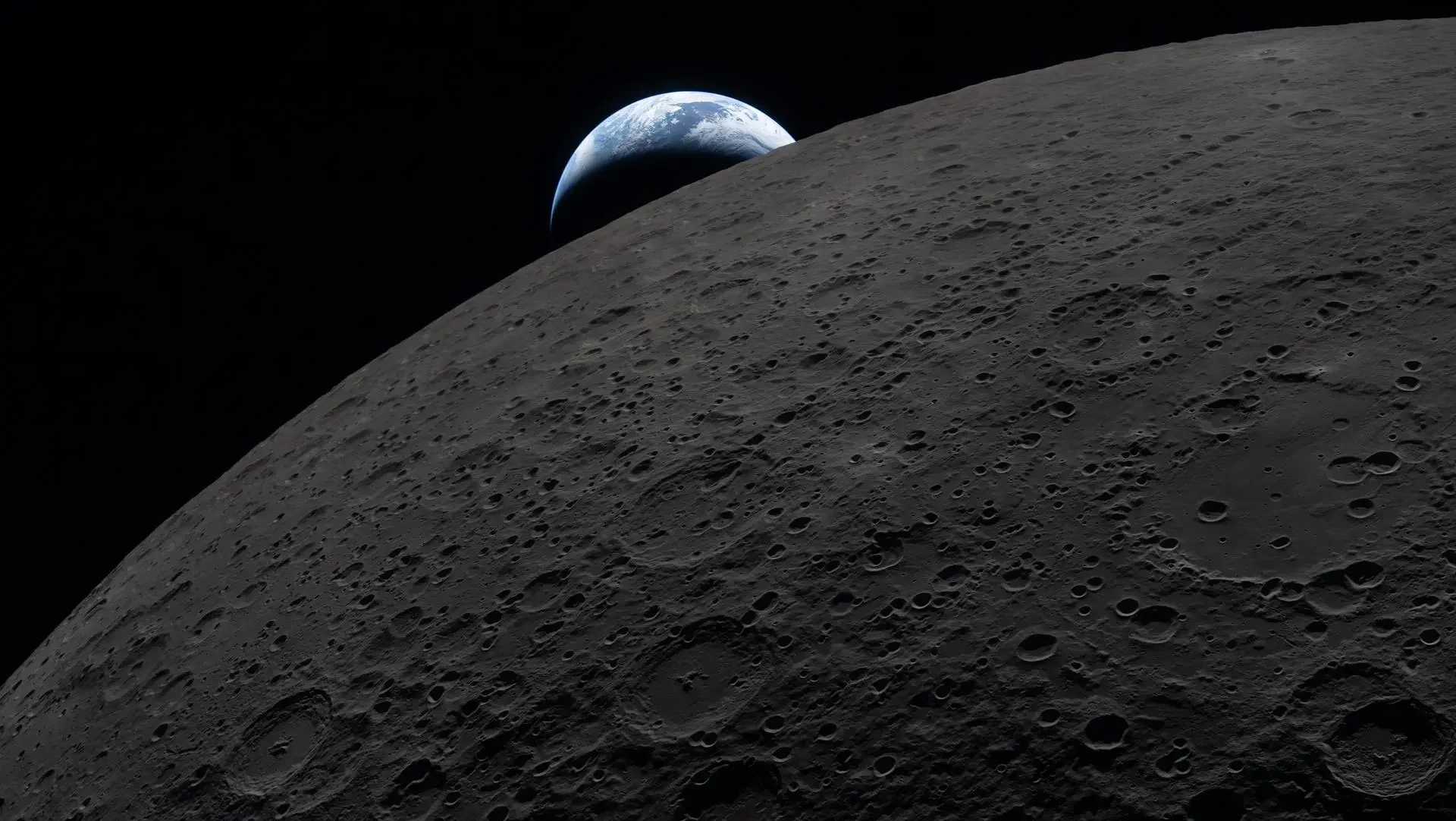
When the Artemis II astronauts splashed down off the coast of San Diego on April 10, the United States asserted itself as the definitive leader of any space race that may come of its endeavour (China, in partnership with Russia, is planning to land astronauts on the moon by 2030).
There were certainly celebrations after the successful landing and return to earth, with NASA’s Artemis program manager Lori Glaze saying, “We sent four amazing people to the Moon and safely returned them to Earth for the first time in more than 50 years. To the generation that now knows what we’re capable of, ‘Welcome to our moonshot.’”
One of the poignant moments came with the naming of two moon craters, one named Integrity after the spaceship. The other is now known as Carroll Crater, named after NASA Commander Reid Wiseman’s late wife, Carrol. Mission specialist Jeremy Hansen negotiated the permission for the naming, which was quite an emotional moment for the crew. The naming also needed the approval of the International Astronomical Union.
the origins of space exploration
The flight of NASA’s Artemis II reminded us of the fascination many have with the Moon—and it’s a reminder that space exploration may not have reached this level if not for Soviet Russia’s successful launch of Sputnik 1 in 1957. With that launch, US president John F Kennedy announced “the Herculean task at hand: sending man to the Moon”. In May 1961, he outlined a “speculative budget for landing a man on the moon”. In September the following year, he said:
“Finally, if we are to win the battle that is now going on around the world between freedom and tyranny, the dramatic achievements in space which occurred in recent weeks should have made clear to us all, as did the Sputnik in 1957, the impact of this adventure on the minds of men everywhere, who are attempting to make a determination of which road they should take.”
Art and culture critic Henry Little adds that, “As the first ever global media event, the lunar landings entranced humanity with an efficacy than can never be replicated. The world watched as the Moon was claimed by Americans.” He reckons that it was “the most singularly successful piece of branding in history. . . a super-ad for a superpower on the make.” Perhaps so, but it did grab worldwide attention. And a fascination for the moon. It also demonstrated the power of television as people around the world tuned in to watch what were, back then, very poor black-and-white images coming from the moon.
faith among astronauts
In the recent flight around the Moon, as the NASA astronauts on Artemis II were about to experience 40 minutes of radio silence as they passed behind the moon, astronaut pilot Victor Glover gave a message to the world:
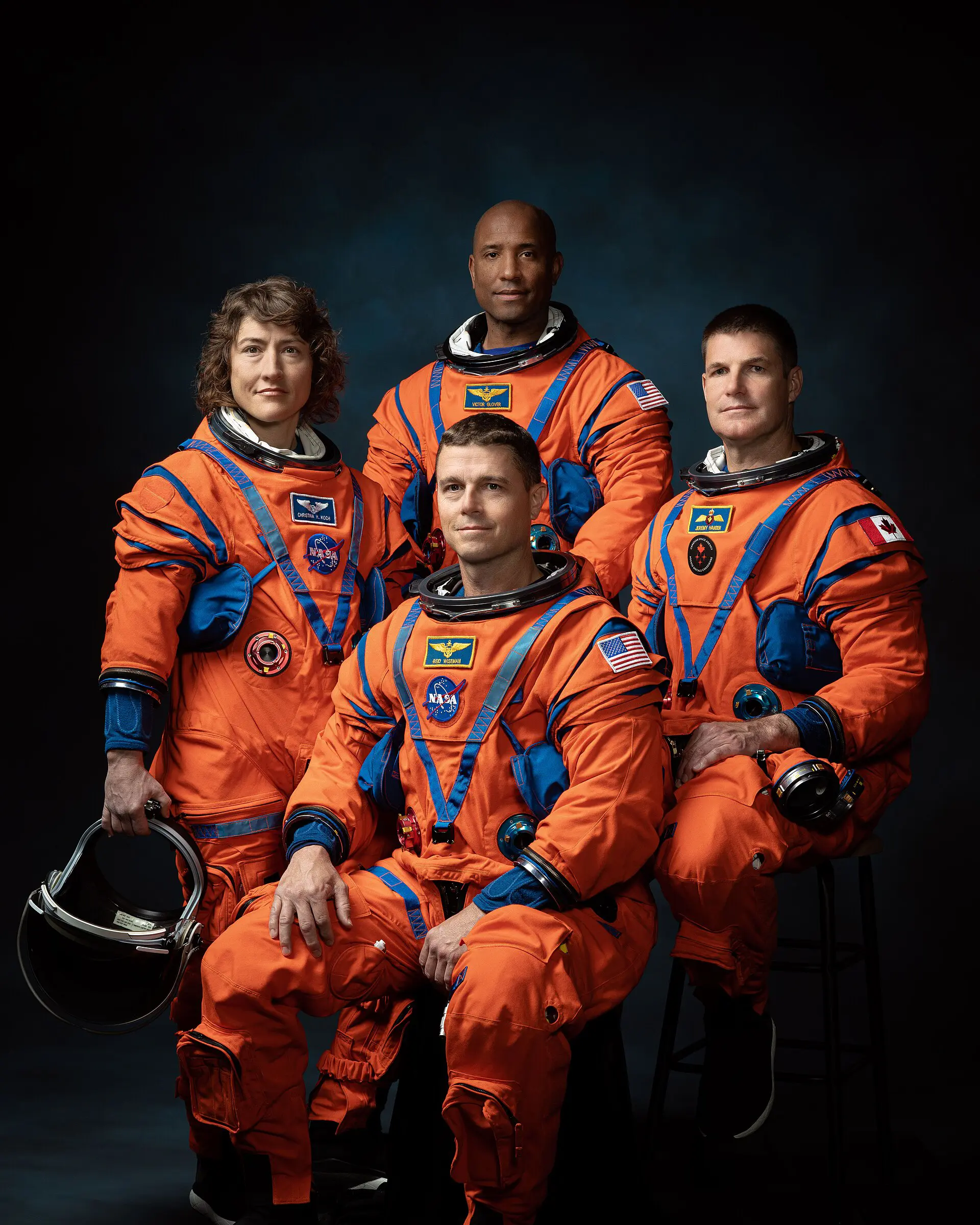
“As we continue to unlock the mysteries of the cosmos, I would like to remind you of one of the most important mysteries there on Earth—and that’s love. Christ said, in response to what was the greatest command, that it was to love God with all that you are. And He also, being a great teacher, said this: ‘I give you equal to it, and that is to love your neighbour as yourself.’” Glover then added, “And, so, as we prepare to go out of radio communication, we’re still able to feel your love from Earth and to all you down there on Earth, and around the Earth, we love you from the Moon.”
There’s nothing new in this kind of Christian message from astronauts from the United States. On Christmas Eve, 1968, during their ninth orbit around the moon, astronauts Bill Anders, Jim Lovell and Frank Borman on Apollo 8 also shared a biblical message in reciting Genesis 1:1–10 from the King James Bible. Borman finished saying, “From the crew of Apollo 8, we close with good night, good luck, a Merry Christmas and God bless all of you—all of you on the good Earth.”
And when Artemis II mission pilot Victor Glover was asked in a CBS interview if he had an Easter message, he said he didn’t have anything prepared, but then he went on to talk about his faith in God and the Bible.
“When I read the Bible, and I look at all of the amazing things that were done for us, who created it, you have this amazing place, this spaceship. You guys are talking to us because we’re on a spaceship, and we’re really far from Earth, but you’re on a spaceship called Earth, that was created to give us a place to live in the universe and the cosmos.
“Maybe the distance we are from you makes you think what we’re doing is special, but we’re the same distance from you. And I’m trying to tell you, just trust me, you are special,” he said. “In all of this emptiness, this is a whole bunch of nothing, this thing we call the universe, you have this oasis, this beautiful place that we get to exist together.”
divided values
Not everyone is happy with all this “religious BS” being sprouted by Artemis II astronauts, accoring to one Reddit user, adding that it is “pretty depressing to hear some of the Artemis astronauts talking religiously as they orbit the Moon using some of the most advanced science and engineering available to the human race”.
Lisa Grossman, an astronomy writer for Science News was likewise quite torn about her feelings on NASA’s Artemis II mission. That surprised her as someone who, as an eight-year-old, became enraptured with space and dreamed of being the first woman to land on Mars to search for alien microbes. She recalls how President Nixon spoke to astronauts Neil Armstrong and Buzz Aldrin after they landed on the moon in 1969. He said, “For one priceless moment in the whole history of man, all the people on this Earth are truly one.”
Grossman wondered if Artemis II would invoke the same feeling. “We could certainly use it in 2026.” Her resolve was tested when, two days after she came home to Minneapolis after attending lunar science talks at an astronomy meeting in Arizona, ICE agents shot and killed a woman about “a mile from my house”. To make the situation worse, Renee Good—the woman killed by ICE— “was demographically identical to me”. Then she found masked agents in military vests driving around her neighbourhood and witnessed them arrest someone across the street from her house.
While preparing her preview story for the launch, she wondered, Who cares about people going to the moon? It was quite a discovery for her to recognise that not everyone was thrilled about Artemis II, with other social issues at top of mind in the national consciousness. And it made her think, It’s okay for me to be less than thrilled about Artemis.
Grossman says, “I hope my sense of transcendence in space comes back. In the meantime, I’m finding that feeling of unity in my Minneapolis neighbours’ . . . The courage and tenacity on display here every day. People are capable of astonishing things when they work together.”
Perhaps that’s the big lesson from Artemis II. Grossman reported a truth when she wrote of the astronauts: “Even when you’re one of the first people to go to the Moon in half a century, there’s no place like home.”
Meanwhile, back on Earth, we’re fortunate in the West that religious freedom is part of who we are. It’s a right we need to defend, no matter what religion or belief—unless it causes harm. NASA has promised that what we have seen is “just the beginning”, according to administrator Jared Isaacman. “We are going to get back into doing this with frequency, sending missions to the Moon until we land on it in 2028 and start building our base.
“Much work remains before any astronauts make a 21st-century footfall on the Moon,” he adds. “There is no guarantee that either the US timeline of a human landing in 2028 or China’s target of 2030 will be met. But Artemis II is a positive signal. By once again sending crews to the lunar vicinity and returning them safely to Earth, NASA has shown that some of the Apollo era’s faded glory can be rekindled—and may yet be surpassed.”
| Yes, there is a man on the moon—kind of The ashes of Gene Shoemaker are buried on the Moon. The founder of what is known as astrogeology, Shoemaker is the only person to have been buried on the moon. Despite being a scientist of great esteem, Shoemaker’s health problems and early death meant that he never walked on the Moon. He was to be the first geologist to walk on the moon, but a diagnosis of Addison’s disease disqualified him. He and Canadian astronomer David Levy recognised a comet that came to be known as the Shoemaker-Levy comet. That comet hit Jupiter, becoming the only recorded striking of a comet hitting a planet. Shoemaker’s ashes were carried to the Moon by the Lunar Prospector space probe January 11, 1998 to July 31, 1999, in honour of his contributions to planetary science. Shoemaker died from a car accident in Australia in 1997 while searching for impact craters. |